Bikes have a way of taking over a garage. One road bike becomes two, a commuter joins them, a kid's bike appears, and suddenly every vertical surface is a parking spot and the floor is a maze of pedals and wheels. The search for bike storage racks almost always starts the same way: you want the bikes out of the walking path, off the car, and reachable without moving three other things first.
The trouble is that "bike rack" covers at least four different products. A vertical wall mount stores one bike flat against a wall. A horizontal wall hanger does something similar at a different angle. A floor stand parks several bikes side by side without touching the wall. A hitch rack carries bikes on the back of a car. They are not interchangeable, and buying the wrong type for your space is the most common mistake in this category.
This comparison looks at six products that cover those jobs: four storage solutions, one hitch-mounted carrier, and one accessory that protects frames while a bike rides on a carrier. Every description below comes from the maker's own product information. There are no invented test results, no made-up weights and measures, and no prices written into the copy, because pricing in this category moves around.
Related: Best Hitch Bike Racks for Two-Inch Receivers
Quick answer
The Steadyrack Bike Rack for Road Bikes is the strongest fit for daily indoor storage of road bikes because it mounts vertically, uses a space-saving pivot design, and is built from heavy-duty steel. Choose the Young Bike Rack Hitch for Car instead when your priority is hauling two bikes on a two-inch receiver rather than parking them on a wall.
Bike racks worth comparing
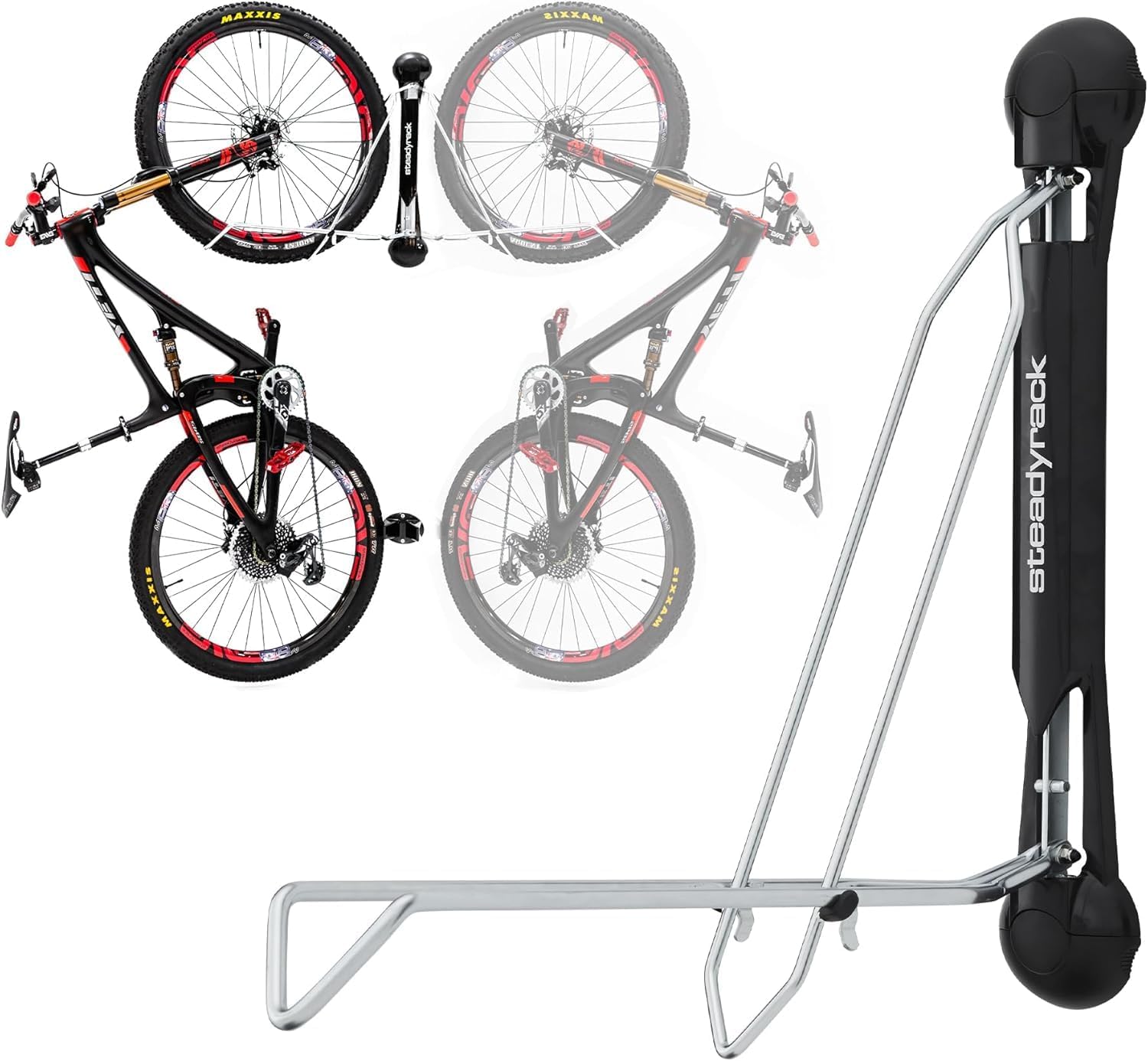
Steadyrack Bike Rack for Road Bikes - The Original Wall Mounted Vertical Bike Storage - Fits Narrow Tires - Space Saving Pivot Design - Heavy-Duty Steel Rack for Indoor Garage, Apartment or Home Use
Vertical wall-mounted storage built for road bikes, with a pivot design that swings the bike flat against the wall to free up floor space. Heavy-duty steel construction and a narrow-tire fit, intended for indoor use in a garage, apartment, or home.
Visit on Amazon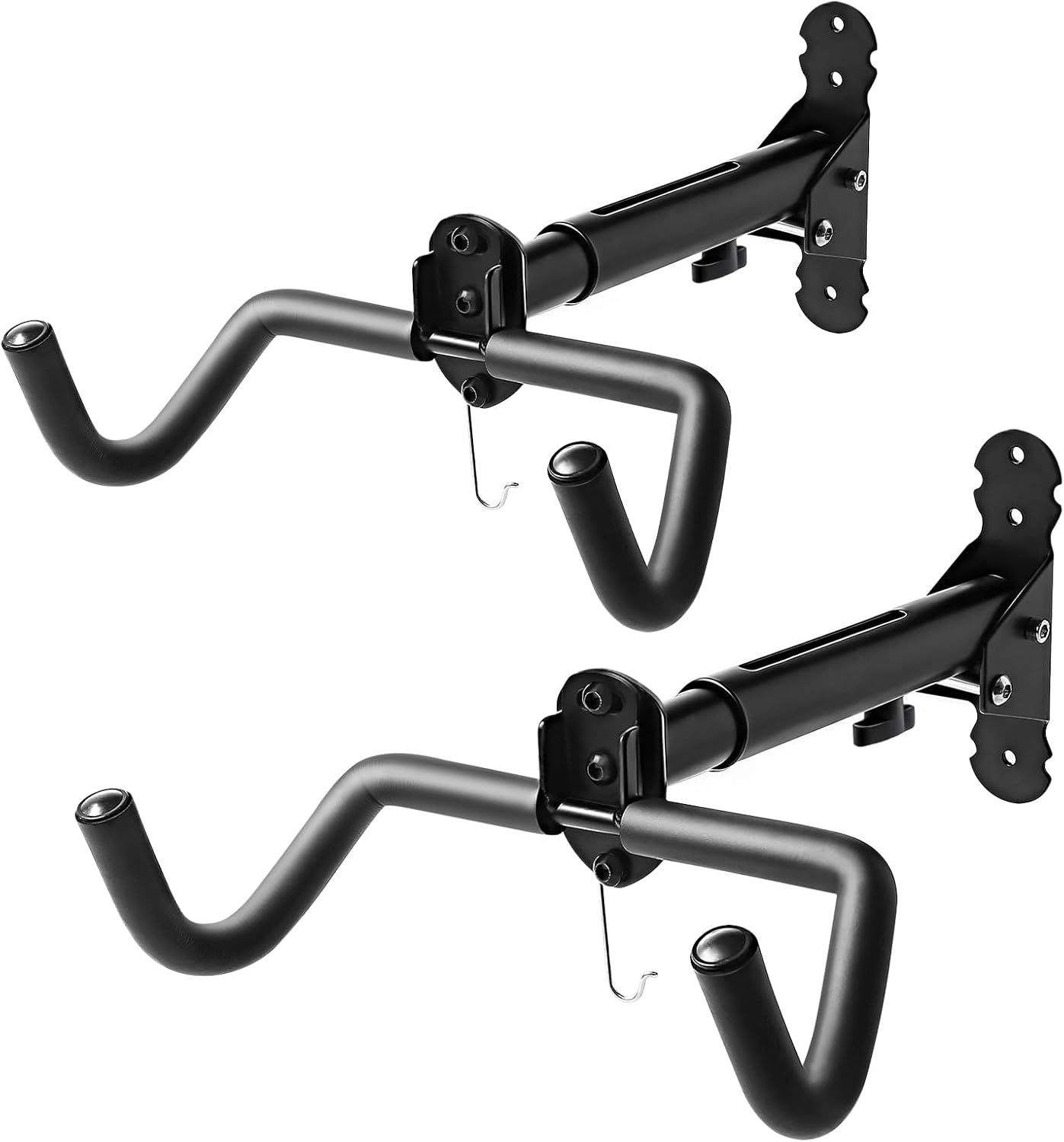
Gootus Bike Wall Mount Hanger - Horizontal Bicycle Indoor Storage Rack
A horizontal wall mount hanger for indoor bicycle storage. The bike hangs parallel to the wall, which keeps handlebars and pedals out of the walking path without consuming floor space.
Visit on Amazon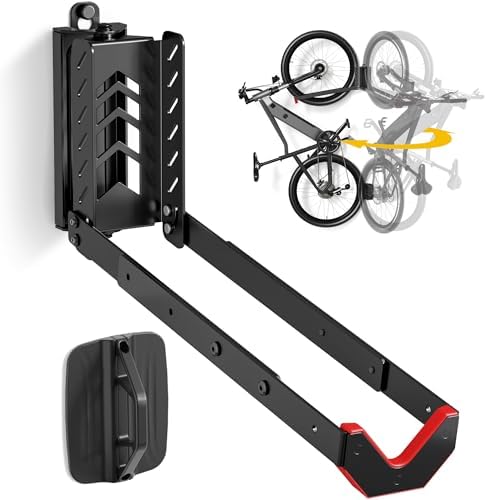
monTEK No-Lift Swivel Bike Wall Mount, Bike Hangers for Garage, 1 Pack
A swivel wall mount sold as a single hanger for garage storage. The no-lift design is aimed at riders who would rather roll a bike into position than lift it over their head.
Visit on Amazon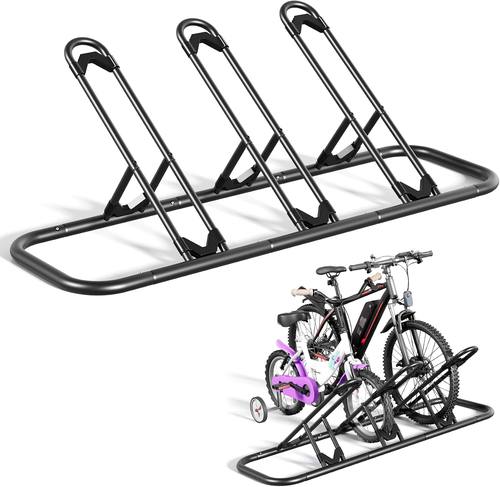
Mr IRONSTONE Bike Rack, Floor Storage Stand for Garage, Indoor/Outdoor Parking Holder, Fits Mountain, Road & Kids Cycles (Black, 3-Slot)
A three-slot floor stand that parks mountain, road, and kids' bikes side by side. It is listed for indoor and outdoor use and holds bikes upright without drilling into a wall.
Visit on Amazon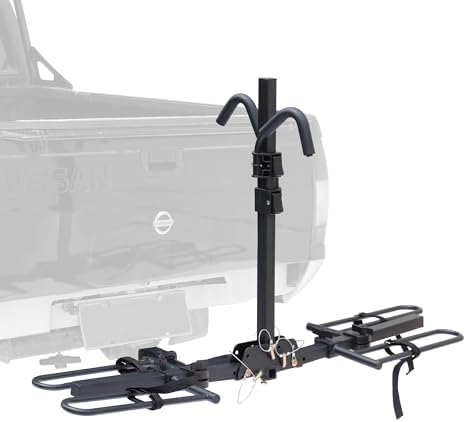
Young Bike Rack Hitch for Car - 200LB 2-Bike Rack Hitch Mount Platform Style Hitch Bike Rack,Smart Tilting & Easy Fold for Car SUV with 2 Inch Receiver,Bike Carrier Fits Up to 5-inch Fat Tire
A platform-style hitch rack for a two-inch receiver with a stated 200 lb capacity for two bikes. It tilts for rear access and folds when empty, and it is listed to fit tires up to 5 inches wide.
Visit on Amazon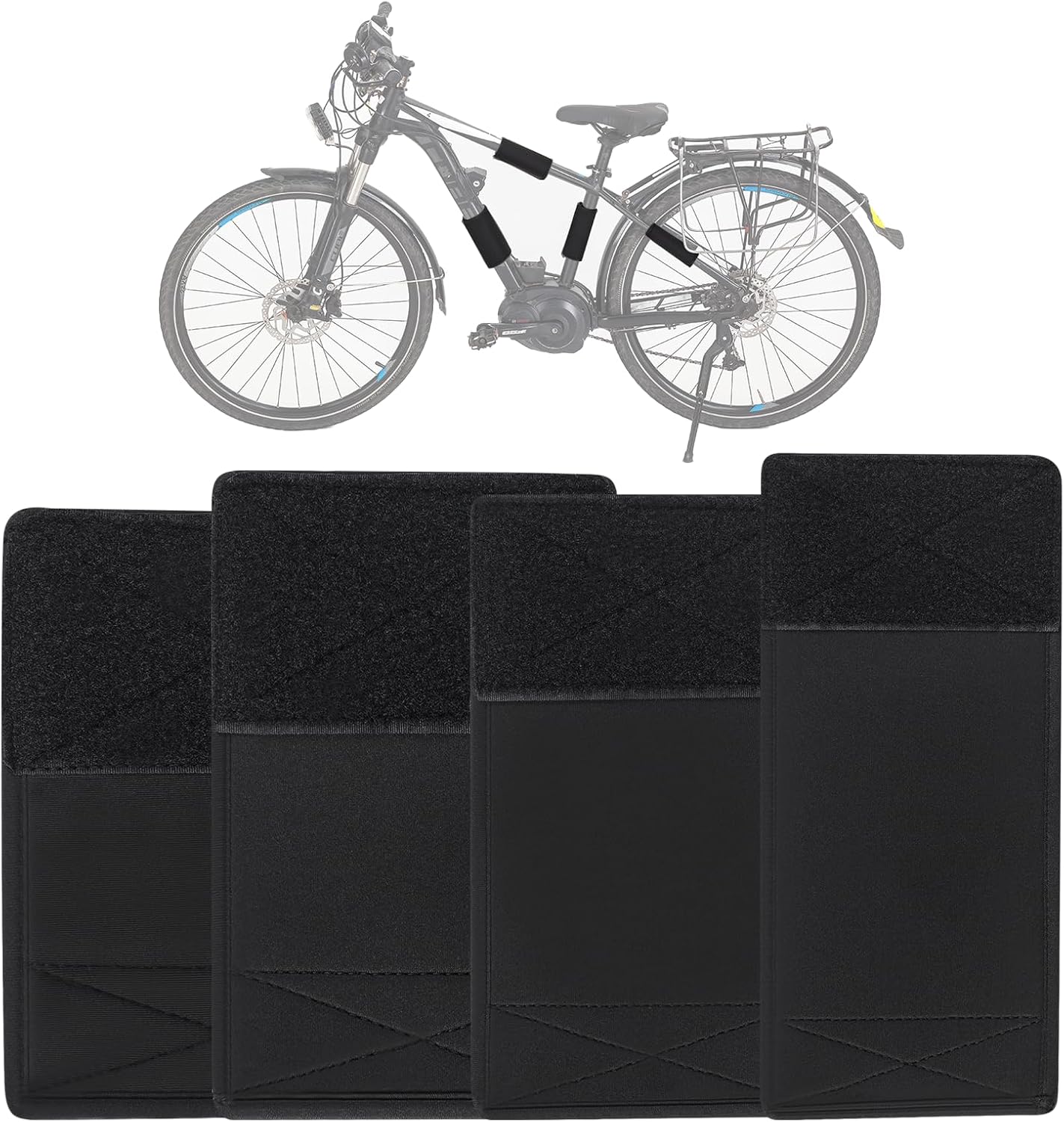
Besudo Bicycle Frame Protectors Set of 4, Neoprene, for Carrier Transport
A set of four neoprene frame protectors made for carrier transport. They sit between the frame and the rack or straps to reduce rub while a bike is being hauled.
Visit on AmazonPrices and availability may change. Check the retailer for current details.
How these products were compared
This guide compares mounting type and hardware, how many bikes each product is designed to hold, the stated capacity and tire width limits, the footprint each rack demands in a garage or on a car, and the materials described by the maker. Product names, images, and retailer links are matched by product identifier so that every card points to the product shown.
The categories here are genuinely different, and that shapes the comparison. A wall mount and a floor stand are judged on how much floor they free up and how much lifting they require. A hitch rack is judged on receiver size, stated load capacity, tire clearance, and whether it tilts or folds. An accessory like a set of frame protectors is judged on where it sits in the transport workflow, not on storage capacity at all. Treating all six as one ranked list would be misleading, so the recommendation below is tied to a specific job rather than to a single overall winner.
One more note on the numbers: the capacities and fit ranges quoted in this article come from the manufacturers' own descriptions. They are starting points for your own measurements, not a substitute for them. If your bike is unusual, measure the tire width and the wheelbase before you buy anything.
How to choose the right bike rack
Start with the job, not the product. If the problem is a crowded garage floor, a wall mount or a floor stand solves it. If the problem is getting bikes to a trailhead, only a hitch rack solves it. Most people eventually want both, and it is fine to buy them separately rather than forcing one product to do two unrelated jobs.
For wall storage, the split is vertical versus horizontal, and it matters more than brand. A vertical rack such as the Steadyrack holds the bike upright and pivots it sideways against the wall, which concentrates the footprint into a narrow strip of wall and is the better choice when floor space is the scarce resource. The trade-off is that the bike goes up high, and the rack is listed for narrow tires, so it suits road bikes rather than mountain or fat bikes. A horizontal hanger such as the Gootus stores the bike parallel to the wall, which can be easier to reach and works along a long empty wall, but the bike projects further into the room and the hanger has to be mounted at a height that clears whatever is parked underneath. The monTEK swivel mount sits in the middle of that conversation: it is a single wall hanger with a no-lift design, aimed at riders who would rather roll the bike into place than lift it overhead.
Tire width is the specification people skip and then regret. The Steadyrack is built around narrow tires for road bikes. The Young hitch rack is listed to fit tires up to 5 inches wide, which covers fat bikes. The Mr IRONSTONE floor stand is described as fitting mountain, road, and kids' cycles, which makes it the flexible option for a household with mixed bikes.
If you are buying for the car rather than the garage, the receiver is the first thing to confirm. The Young rack is designed for a 2-inch receiver, carries two bikes, and states a 200 lb capacity, with tilting for rear access and folding for storage when it is empty. Anything that carries bikes outside the vehicle should be checked against the vehicle's own towing and tongue ratings, and the rack's stated capacity should never be exceeded. If you haul carbon frames or painted finishes, a set of neoprene frame protectors is a cheap way to separate the frame from the rack hardware.
If your main interest is transport rather than storage, our hitch rack guide goes deeper on receiver classes and platform geometry, which is a different set of decisions from the ones on this page.
Steadyrack Bike Rack for Road Bikes
The Steadyrack is the top pick here because it does the job most riders actually need first: getting a road bike off the floor without giving up a parking space. It is a vertical wall-mounted rack, described as the original in that format, with a pivot design that lets the bike swing flat against the wall once it is loaded. The frame is heavy-duty steel, and the rack is intended for indoor use in a garage, apartment, or home.
The trade-offs are worth stating plainly. It is built for narrow tires, so it is a road-bike solution and not a fat-bike or wide-tire solution. Vertical storage means lifting the bike and hanging it, which is fine for a 17 lb road bike and considerably less fun for anything heavy. It also needs a wall you are willing to drill into, and enough clear height above the mounting point for the bike to sit upright. If any of those conditions do not hold in your space, one of the alternatives below is the better answer.
Alternatives to consider
The monTEK No-Lift Swivel Bike Wall Mount is better suited to riders who do not want to lift a bike at all, since the whole point of the design is rolling the bike into the hanger, while the Gootus Bike Wall Mount Hanger is a stronger fit when you want indoor storage along a wall at a lower height and are not limited on floor space.
The Mr IRONSTONE Bike Rack, Young Bike Rack Hitch for Car, and Besudo Bicycle Frame Protectors cover the other jobs in this comparison. The Mr IRONSTONE is a three-slot floor stand for mixed households with mountain, road, and kids' bikes and needs no wall drilling at all. The Young rack is the transport option for a two-inch receiver, with a stated 200 lb capacity for two bikes, tilting, folding, and clearance for tires up to 5 inches. The Besudo set of four neoprene protectors is not a rack at all; it is the finishing piece for anyone who carries a bike on a rack and wants to reduce rub at the contact points.
Day-to-day use and maintenance
Storage racks are only as good as their mounting. Check the wall hardware periodically, especially in a garage that swings between hot and cold, and re-tighten anything that has worked loose. Load bikes with the wheels fully seated in the rack before you let go, and keep the contact points clean so grit does not grind into rims or paint over time.
For a floor stand, the maintenance is mostly about placement. Leave enough room on both sides to roll a bike in and out without clipping the neighboring one, and keep the stand on a level surface so the bikes stay upright. For a hitch rack, the routine is different: confirm the rack is properly seated and tightened in the receiver before every trip, follow the maker's instructions for the tilt and fold mechanisms, and check the straps and wheel holders after the first few miles of any long drive. The stated 200 lb capacity is a ceiling, not a target, and it applies to the rack in good condition with everything tightened as specified.
The frame protectors are the simplest item in the group. Fit them where the frame meets the rack hardware or straps, and store them with the rack so they are on hand when you load. Neoprene is there to separate surfaces, not to carry load, so it does not change any capacity figure.
Buying checklist
- Measure the wall space, the ceiling height above the mounting point, and how far a stored bike will project into the room.
- Check the tire width of your widest bike against the rack's stated fit before you commit.
- Choose the type based on normal use: wall storage, floor storage, or transport, rather than an occasional edge case.
- Confirm the exact model includes the features you need, such as a pivot design, a no-lift hanger, three slots, or a tilting and folding hitch platform.
- For a hitch rack, verify your receiver size and your vehicle's ratings, and stay within the rack's stated capacity.
- Read the mounting and maintenance instructions, and check the wall or receiver hardware regularly.
- Verify the current retailer price, availability, and return terms before ordering.
Final recommendation
Choose the Steadyrack Bike Rack for Road Bikes when you want road bikes off the garage floor in the smallest possible wall footprint and you are comfortable lifting the bike into place. Choose the Young Bike Rack Hitch for Car when the real problem is getting two bikes to the ride on a two-inch receiver, with tilting for rear access and clearance for tires up to 5 inches. If lifting a bike overhead is the sticking point, the monTEK swivel mount is the more sensible wall option, and if you would rather not drill into a wall at all, the Mr IRONSTONE three-slot floor stand handles a mixed fleet of mountain, road, and kids' bikes. Whichever direction you go, buy for the job you do every week, not the one you do twice a year.