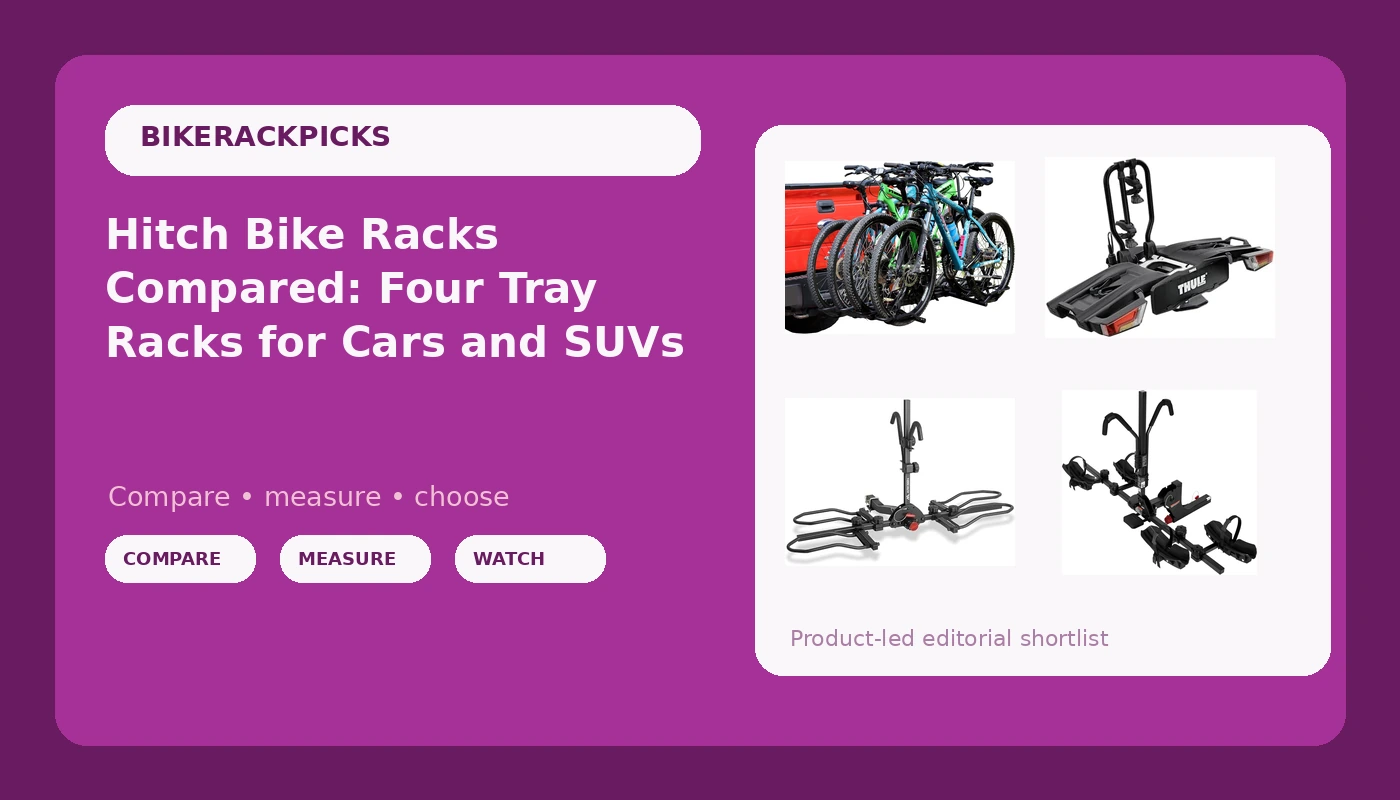
I have ridden out of Boulder for twelve years, and in that time I have owned eight bike racks. One was a trunk strap that scratched the paint on a car I still owed money on. One was a hanging rack that swung into a highway divider on I-70 with two bikes aboard. The tray rack on my car now took a deer strike on Highway 36 and kept both wheels true. That history is why I treat a hitch bike rack as safety equipment rather than cargo gear, and why this comparison spends more words on receiver size, per-bike weight limits, and tilt clearance than on styling.
The four racks below are platform-style carriers that mount in a hitch receiver, and they split into two camps. Two are built around heavy loads and wide tires, one is a four-bike family hauler, and one is a premium folding design from the brand people name first when they ask me what to buy. This is a hitch comparison only. I don't review roof racks, and RV or fifth-wheel setups use different weight and wind math.
The best hitch bike rack for most people here is the WEIZE 2 E Bike Rack, because it pairs a 2-inch hitch mount and a 160 lb capacity with clearance for tires up to 5.5 inches, a tilting and folding frame, and an integrated lock at a price that undercuts the premium tier. If you want fold-flat engineering and the resale value that comes with a Thule badge, the Thule 933B EasyFold XT 2bc is the other honest answer.
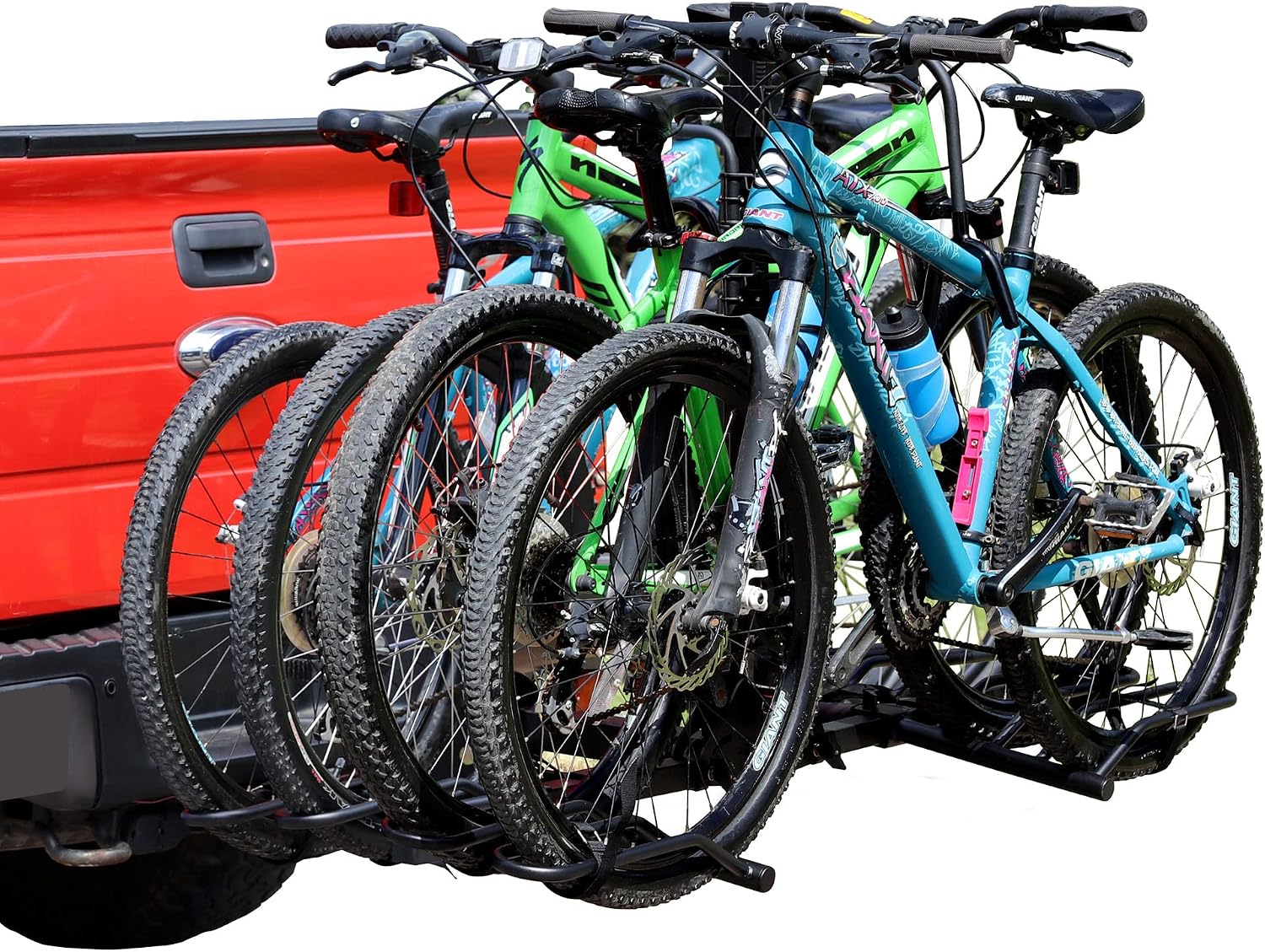
Young 4-Bike Rack Hitch Mount Platform Style Carrier
Four trays on a 2-inch receiver, 160 lbs total, enough for a whole family of road and gravel bikes
40 lbs per bike rules out e-bikes and downhill builds, and no tilt or lock is named
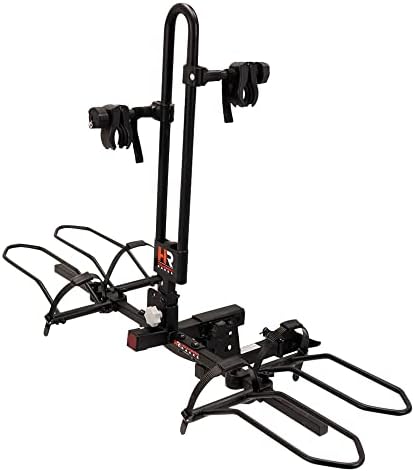
Thule 933B EasyFold XT 2bc
Fold-flat design that stores small, the quality tier most riders aspire to
13-pin connector needs a harness check, ships without the accessory pocket, premium money
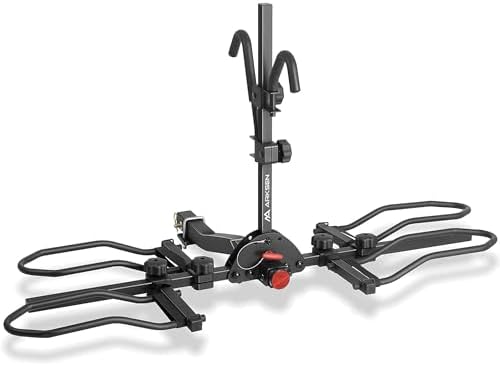
ARKSEN Hitch Bike Rack for 2 Bikes
75 lbs per bike is the highest per-bike limit in this group, so e-bikes and DH bikes fit
Only two bikes, 150 lbs total, and no tilt or lock is named
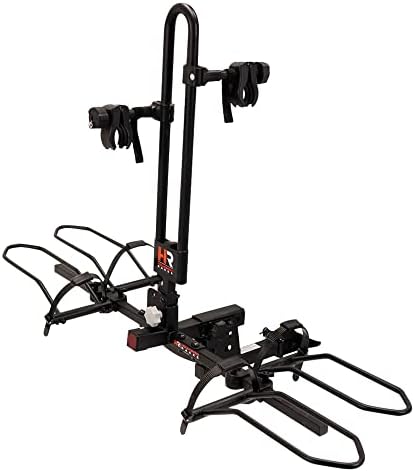
WEIZE 2 E Bike Rack Hitch Mounted
2-inch hitch, 160 lbs total, tires up to 5.5 inches, tilting and folding, lock included
Two bikes only, so a family of four needs two cars or a different rack
Prices and availability were captured from Amazon Creators API and may change.
What the specs tell you before you bolt anything on
Four numbers decide whether a rack works on your car, and three of them are printed right in the product name.
The first is receiver size. A 1.25-inch hitch limits you to light two-bike racks and adds wobble you can feel at highway speed. A 2-inch receiver is the real standard, and it is what the heavy tray racks are built around. Two of these listings name a 2-inch receiver explicitly. For the other two, confirm the receiver size before you order, because a rack that arrives with the wrong shank is a return and a wasted weekend.
The second is per-bike weight versus total weight. These are not the same number and the difference matters. A rack rated at 160 lbs total and 40 lbs per bike is a four-bike rack for road, gravel, and cross-country bikes. A rack rated at 75 lbs per bike is a two-bike rack that will carry a commuter e-bike or a downhill bike. If you put two 70 lb e-bikes on a rack rated at 40 lbs per bike, you have overloaded the trays regardless of what the total says.
The third is tray width. Tires up to 5.5 inches means fat bikes fit without adapters. That number is the single biggest gap between the cheap end of this category and the racks that get recommended to e-bike owners, and it is why I keep telling people that tray width is a spec, not a detail.
The fourth is the features that are named and the ones that are not. Tilt, fold, and lock are not cosmetic. A rack that tilts away from the hatch is worth real money on a weekly grocery run. A rack that folds flat is worth real money in a garage with a low ceiling. And a lock that comes in the box saves you a separate purchase.
Young 4-Bike Rack Hitch Mount Platform Style Carrier: the family hauler
Four bikes at 40 lbs each, 160 lbs total, on a 2-inch receiver. That is the whole pitch, and for a household with two adults and two kids on road or gravel bikes, it is a good one. Four trays mean no frame contact, no handlebars rubbing on saddles, and no arguing about who loads first.
The limit is the 40 lb per-bike rating. A carbon road bike, a gravel bike, and a couple of aluminum hybrids all live comfortably under that. An e-bike does not. Neither does a downhill bike with a coil shock. If your garage has one e-bike in it, this is the wrong rack.
The name also does not mention a tilt or a lock, so plan accordingly. Loading groceries around a rack that cannot tilt is a weekly annoyance, and a rack without a locking hitch pin or cable is a rack you will worry about in a parking lot.
ARKSEN Hitch Bike Rack for 2 Bikes: the heavy-bike option
Up to 75 lbs per bike, 150 lbs total, two bikes. That per-bike number is the highest in this group, and it is the reason this rack exists in the conversation. Two e-bikes, two downhill bikes, or one of each all fit inside the rating. Most tray racks in the affordable tier cap per-bike weight well below this, which is exactly where e-bike owners get burned.
The trade is capacity. Two bikes is two bikes, and a family of four needs a different plan. The listing name also does not name a tilt or a lock, so the same advice applies: verify what is in the box before you count on it, and budget for a locking hitch pin if one is not included.
At 150 lbs total, the math is simple. Two bikes at 75 lbs each is the ceiling, and you should weigh your bikes rather than guess, because a loaded commuter e-bike with a rack, fenders, and a lock on it can surprise you.
WEIZE 2 E Bike Rack Hitch Mounted: the value pick for fat tires and e-bikes
This is the one I would point most people toward. A 2-inch hitch, up to 160 lbs total, tires up to 5.5 inches, a tilting and folding frame, a wobble-free mounting claim, and a lock in the box. That is the feature list I would write myself if I were designing a rack for the way people actually ride in 2026, which is on wider tires and heavier bikes than they were ten years ago.
The fat tire clearance is the headline for me. Tires up to 5.5 inches covers fat bikes and most e-bike rubber without adapters, and adapters are where cheap racks get fiddly and where straps start scratching rims. The tilt function matters for the same reason I keep harping on it: a rack that swings away from the hatch turns a two-minute grocery stop into a two-minute grocery stop instead of a five-minute negotiation.
Two caveats. First, it carries two bikes, so this is not the family-of-four answer. Second, 160 lbs total means a pair of 80 lb e-bikes is the ceiling. Weigh your bikes. And on any tilting rack, test the tilt with a bike loaded before you rely on it at a trailhead, because a tilt mechanism that only works empty is not a tilt mechanism.
Thule 933B EasyFold XT 2bc: the premium folding rack
Thule owns the quality tier in this category, and the EasyFold name tells you what you are paying for: a rack that folds down small enough to store on a shelf instead of living on your car year round. For anyone in a condo or a garage with a low ceiling, that folding geometry is the whole argument.
Read the listing name carefully before you buy, though. It specifies a 13-pin connector, which is the European lighting plug rather than the flat 4-pin or 7-pin harness most North American vehicles use. That is the first thing to confirm against your car, because it is not a detail you want to discover in the driveway. The name also says it ships without the pocket for the carrier and poles, so do not expect the accessory pocket that some EasyFold variants include.
The load rating is not spelled out in the supplied name either, so treat the capacity as something to verify on the listing rather than assume. What you are buying here is engineering, fold-flat storage, and resale value. Whether that is worth the premium depends entirely on how often you actually haul bikes, and that is a question only you can answer.
The trade-offs nobody puts on the box
Capacity and weight fight each other. A four-bike rack is a long lever hanging off the back of your car, and every tray you add moves the load further from the hitch. That is why the four-bike option here is rated at 40 lbs per bike while the two-bike racks go higher. It is not stinginess, it is physics.
Tilt clearance is the feature people skip and then regret. If your hatch swings up and your rack does not swing away, you are unloading bikes to get to the groceries. One of these racks names tilt and fold. The others do not, so verify before you buy.
Locks are the same story. One rack names a lock in the box. For the rest, a locking hitch pin and a cable are a small purchase that turns a rack from a thing you worry about into a thing you leave on the car. My pet peeve in this category is a lock design that uses one key across four bikes, because it means one cut cable frees everything.
And on the fat bike and e-bike front, watch the tray widths. That is the segment that is growing, and it is where the mid-tier factories are putting their tooling money. I expect the affordable tray rack of 2027 to have the build quality of today's mid-range, and 2-inch hitch standardization to finally put the 1.25-inch confusion out of its misery.
Which rack for which rider
If you have a 2-inch hitch, two bikes, and you ride gravel or road most weekends, the WEIZE 2 E Bike Rack is the pick. Fat tire clearance, tilt, fold, and a lock at a price that leaves money for the bikes.
If your garage has e-bikes or downhill bikes in it, the ARKSEN rack's 75 lb per-bike limit is the number that matters most. Two bikes, heavy ones, no drama.
If you are hauling a family of four on lighter bikes, the Young 4-Bike Rack is the practical answer, as long as every bike in the house stays under 40 lbs.
If you want the fold-flat design, the brand reputation, and the resale value, the Thule 933B EasyFold XT 2bc is the premium choice, with a harness check on that 13-pin connector before you order.
The bottom line
Every rack in this comparison is a platform rack, and that is not an accident. Trays hold bikes by the wheels, protect carbon frames, and load the same way in the dark after a long ride. The differences come down to how much weight each tray will take, how wide a tire fits, whether the rack tilts away from your hatch, and whether a lock is included. Match those four specs to your actual bikes and your actual hitch, and you will end up with a rack you leave on the car instead of one you dread mounting.