Related: Tray Racks vs Hanging Racks: Why I Stopped Trusting Straps
I have owned eight bike racks in twelve years. One scratched the paint on a car I was still paying for, one swung into a highway divider with two bikes on it, and one survived a deer strike at speed. That is the whole education. So this bike rack comparison starts where I start every purchase: what is the rack holding, and what is holding the rack?
There are four ways to carry or store a bike, and they are not interchangeable. A hitch tray rack is the standard for anything you care about. A trunk strap rack is for occasional trips with a bike you can afford to lose. A tailgate pad is for pickup owners who shuttle. A vertical wall mount is for the garage, not the highway. Pick the wrong category and no amount of re-tightening fixes it. Pick the right one and the rack disappears into the background of your weekend.
Here is how the four racks I would actually consider break down, plus the questions I ask before I hand over a card.
Best Overall: MaxxHaul Platform Bike Rack for 2 Bikes
This is a hitch-mounted platform carrier for two bikes, and it is built for 2-inch Class III and IV receivers. That single spec matters more than everything else on this page. A 2-inch receiver is the real standard: it holds the rack body steady, it takes the load of two bikes plus the rack itself, and it is the difference between a rack that tracks straight at 75 mph and one you spend the whole drive watching in the mirror.
The tray layout is what makes it the default recommendation. Bikes sit in adjustable tire cradles, so the wheels carry the weight instead of the frame, and the cradles move to fit different wheelbases. The foam padded hooks give you a soft second point of contact if you want the extra security. If you ride carbon, this is the category you belong in. Hanging racks hook a frame by the top tube, and carbon top tubes do not forgive that.
Before you buy, check four things in the listing, because these are the details that separate a rack you love from a rack you tolerate: whether it tilts away from the tailgate with bikes loaded, how far apart the cradles sit so your two bikes do not trade bar ends, whether the cradle spacing clears a fat tire if you own one, and whether the included lock uses one key or four. I have returned racks over the last two.
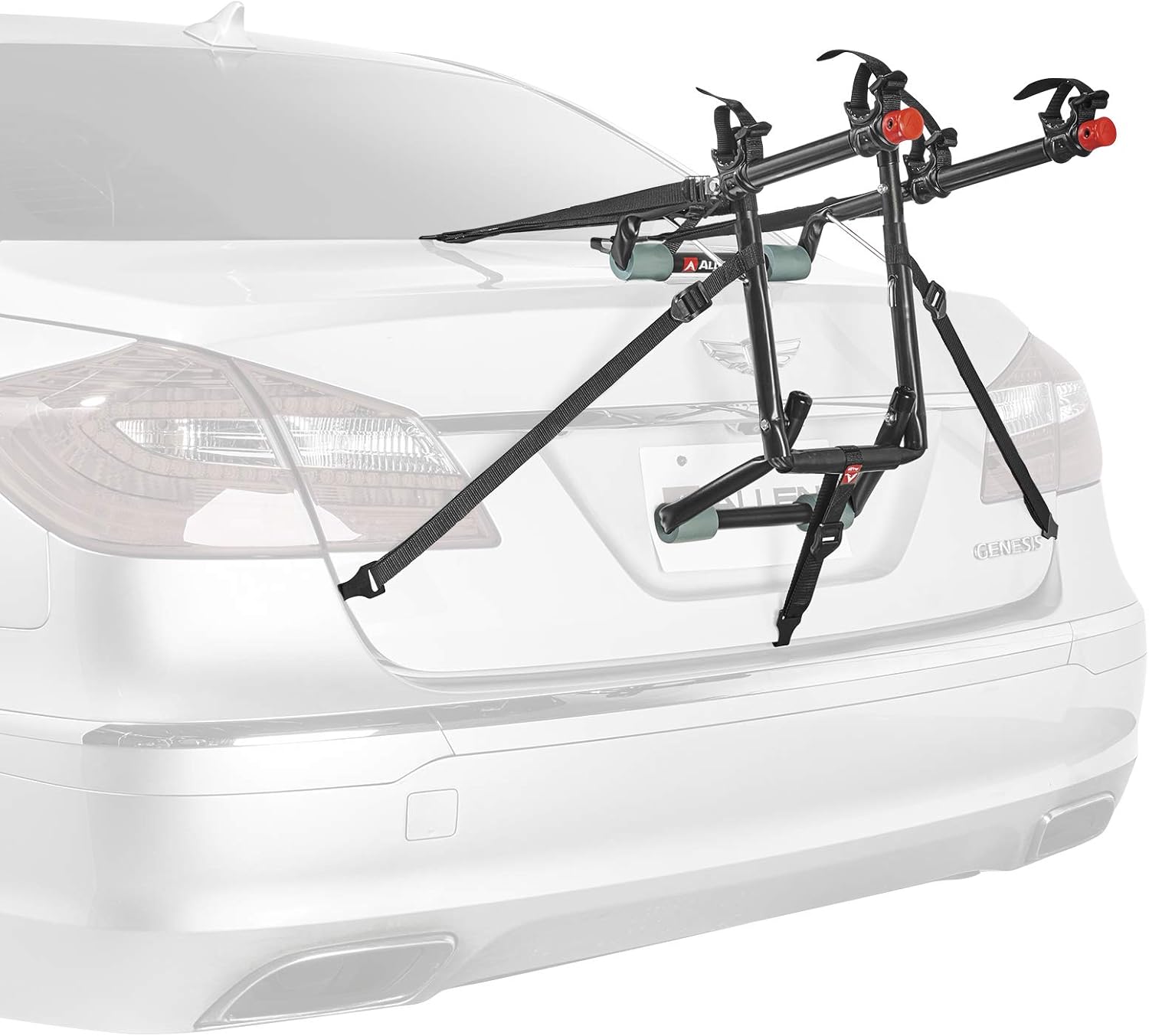
Best for Occasional Use: Allen Sports Premier 2-Bike Trunk Rack, Model S102
I am going to be blunt, because I have been the person who ignored this advice. A trunk rack is a compromise. It hangs bikes off straps and padded feet pressed against your trunk lid, which means paint wear where the pads sit, movement in a crosswind, and taillights you can partially block. The straps stretch. The whole assembly shifts when you hit a bridge expansion joint at speed. I watched mine move in the mirror for two hours and hated every minute of it.
That said, this category has one real job, and the Allen Sports S102 does it. It carries two bikes, it mounts to the trunk of almost any sedan or hatchback, it needs no hitch, and it stores flat in a closet. If you take a bike somewhere twice a summer, you drive a leased sedan, and the bike is an aluminum hybrid you bought used, this is the honest answer and the money is better spent on a tune-up.
Where I draw the line: no carbon, no expensive road bike, and no long highway trip. If your bike is worth more than your deductible, move up to the tray rack. Also, check that the straps clear your spoiler and that the feet do not sit on a plastic bumper cover, because plastic flexes and paint under it cracks.
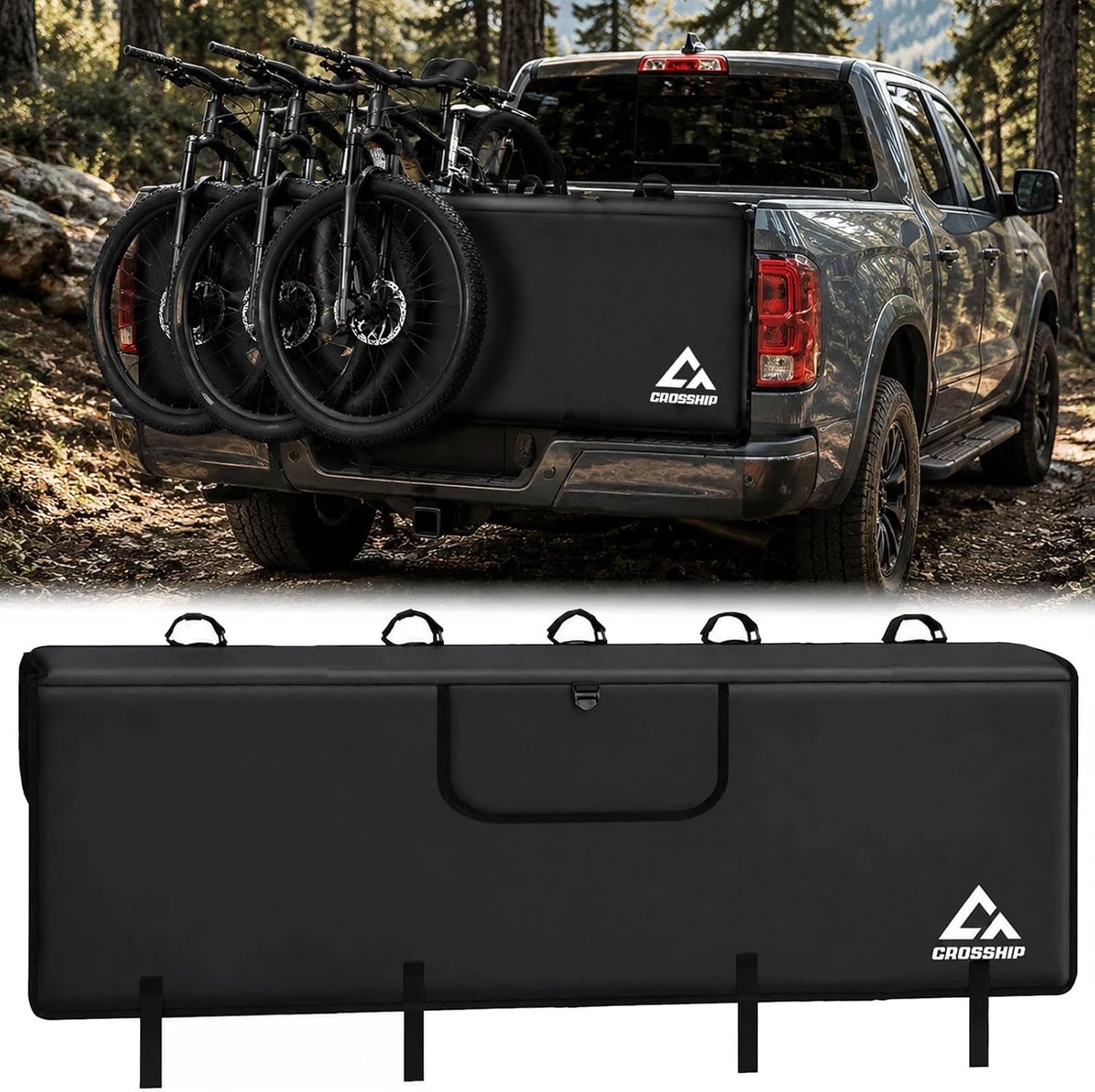
Best for Pickups: Tailgate Bike Pad
If you own a pickup, this is the cheapest and most useful thing on the list. The pad drapes over the tailgate, protects the tailgate paint from fork lowers and pedals, and protects your frames from the sharp metal edge they would otherwise rest against. You get the bed space back, you skip the hitch entirely, and setup takes seconds.
Understand what it is, though. A pad is protection, not a mounting system. Bikes lean against each other, front wheels hang over the edge, and nothing is locked. It is perfect for shuttle laps, trailhead runs, and truck bed life. It is not what I would use for a four-hour interstate drive with two carbon frames, because the bikes will rub each other and a pad will not stop that.
Check two things before buying: that the pad is sized for your tailgate width and that your down tubes are not a shape that will chew through the padding at the contact points. If you want the bikes standing upright instead of leaning, that is a different product and a different conversation.
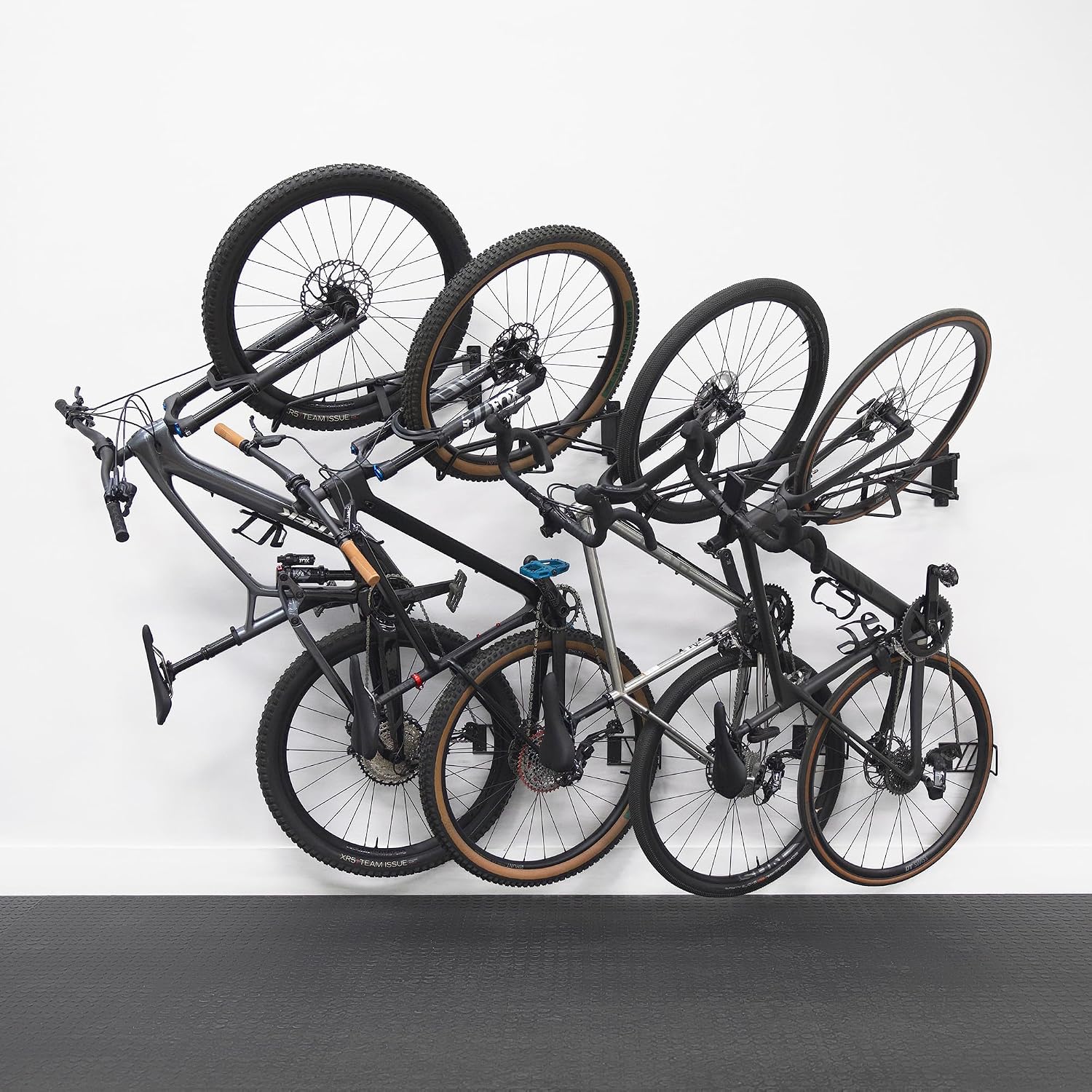
Best for the Garage: SwivelStow Adaptive Vertical Wall Mount
This one is not a car rack and I want to be clear about that, because half the people shopping for racks are actually shopping for storage and do not know it yet. The SwivelStow is a vertical wall mount for MTB, gravel, and road bikes, and the name tells you the two things that matter: it swivels, so you can rotate the bike flat against the wall and walk past it, and it is designed so you do not have to lift the bike overhead to hang it.
That last point is the one nobody appreciates until they have tried to hoist a loaded mountain bike above their head in a cold garage. Vertical storage is the difference between a garage you can park in and a garage with a bike lying across the floor.
For a Boulder apartment or a one-car garage, this is the highest-value rack on the list. Mount it into studs, check the weight rating and the stud spacing in the listing before you drill, and measure your ceiling height first, because a vertical bike is taller than you think. Do not buy a storage mount and expect it to carry a bike down I-70.
How I judge these racks
I run every rack through the same three checks, and none of them happen in a showroom.
The load test. How long does it take to mount the rack and load two bikes, start to finish, in the dark, after a ride, with a headlamp on? A rack that takes thirty minutes to install gets used half as often, and that is a spec whether the manufacturer prints it or not. Wheel straps that need two hands, cradles that fight you, hooks that only reach one position: all of it shows up here.
The highway run. Wobble at 75 mph is the number I care about. Not the number in the brochure, the movement I can see in the mirror and feel through the steering wheel. I check camera visibility too, because a rack that hides the backup camera is a rack you will start hating on day three. And I check whether the rack tilts away from the hatch with the bikes still loaded, because a tilt feature that only works empty is decoration.
The buyer's chair. Then I sit down and ask who this is actually for. A weekend gravel rider with a 2-inch hitch and a carbon frame should buy the tray rack and stop reading. A sedan owner who hauls twice a year should buy the trunk rack and put the savings into tires. A truck owner shuttling with friends should buy the pad. Anyone with a small garage should buy the wall mount before they buy any of the others.
The bike rack comparison table
| Rack | Type | Mount | Bikes | Best for | Price |
|---|---|---|---|---|---|
 Visit on Amazon → Visit on Amazon →MaxxHaul Platform Bike Rack |
Hitch tray | 2-inch Class III or IV | 2 | Daily hauling, carbon and gravel bikes | $109.99 |
 Visit on Amazon → Visit on Amazon →Allen Sports Premier Trunk Rack |
Trunk strap | None | 2 | Occasional trips, no hitch on the car | $158.09 |
 Visit on Amazon → Visit on Amazon →Tailgate Bike Pad |
Tailgate pad | Truck bed, no hitch | See product | Shuttle laps and trailhead runs | $64.99 |
 Visit on Amazon → Visit on Amazon →SwivelStow Vertical Wall Mount |
Garage storage | Wall studs | See product | Small garages and apartments | $249.99 |
Analysis: what the table actually tells you
The category is the decision. Everything after that is fit and finish.
Tray racks cost more because they are doing more work. They tie into the chassis through a hitch class receiver, they carry bikes by the wheels, and they keep frames out of the load path. That is why the MaxxHaul is the one I would put behind a car I care about. The adjustable cradles and padded hooks are the parts that make it liveable, because a tray rack that fights you at the trailhead is a tray rack you leave in the garage.
Trunk racks are a category with a narrow, honest use case. The Allen Sports S102 fits cars with no hitch, stores in a closet, and costs less than a good set of tires. It also puts rubber feet on your paint and straps under tension near your rear glass. If you accept that trade, it works. If you do not, buy the hitch.
Tailgate pads win on value and lose on protection from each other. The pad here does exactly what its name says, protecting the tailgate and the frames at the contact points. It does not stop two bikes from rubbing shoulders, and it does not lock anything. For a truck owner running shuttles, that is fine.
The wall mount is the sleeper. The SwivelStow is solving a problem the other three do not touch: floor space. If you are storing a bike indoors, a no-lift vertical mount with a swivel is worth more day to day than any car rack, because you use it every single day.
One pattern I keep tracking: tray racks keep getting cheaper as the mid-tier factories improve their tooling, and 2-inch hitches keep replacing 1.25-inch receivers as the default. Both of those trends favor the buyer. The tray rack keeps winning for the same reason it always did, which is that wheels are stronger than top tubes.
Should you buy the MaxxHaul Platform Bike Rack?
Yes, if you have a 2-inch Class III or IV hitch and you ride anything you would be upset to lose. The platform layout, adjustable tire cradles, and foam padded hooks are the right design for two bikes, and the 2-inch mount is the right foundation. This is the rack I would put behind a gravel bike on a 200-mile drive, and it is the one I would tell a friend to buy without hedging.
Should you buy the Allen Sports Premier Trunk Rack?
Only for the narrow case it was built for: no hitch, occasional trips, a bike you are not precious about. It mounts to almost any trunk, it carries two bikes, and it stores flat. It will also put pressure on your paint and move in the wind, and no trunk rack I have used has ever solved that. If you are hauling carbon, skip it.
Should you buy the Tailgate Bike Pad?
If you drive a pickup and you shuttle, yes. It protects the tailgate and your frames for a fraction of what a hitch setup costs, and it takes seconds to throw on. Just go in knowing it is padding, not a rack, so bring your own straps and expect the bikes to lean.
Should you buy the SwivelStow Vertical Wall Mount?
If your problem is the garage floor rather than the highway, this is the one. A no-lift vertical mount that swivels flat against the wall turns dead space into bike storage, and it is the rack on this list you will touch more often than any other. Measure your ceiling, find your studs, and check the listing for the weight rating before you commit.
The short version: buy the tray rack for the car, the wall mount for the garage, the pad if you own a truck, and the trunk rack only if none of those fit your life yet.