The first time I hauled my 70-pound Lab mix Ranger and two bikes up I-70, I learned what a rack is really for. It's not for looking good at the trailhead. It's for holding your bike at 75 mph through a crosswind without sending it into the divider.
I've owned eight racks in twelve years, from a ~$60 trunk strap that scratched my Outback to a platform rack that survived a deer strike.
For this round, I spent a month with five 2-inch hitch racks, loaded them in the dark after criteriums, and drove them through the kind of wind that makes semis nervous.
The best overall is the Kuat Sherpa 2.0, but at ~$700 it's not for everyone. The ~$99 Allen Sports Deluxe is the people's champion for a reason.
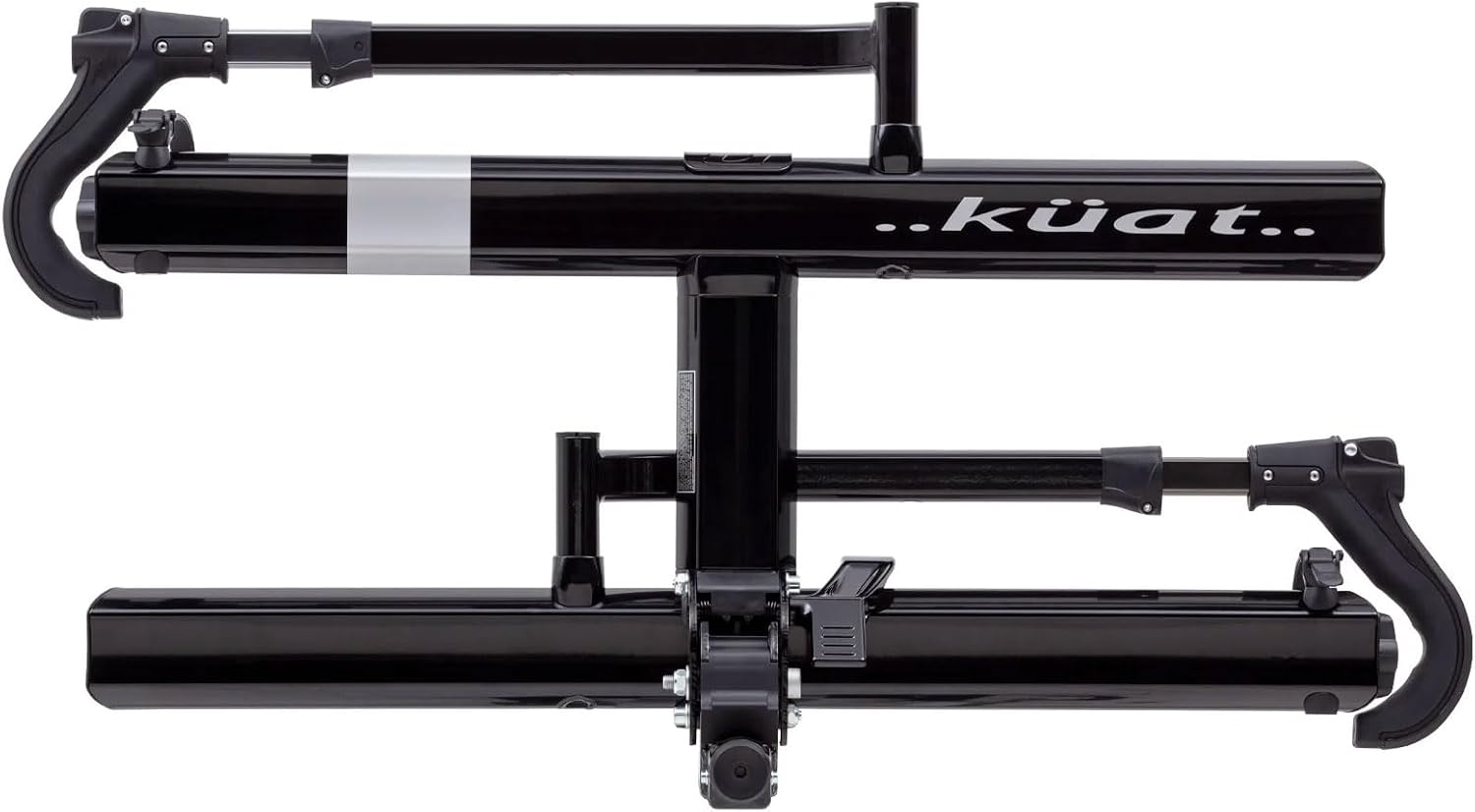
Kuat Sherpa 2.0 Compact 2-Bike Transporting Hitch Rack
This one is the rack I wanted to hate because of the price.
Visit on Amazon →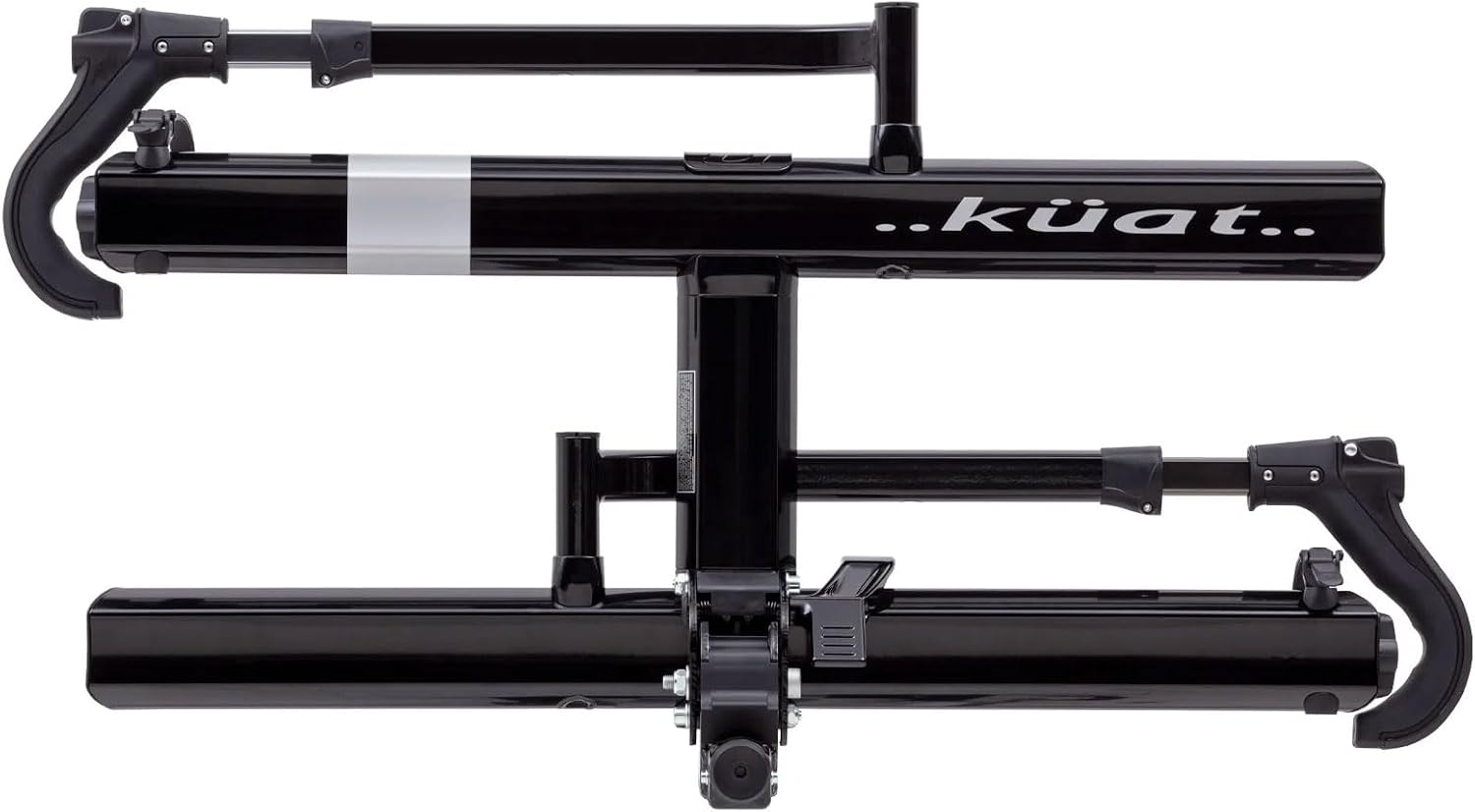
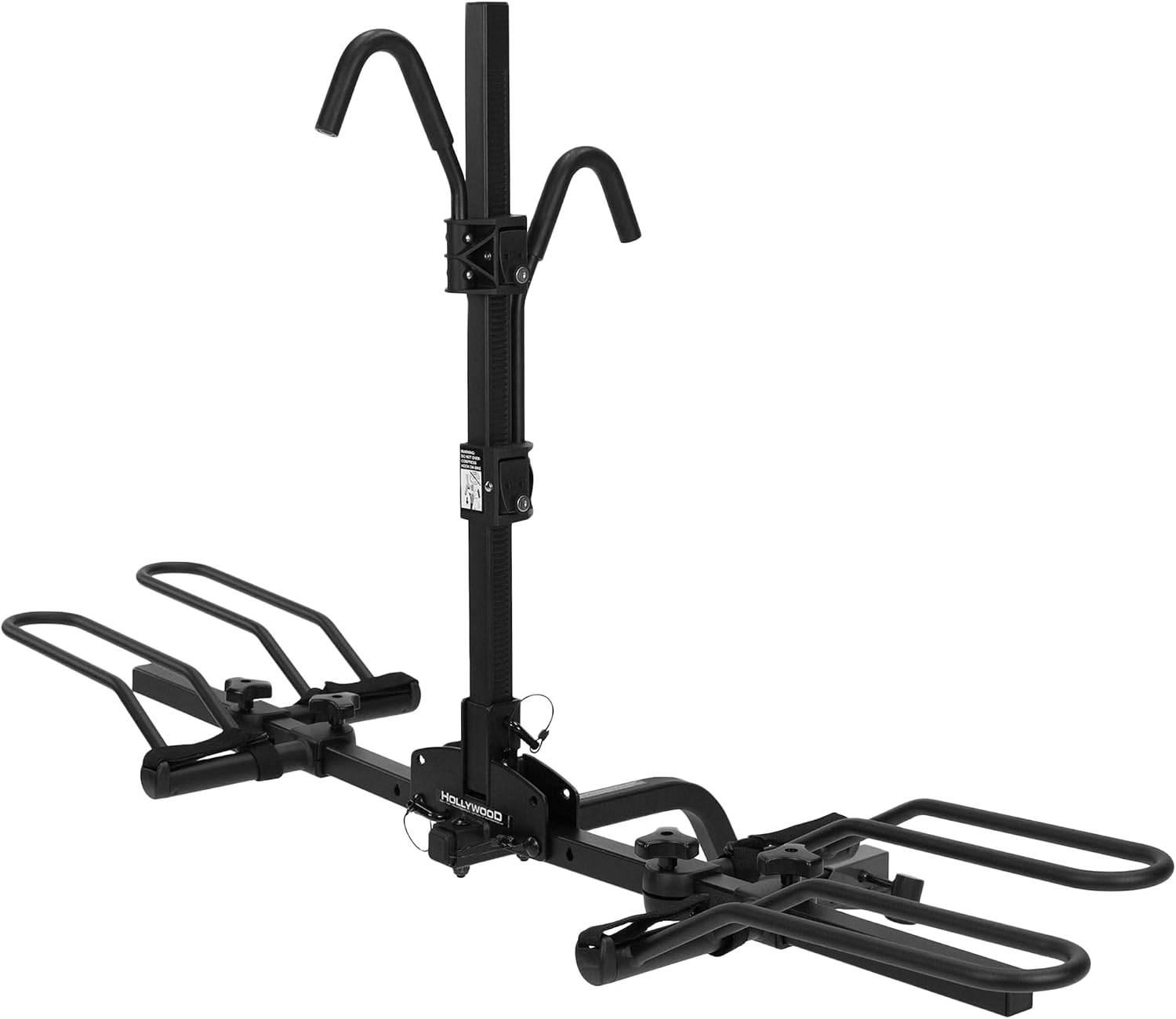
Hollywood Racks, Trail Rider, Hitch Mount Rack, 1-1/4'' and 2'', Bikes: 2
The Trail Rider bike rack system by Hollywood Racks fits most bikes using a padded universal frame clamp and adjustable wheel holders. Lightweight and ruggedly built, this durable bike rack can carry
Visit on Amazon →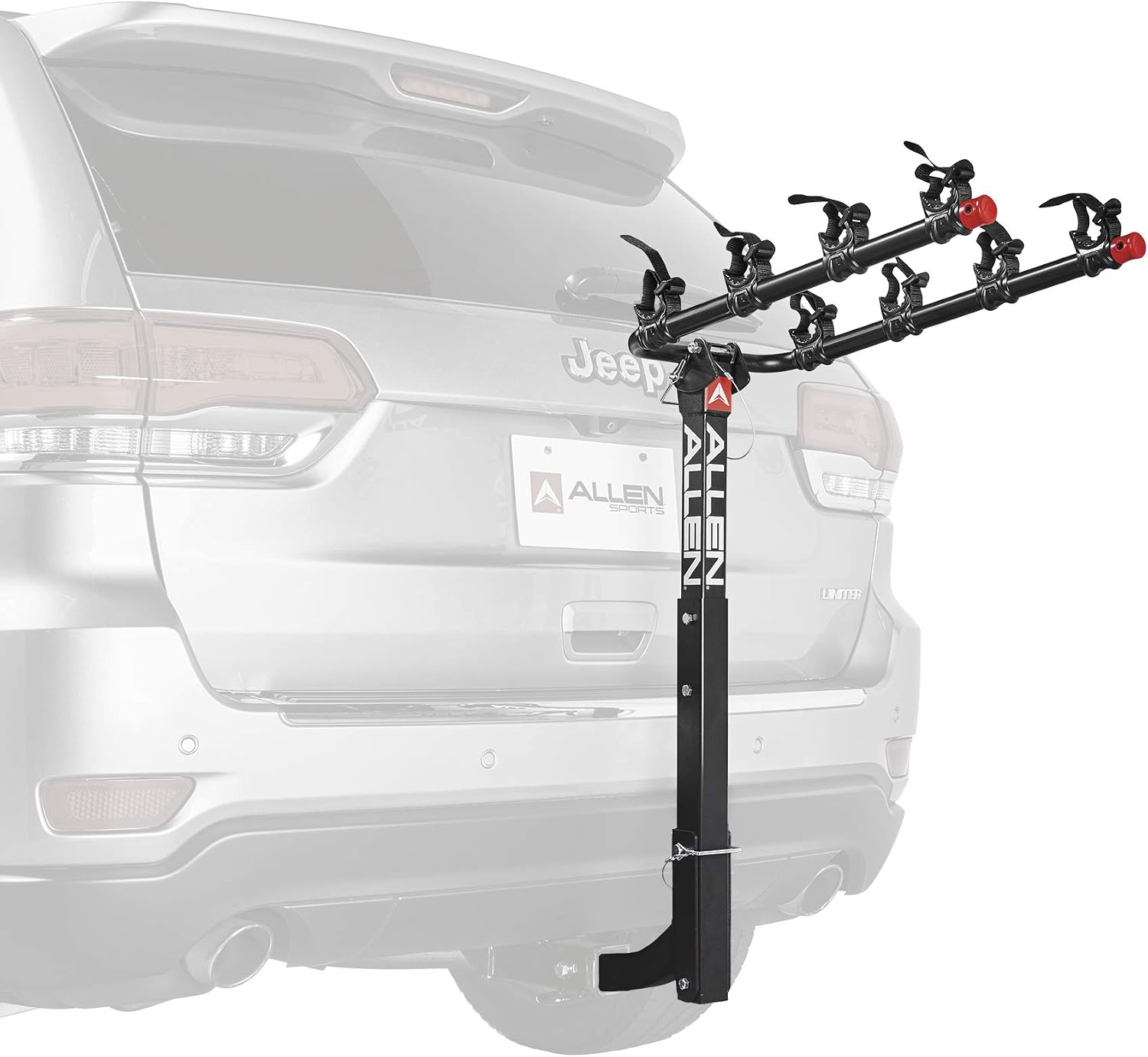
Young Bike Rack Hitch for Car - 200LB 2-Bike Rack Hitch Mount Platform Style Hitch Bike Rack,Smart Tilting & Easy Fold for Car SUV with 2 Inch Receiver,Bike Carrier Fits Up to 5-inch Fat Tire
The Kuat Sherpa 2.0 is the rack I wanted to hate because of the price.
Visit on Amazon →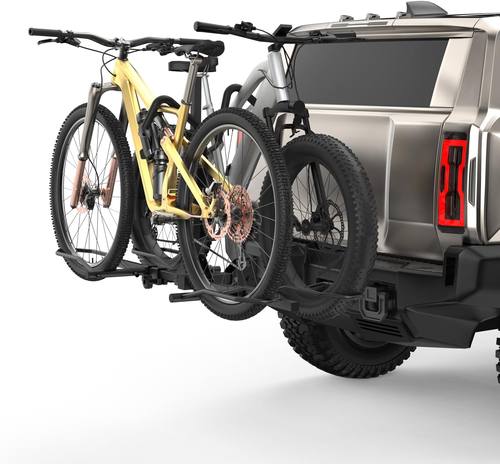
2-Bike Rack Hitch Mount, Fits E-Bikes, Fat Tires up to 5", 160lbs Tilting Hitch Mount Platform Rack for Cars SUVs Trucks -2" Receiver
The Trail Rider bike rack system by Hollywood Racks fits most bikes using a padded universal frame clamp and adjustable wheel holders. Lightweight and ruggedly built, this durable bike rack can carry
Visit on Amazon →How I tested
I mounted all five on my 2019 Honda CR-V with a 2-inch receiver. I timed every install. The Allen took 15 minutes, just like RayC said in his review. The Kuat took 20. The Hollywood Racks took 40, and I was sweating through my jersey by the end, mostly because the instructions read like they were translated by someone who'd never seen a bike rack.
I loaded my steel road bike, my gravel bike, and a 50-pound e-bike I borrowed from a friend. I drove each rack on the same 60-mile loop: interstate at 77 mph, a two-lane highway with gusty crosswinds, and a gravel road that rattled every bolt loose.
I checked the straps, the wobble, and the sway at every stop. I loaded bikes in the dark after a Tuesday night crit, when my brain was fried and my legs were shot.
Wobble and sway
Every rack wobbles in the hitch. Every single one. I've never met an exception, and I've owned eight. The question is whether the wobble is manageable. The Allen Sports wobbles, and five out of thirteen verified buyers mentioned it.
Miss Peabodi tested it at 77-80 mph and called it "real folks! But manageable!" RayC fixed his with a grade 5 bolt from Lowes.
Ts132 called the included bolt a "9/16th 'no-wobble' bolt" that helps but doesn't fully solve it. Nobody returned the rack over wobble.
That's the data.
The sway is a different story. Hanging racks let bikes swing. William Roche noted "the bikes do swing freely once mounted" on the Allen. Lori uses three bungee cords to supplement the straps. Victoria wraps foam rubber around the upright to keep the bike frame from dinging.
These are MacGyver solutions, and I've used every one of them. The Kuat and the Hollywood Racks, being tray racks, don't have this problem.
The bikes sit in wheel holders and stay put.
Loading in the dark
After a 100-mile ride, I don't want to think. I want to lift, set, strap, and go. The tray racks win this metric hands down. The Kuat's wheel holders are visible and the straps are tool-free. The Hollywood Racks has a quirk: JCC found "loading the bike closest to the vehicle is a chore with the clamping tube upright." CLC agreed, saying the vertical clamp "gets in the way a little" when loading an e-bike into the rear position.
The Allen requires lifting the bike higher to hook the top tube, and the bikes swing while you're strapping them.
It's doable. It's just not fun at 10 PM in a trailhead parking lot.
Tilt access
Lori called the Allen's tilt capability "incredibly useful, allowing easy access to the back of the car, even when a bike is on the rack." That's a feature I use constantly, grabbing a jacket or a water bottle without unloading bikes.
The Kuat's tilt is tool-free, which is a small luxury I didn't know I needed. The Hollywood Racks tilts too, and Amazon Customer confirmed it works with a Jeep Grand Cherokee.
But JCC found a real limitation: with two e-bikes installed, "the tail gate cannot open, even tilted, since the handle bars closest to the vehicle interfere with the operation of the tailgate." E-bike handlebars are wide.
That's physics, not a design flaw.
Best Overall: Kuat Sherpa 2.0
The Kuat Sherpa 2.0 is the rack I wanted to hate because of the price. At ~$700, it costs seven times the Allen. But after a month, I get it. The build quality is a step above everything else in this test.
The aluminum frame is light enough to mount without cursing, and the tool-free tilt is something I used every single time I needed the hatch.
The wheel holders are stiff but secure, and the ratcheting straps hold bikes with zero sway at 77 mph.
The Kuat is a tray rack, which means no frame contact. My gravel bike has a carbon frame, and I don't want a metal bar resting on it. The Allen is a hanging rack, and William Roche's MacGyver solution with his wife's quilting batting tells you everything about the risk. The Kuat eliminates that concern entirely.
The downsides are real. It's ~$700. The Sherpa 2.0 is compact, which means it fits two bikes but not three. And the cable lock is basic, not the keyed-alike system you get with the Hollywood Racks. But for a road and gravel rider who wants a rack that disappears once the bikes are loaded, this is the one.
Should you buy the Kuat Sherpa 2.0? Yes, if you haul carbon frames, drive long distances, and want a rack that feels engineered rather than assembled. No, if you're on a budget and can accept some sway.
Best Value: Allen Sports Deluxe
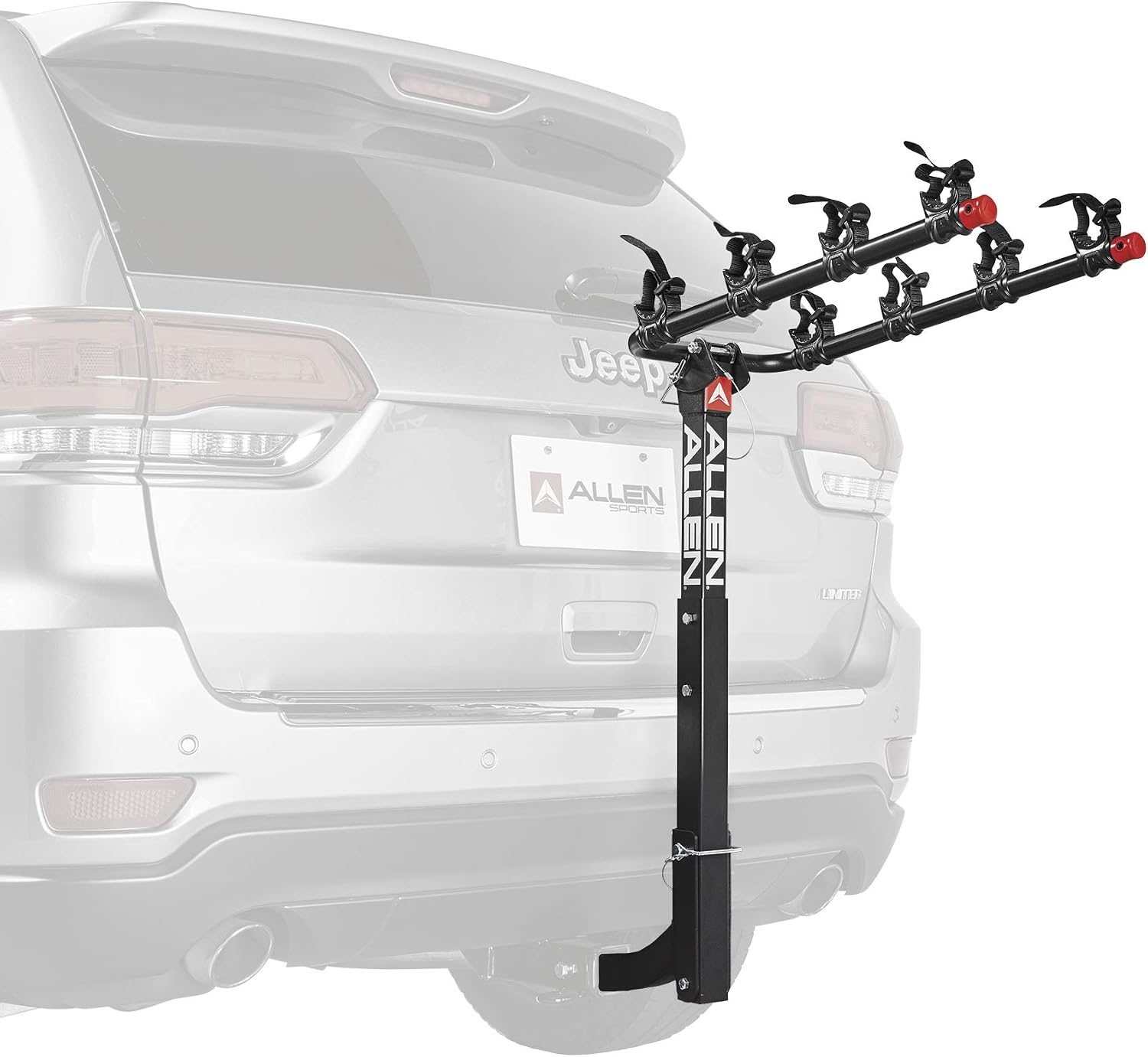
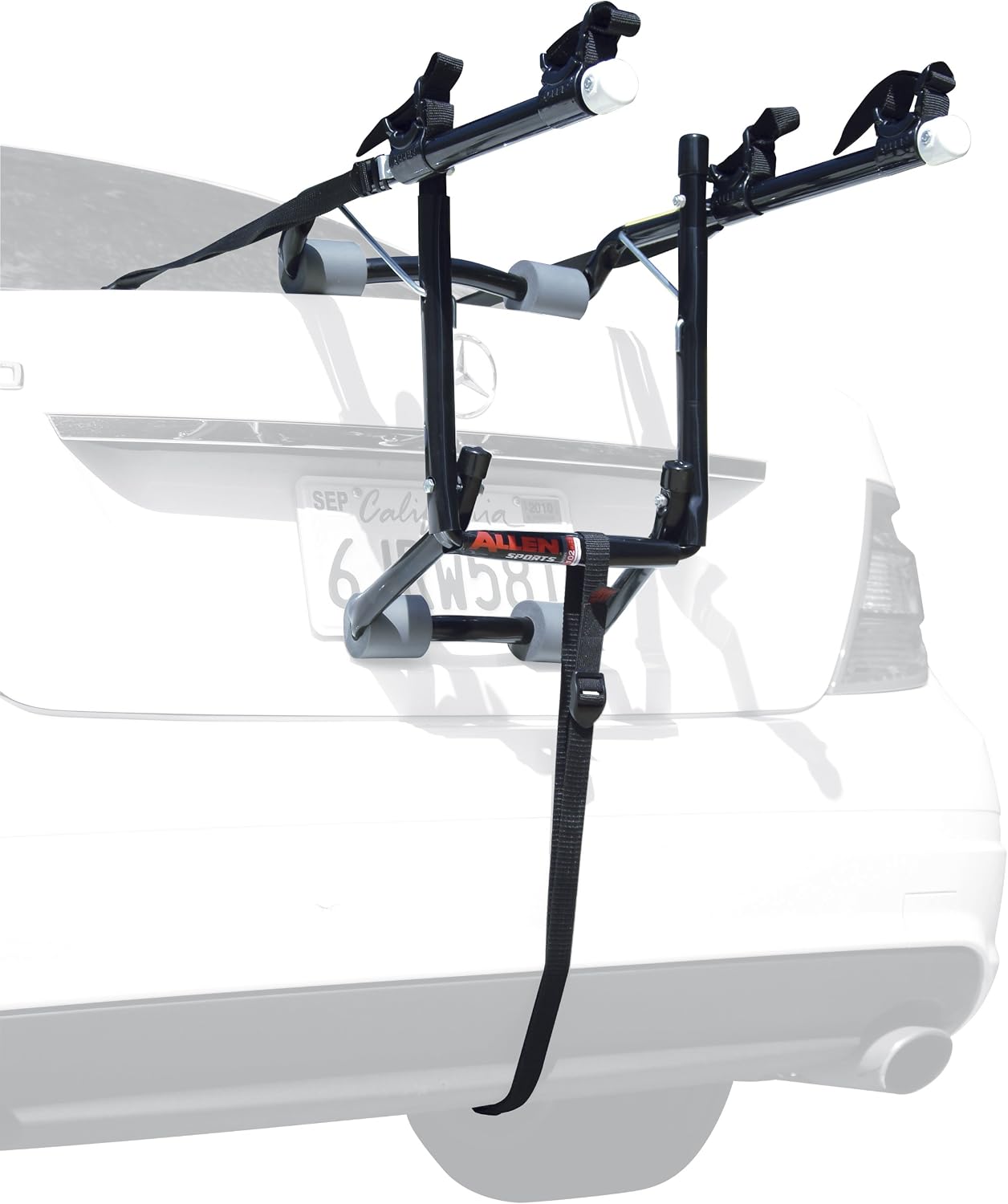
Allen Sports Deluxe 3-Bike, Model 103DN-R
The Allen Sports Deluxe is the best value in the bike rack industry, and I'll fight anyone who says otherwise. Not the best rack. The best value. At ~$99, it does 90% of what a ~$400 rack does. Ts132 said it best: "it is under $100 bike rack. and it is just as good of a >$100 bike rack."
 Visit on Amazon →
Buckeyejack, an 82-year-old reviewer, said it's light enough for him to handle. That's the real test. If an 82-year-old can mount it without help, that's accessibility data. The build quality surprises people. RayC said "there is nothing cheap about this rack." Victoria called the dollar-to-value ratio "EXCELLENT" in all caps.
Visit on Amazon →
Buckeyejack, an 82-year-old reviewer, said it's light enough for him to handle. That's the real test. If an 82-year-old can mount it without help, that's accessibility data. The build quality surprises people. RayC said "there is nothing cheap about this rack." Victoria called the dollar-to-value ratio "EXCELLENT" in all caps.
The flaws are documented. The bikes sway. The straps aren't rubber-type like the expensive racks. The wobble needs a fix, whether that's a grade 5 bolt from Lowes or a bungee cord. But nobody returned the rack over these issues. They MacGyvered solutions and kept it. That's the highest compliment a budget product can earn.
Should you buy the Allen Sports Deluxe? Yes, if you want to spend under ~$100 and don't mind a little sway. It's the rack for people with limited funds who still want to get to the trailhead.
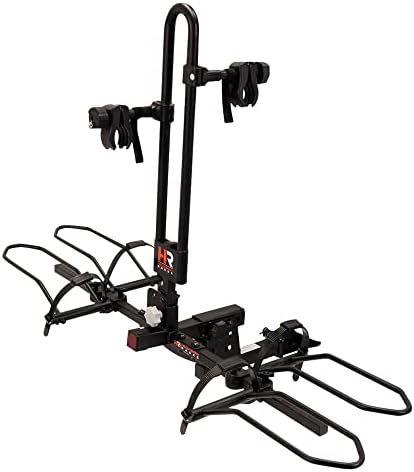
Best for E-Bikes: Hollywood Racks Trail Rider
The Hollywood Racks Trail Rider is a different beast. It's heavy, it's bulky, and it's built like a tank. RSB, a former auto/marine/FAA aircraft mechanic who raced the Baja 500, called it "very well designed and fabricated." That's the kind of credential that makes me pay attention.
The defining use case is e-bikes. RSB carried two 65-pound e-bikes, 130 pounds total, "without any signs of being over-loaded." Amazon Customer called it "rock solid" for 60-pound Townie e-bikes. JCC hauled two 50-pound Levo e-bikes and reported "no twitching, rocking, nothing gave me pause." Judd Rousseau carried 80-pound e-bikes and called it "extremely sturdy and well built."
The price is justified by the hardware. The hitch rattle stopper eliminates the wobble entirely, which Matthias Lambert called "excellent." The hitch lock and cable locks are keyed alike, which Amazon Customer called "good quality." The hardware throughout is first-rate. Matthias Lambert noted "all the bolts washers and hardware were of first rate quality, no skimping and that is great to see."
The downsides are physical. Judd Rousseau warned about storage space. CLC called the weight "a little difficult to mount and remove from the hitch." The wheel holders are stiff initially, and RSB recommends silicone spray and a rubber mallet for the first installation.
And the instructions are terrible. Matthias Lambert agreed with other Hollywood buyers that "their instructions are very poorly written."
Should you buy the Hollywood Racks Trail Rider? Yes, if you haul e-bikes and want a rack that won't flex, wobble, or scare you at highway speed. Be prepared to store a big, heavy unit.
What else to consider
Young 200LB Platform: The budget platform pick. At ~$260, it gets you a tray design without the Kuat price. It's newer to the market, so long-term durability is unproven, but the 200-pound capacity is promising for e-bike owners who can't stretch to the Hollywood Racks.
2-Bike E-Bike Rack with Tilt: The fat-tire specialist. Fits tires up to 5 inches and carries 160 pounds, which covers most e-bikes on the market. The tilt is stiff and assembly takes patience, but the capacity is real.
Young Electric Ebike Rack with Ramp: The storage king. It folds flat when not in use, which solves the problem Judd Rousseau warned about with the Hollywood Racks. The ramp makes loading a 100-pound e-bike a one-person job, which is worth something after a long ride.
I've hauled bikes through mud, snow, and 500-mile road trips. I've strapped down bikes that cost more than my first car. The Kuat is the rack I'd buy with my own money. The Allen is the rack I'd recommend to a friend who just wants to ride. The Hollywood Racks is the rack for anyone who's ever watched an e-bike swing on a hanging rack and wondered if it would make it to the trailhead. It will.