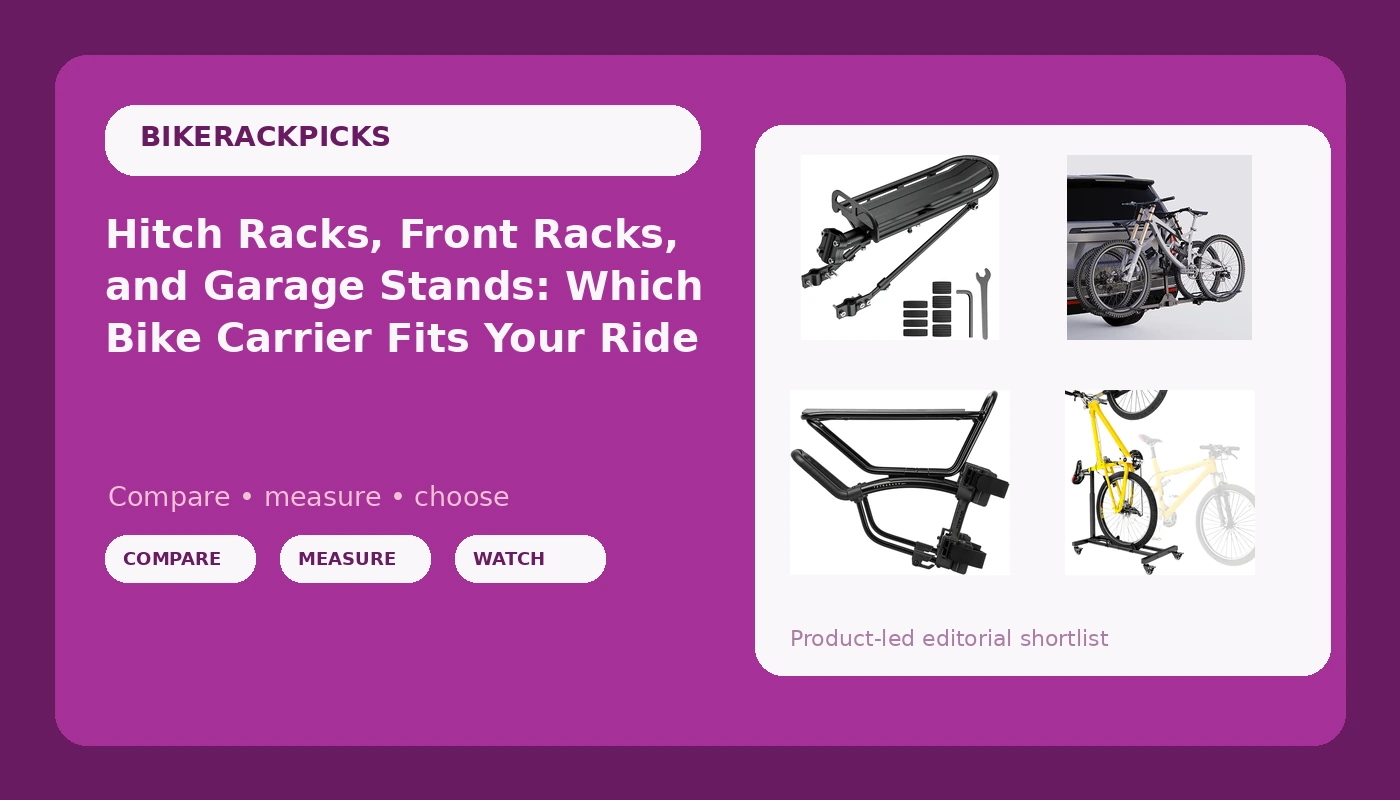
Four products ended up in this comparison because they answer four different versions of one question: how do you get a bike somewhere, or get it out of the way when you are not riding it. I'm Simone, I ride road and gravel out of Boulder, and twelve years and eight racks have taught me that the hardest part of any bike rack and storage solutions decision is admitting which job you actually have. A hitch carrier, an on-bike front rack, a garage stand, and a cheap seat-post rack do not compete with each other, and buying the wrong category is how people end up with a rack that lives in the corner of the garage.
Related: Hitch Rack Vs Trunk Rack: What Actually Survives A Highway Run
The short answer: if you drive to your rides, the TANX 2-bike hitch rack is the one that carries real weight, because a 2-inch receiver and a 160 lb rating is the only spec on this list that keeps two heavy bikes off the highway. If you ride to your rides, the Topeak TetraRack GR1 is the one that turns a gravel bike into a cargo bike. The vertical stand solves storage, not transport, and the Outtag rack is a commuter accessory that has nothing to do with your car.
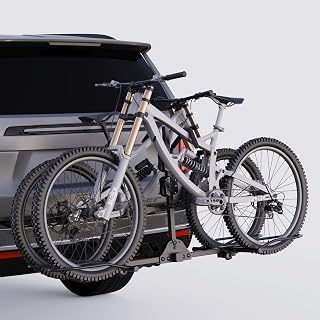
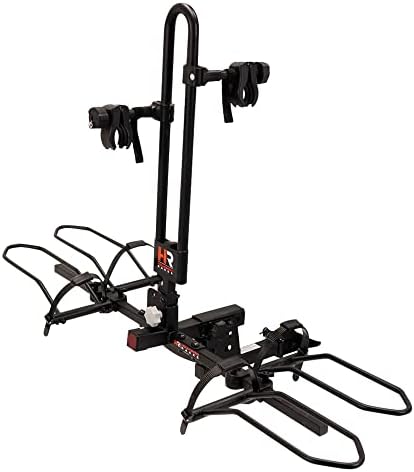
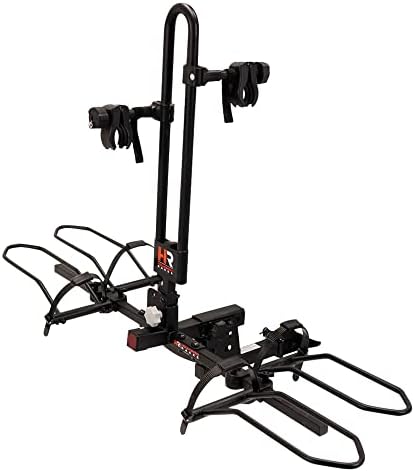
TANX Bike Racks for Ebikes,Fat Tire Bike Rack for Tow Hitch 2-Bike 160 lbs Capacity,Hitch Bike Rack for Heavy E Bike, Wobble Free Smart Tilting Folding Bicycle Car Racks for Standard, 2 inch Receiver
160 lb capacity, 2-inch receiver, tilting mast, and fat-tire spacing in one package
Only fits a 2-inch receiver, so 1.25-inch cars are out
Topeak TetraRack GR1, Front Rack for Road & Gravel Bikes, Quick-Mount System, 7 kg Capacity, Aluminum & Polymer Construction, Fits 700 x 50C Tires, Works with MTX/MTX 2.0 QuickTrack (TA2417)
Quick-mount front rack that fits 700 x 50C tires and integrates with MTX bags
7 kg capacity means light loads only, and it does not replace a car rack
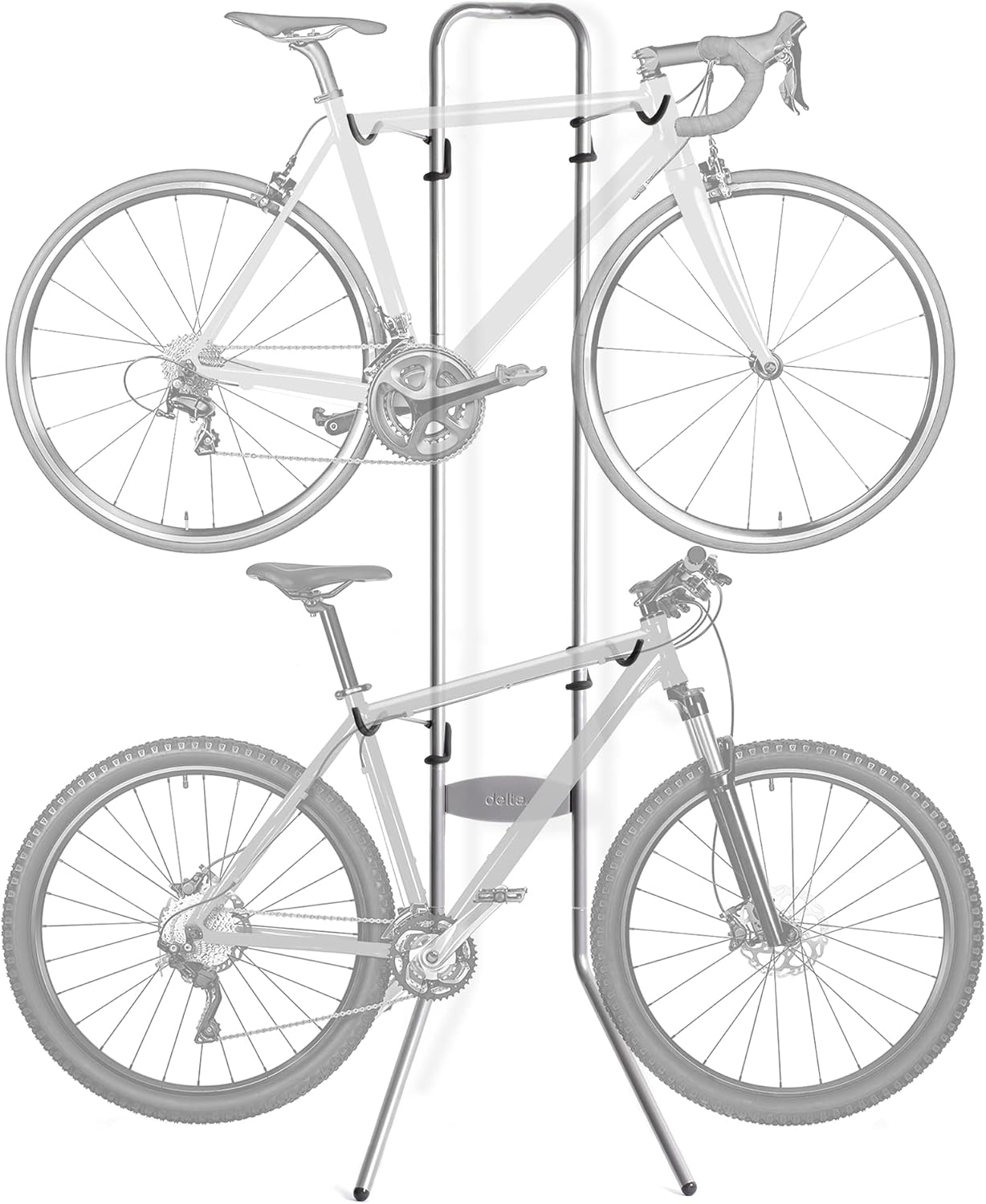
Vertical Bike Stand, Freestanding Bike Rack Garage Storage with Adjustable Height for Wheels up to 29", Space-Saving Indoor Bicycle Stand for Garage & Apartment, Upright Bike Holder for MTB Road Bike
Freestanding and adjustable, so it works in a rental garage with no drilling
Holds one bike, and a stand is not a lock or a security device
Outtag Rear Bike Rack Aluminum Alloy Bike Cargo Rack Quick Release Adjustable Bicycle Rear Rack Heavy Duty Mountain Bike Back Rack Seat Post Frame Mount Cycle Luggage Carrier Accessories
Cheap way to add cargo capacity to a bike that has no rack mounts
Seat-post clamping is a bad match for carbon posts and heavy loads
Prices and availability were captured from Amazon Creators API and may change.
The four jobs these products do
Sorting these by category is the whole review. The TANX is a car-mounted hitch carrier, which means it does the job of keeping a bike out of your trunk and off your paint. The Topeak GR1 is a rack that mounts on the bike itself, so the bike carries the load instead of the car. The vertical stand is furniture for your garage. The Outtag is a cargo rack for the bike you commute on.
If you read this list and thought "I need two of these," you are right, and that is the honest answer for most people with a garage and a car. Transport and storage are separate problems, and the products that solve them are sold separately.
The hitch rack: TANX, 2 bikes, 160 lbs
The TANX is the only product here that touches your car, and it is the one I would spend the most time on. It mounts to a 2-inch receiver, carries two bikes up to a combined 160 lbs, and the platform is wide enough for fat tires and heavy e-bikes. That weight rating is the headline number. Two e-bikes at 70 lbs each land at 140 lbs, which leaves you headroom instead of sitting on the limit.
Two features matter more than they sound. The first is the tilting mast. A rack that tilts away from the hatchback is worth paying for, because loading groceries around a fixed rack is a weekly annoyance you cannot unsee, and the tilt is the difference between using the rack and dreading it. The second is folding. A rack that folds flat against the bumper when empty is a rack you leave on the car, and a rack you leave on the car is a rack you actually use.
The 2-inch receiver requirement is a hard filter. If your vehicle has a 1.25-inch receiver, this rack is not for you, and no adapter is going to make me comfortable with a 160 lb load on a smaller platform. The hitch is the platform. On the wobble question, the manufacturer describes the rack as wobble free, and the honest version of that claim is that a properly torqued hitch rack does not wobble much at highway speed, but you should still re-check the hitch bolt and the anti-sway hardware after the first long drive. Every rack I have owned has needed that second tightening.
The on-bike front rack: Topeak TetraRack GR1
The Topeak TetraRack GR1 is a front rack for road and gravel bikes with a quick-mount system, a 7 kg capacity, aluminum and polymer construction, and a fit range that goes out to 700 x 50C tires. It also works with the MTX and MTX 2.0 QuickTrack bag system, which matters more than it sounds: a front rack is only useful if you have a bag that clicks onto it, and a dedicated track system beats strapping a dry bag to a bare platform with two bungees.
Seven kilograms is about 15 lbs. That is a sleeping bag, a jacket, snacks, and a small camera. It is not a case of beer, and it is definitely not a loaded touring setup. Read the capacity as a bikepacking number, not a grocery number.
The reason I like a front rack on a gravel bike is weight distribution. Load the rear and the front end goes light on loose descents, which is exactly when you want steering feel. Load the front and the bike stays planted. The 700 x 50C fit matters for anyone running wider rubber on gravel, because a rack that only clears a 38 mm tire is useless on the bike you actually race.
What it is not: a car rack. Nothing about a front rack solves the problem of getting two bikes to a trailhead two hours away. It solves the problem of carrying gear once you are there.
The garage piece: freestanding vertical stand
The vertical stand is the cheapest and least glamorous product here, and it is the one that changes how often you ride. It is freestanding, so no drilling into a rental wall, and the height adjusts to take wheels up to 29 inches, which covers mountain bikes and most road bikes.
The workflow case is simple. A bike leaning against a wall gets knocked over, and a bike that gets knocked over twice a week eventually stops being ridden. An upright stand parks the bike on its rear wheel, takes up the footprint of a shoebox, and makes the bike the first thing you see when you walk into the garage.
Two caveats. It holds one bike, so a two-rider household needs two of them, and a stand is not a lock. If your garage is shared or your bike is expensive, a stand plus a wall anchor is the combination that makes sense. Also check the tire width before you buy any vertical stand: a 29-inch wheel is not the same as a 2.6-inch tire, and fat bikes need their own solution.
The budget cargo rack: Outtag rear rack
The Outtag rear rack is a seat-post and frame mount rack in aluminum alloy, adjustable, quick release, and marketed for heavy-duty mountain bike use as a luggage carrier. It is the classic answer for a hardtail or a hybrid that has no rack eyelets, and it costs less than a decent set of tires.
Here is the honest limitation. A seat-post mounted rack clamps the post, and clamping a carbon seat post is a bad idea at any torque spec. If your bike has a carbon post, this is not the rack for you, and there is no version of that conversation that ends with me saying it is fine. On an aluminum post, on a commuter or a hardtail, it does the job: a trunk bag, a lock, a change of clothes, a run to the store.
The second limitation is load. These racks have a rated capacity that is lower than the frame-mounted racks they imitate, and the failure mode is the clamp rotating on the post under a heavy load on a bumpy road. Keep it light, check the clamp after the first ride, and treat it as a commuter accessory rather than an expedition rack.
Trade-offs, product by product
The TANX trades price and receiver compatibility for capacity and convenience. You need a 2-inch hitch, and you are buying a platform that takes up garage space when it is off the car, but you get a rack that handles two e-bikes and tilts out of the way.
The Topeak GR1 trades capacity for integration. Seven kilograms is a light load, and you are committing to the MTX bag ecosystem to get the most out of the QuickTrack mount. In exchange you get a front rack that fits a 50 mm gravel tire and keeps your handling neutral when it is loaded.
The vertical stand trades capacity for space. It holds one bike and it does not secure it, but it costs less than a tank of gas and it removes the reason most people stop riding in winter, which is that the bike is buried behind three others.
The Outtag trades strength for universality. It fits bikes that have no mounts, which is the entire point, and it gives up the load rating and the carbon-frame friendliness of a frame-mounted rack.
How to decide
If you drive to your rides and your vehicle has a 2-inch receiver, buy the TANX and stop reading. It is the only product here that solves the safety problem, and the safety problem is the one that matters. A rack that lets go at highway speed does not just cost you a bike, it costs you whatever is behind you.
If you ride from your door and you want to carry gear on the bike, buy the Topeak GR1. Match it to the MTX bag you want, confirm your tire size is inside the 700 x 50C range, and keep the load under 7 kg.
If your problem is that your garage has become a bike graveyard, buy the vertical stand. It is the cheapest upgrade on this list and the one with the best chance of changing your habits.
If you commute on an aluminum-framed hardtail and you want a trunk bag and a lock with you, the Outtag rack is the right budget answer. If that bike has a carbon seat post, skip it.
The combination I would actually recommend for a two-bike household: the TANX for the car, and one stand per bike for the garage. That covers transport and storage, which are the two things that go wrong.
What I am watching next
Racks are getting lighter, and lighter aluminum trays flex at speed. I am watching the e-bike and fat-tire segment hardest, because that is where the weight ratings are climbing and where the mid-tier factories are finally widening their trays instead of pretending a 2.5-inch cradle fits a 4.8-inch tire. The 2-inch receiver standard is winning, slowly, and every product on this list that ignores it is a product with a shorter shelf life.
The bottom line
Buy the TANX if you haul bikes on a car with a 2-inch hitch, because capacity and a tilting platform are the specs that keep a heavy bike attached at 75 mph. Buy the Topeak GR1 if you want the bike to carry the gear. Buy the vertical stand if the bikes are already home and in the way. Buy the Outtag if you need cheap cargo on an aluminum-seat-post commuter and nothing more. Four products, four jobs, and the mistake is buying one when you needed another.
Check current Amazon price on each before you commit, and measure your receiver, your tire width, and your seat post material first. Those three measurements decide this comparison more than any review does.