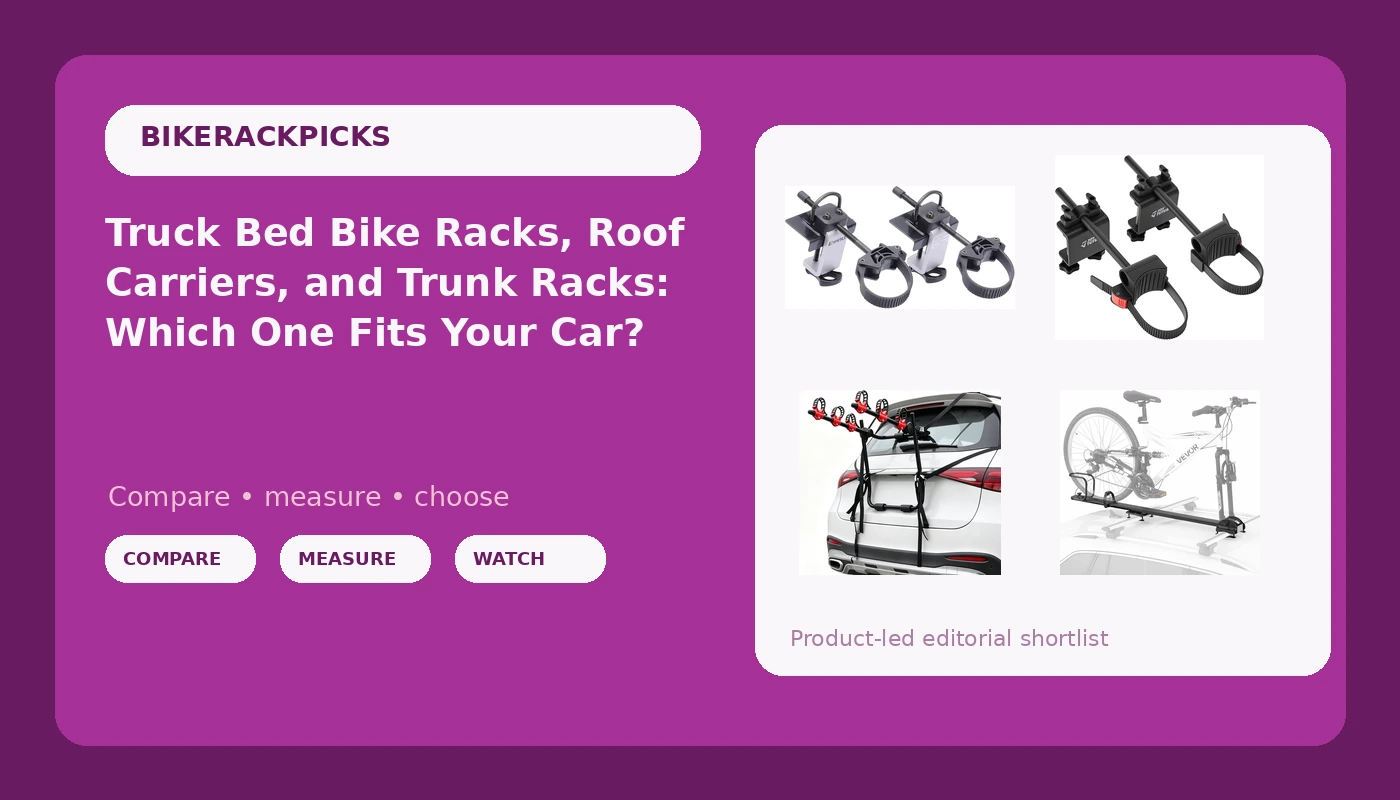
Related: Best Hitch Bike Racks for a 2-Inch Receiver: Tray Racks That Hold at 75 mph
Most people who ask me about a truck bed bike rack do not actually need a truck bed bike rack. They need to get two bikes to a trailhead without spending $600 on a hitch tray rack plus the receiver install. That is a fair problem, and it is the reason I keep a running list of the non-hitch ways to carry a bike.
I have owned eight racks in twelve years. One was a trunk strap rack that scratched the paint on a car I still miss. One was a hanging rack that swung into a highway divider on I-70 in a crosswind. One was a tray rack that survived a deer strike and kept the bike attached, which is the only reason I still talk about tray racks the way I do. None of that makes me an expert on your truck bed. It does mean I have opinions about straps, clamps, and wobble.
The four racks below solve the same problem four different ways: two mounts that live in a pickup bed, one trunk rack for cars with no hitch, and one roof carrier. I am a hitch person, and I have said for years that I do not review roof racks. I am making one exception here, and I will tell you exactly where my knowledge stops.
What I check before I look at the rack
Fit comes first, and fit is not a spec on the box. It is a question about your vehicle.
- Does the vehicle have a hitch receiver, and is it 1.25 inch or 2 inch?
- If it is a pickup, do you have a bed rail, a tonneau cover, or a bed liner that changes the mounting surface?
- If it is a car, does the trunk lid have a spoiler, and does the rack block the lights or the backup camera?
- Do you ride carbon? If yes, any rack that hangs the bike by the frame is off the table.
Loading workflow comes second. A rack that takes thirty minutes to mount gets used half as often as one that takes five. The test I care about is loading in the dark, in a parking lot, after a long ride, with cold hands. If you cannot do that without a headlamp and a second person, the rack is a decoration.
Retention comes third. Straps stretch. Metal clamps and wheel trays hold. There is a reason I trust a rack that grips the wheels more than one that grips the frame, and it is not brand loyalty, it is physics.
Then price. Below the mid-tier you are gambling with a bike that costs more than the rack. I have watched a cheap rack launch a bike onto a highway. That is the whole argument, and it is why I would rather tell you to wait a month and buy once.
INNO RT201 Truck Bed Bike Rack: the bed mount for a standard pickup
This is the one I would start with if you drive a standard pickup and you want the bike to stand up in the bed instead of lying on its side. It is a bed mount, not a tailgate pad, and that distinction matters: a pad leans the bike against the tailgate and rubs the frame, while an upright mount holds the bike by the front wheel area and keeps the drivetrain away from the bed floor.
What I like about the design intent here is that it treats the truck bed as a mounting surface rather than a storage bin. If you have ever bungeed a bike to a bed rail in the dark, you know the difference. You also know why an upright mount is faster. The bike goes in the same place every time, and the same place is the place where nothing scratches.
What to confirm before you order: your truck is a standard pickup and your bed has a surface the mount can attach to. Bed liners, tonneau covers, and aftermarket rails all change the equation. Measure your bed, look at where the mount attaches, and decide whether you want to give up that floor space. You will. That is the trade.
Who should skip it: anyone with a short bed who needs the full floor for cargo on the same trip, and anyone who wants to carry more than a couple of bikes. This is a dedicated mount, and dedicated mounts take up room.
JOYTUTUS Truck Bed Bike Rack Mount: the no tire removal option
The headline feature is in the name: you do not remove the front tire. For a bed mount that is a real workflow improvement, because the front wheel is the part that always fights you when the bed is full and the light is bad. Wheel-on means the bike rolls in, the holder clamps, and you are done.
The second thing I look for in a bed mount is anti-wobble design, and this listing calls that out alongside a strengthened metal build. Metal over plastic is the right call in a bed, where a rack sees sun, grit, and the occasional shovel. If you have ever had a plastic mount crack in a cold snap, you know why.
No tire removal also means no brake rotor contact and no fork dropout wear. On a through-axle bike, repeated fork mounting is the fastest way to chew up dropout threads. A wheel-on holder avoids that entirely, which is the argument I make to anyone on a modern gravel or mountain bike.
What to confirm: the holder needs to fit your tire width and your bed's mounting points. Wide gravel tires and fat bike tires are the two places bed mounts get tight. Check the fit against your actual tire, not the tire you plan to buy.
BeBecome 3 Bike Trunk Rack: for the car with no hitch
I will be straight with you, because you deserve it: I do not recommend trunk racks for expensive bikes. They scratch paint, they swing in wind, and they can block your lights and your backup camera. I have the paint scars to prove the first one, and I have watched the second one happen at highway speed.
That said, plenty of people have a sedan, a hatchback, or a minivan, no hitch, and two or three kids' bikes or commuters that cost less than the rack. For that job a trunk rack is a legitimate tool, and this one carries the three features that separate a usable trunk rack from a bad one: anti-scratch foam padding at the contact points, a foldable frame so it stores flat in the trunk when it is off the car, and secure straps that are part of the design rather than an afterthought.
Foam padding is the feature I care about most. Bare metal hooks on painted sheet metal is how you get a scratch that shows up in every photo for the rest of the car's life. Foam is not a luxury. It is the difference between a rack you keep and a repair bill.
The foldable frame matters for a different reason: a rack that lives in the garage does not get used. If it folds flat and fits in the trunk, it goes with you, and it is there when a friend calls about a ride.
Fit is where trunk racks get people, so verify it. The listing says this fits sedans, hatchbacks, and minivans and carries three bikes. What it cannot tell you is whether your specific spoiler, glass hatch, or plastic trim gives the straps something honest to grab. Check the strap anchor points on your own car, and check that the bikes do not cover your tail lights.
My rule: nothing over $800 on a trunk rack, and nothing carbon, ever. If that sounds harsh, it is because I have watched a cheap rack let go of a bike at highway speed.
VEVOR Roof Bike Rack: the one outside my lane
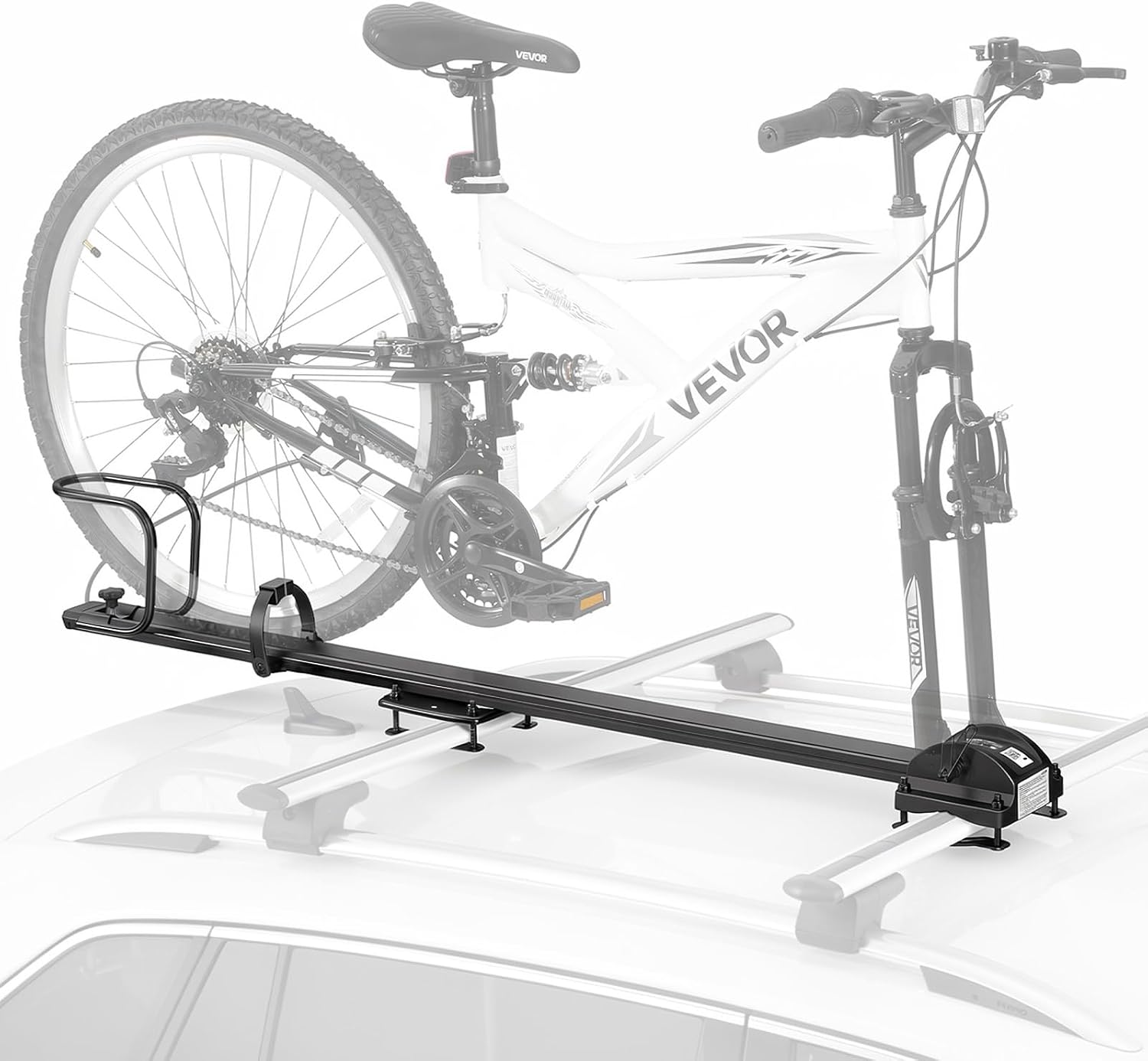
I am a hitch person. I have said for years that I do not review roof racks, and that has not changed. But the questions keep coming, so here is the honest version: this is an upright rooftop carrier rated for one bike at 35 lbs, and I am going to tell you what roof carrying costs you rather than pretend I have run it at 75 mph.
Roof carrying means lifting the bike over your head onto a bar. Every time. After a four-hour ride, that is the part that hurts. It also means you now have a bike-shaped object on the roof, so garage clearance becomes something you think about daily. The first time you forget is expensive.
It also means wind resistance, and on a tall vehicle a bike that sits above the roofline where crosswinds get a longer lever. An upright carrier like this one is easier to load than a fork-mount tray because the front wheel stays on the bike, but upright also means more surface area in the wind.
The 35 lb rating covers most road and gravel bikes and a lot of trail bikes. It does not cover a heavy e-bike, and the listing says one bike, so treat that single-bike limit as real rather than optimistic.
What I can say with confidence: if you already have crossbars and you have decided a roof carrier is your answer, an upright carrier with a 35 lb capacity and a one-bike footprint is a reasonable way to spend less than a hitch install would cost. What I cannot say is that I have tested it. I have not, and I told you where my lane ends.
The rack reference table
This is the table I keep for the question I get most often, which is which of these fits a specific vehicle. Mount type and features come from the product listings. The last column is the part you have to answer yourself, with a tape measure and your own car.
| Rack | Where it mounts | Stated features | Best for | Price |
|---|---|---|---|---|
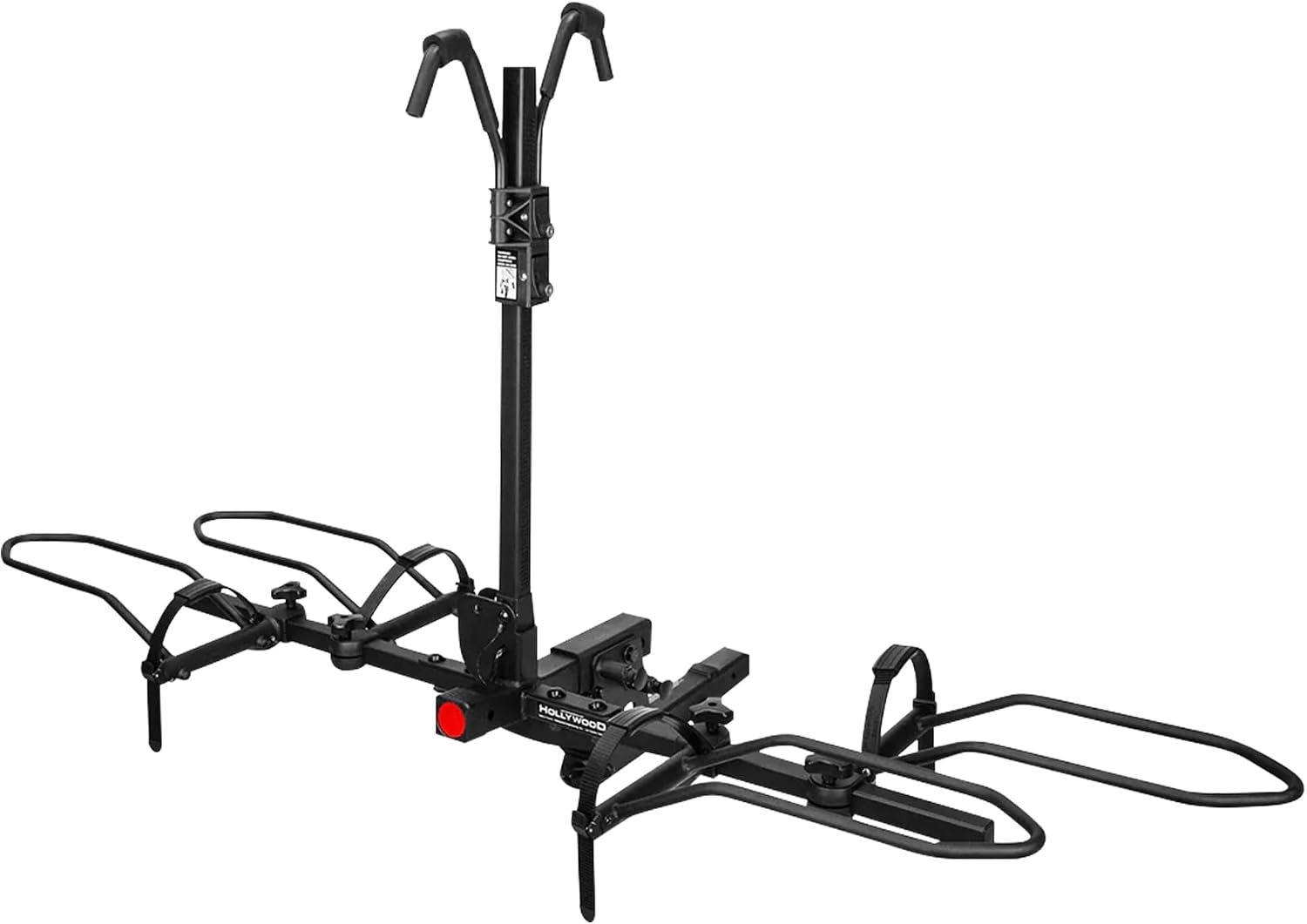 Visit on Amazon → INNO RT201 Truck Bed Bike Rack |
Standard pickup truck bed | Upright bike mount for a standard pickup truck | Pickups with an open, usable bed surface | Check current Amazon priceVisit on Amazon → |
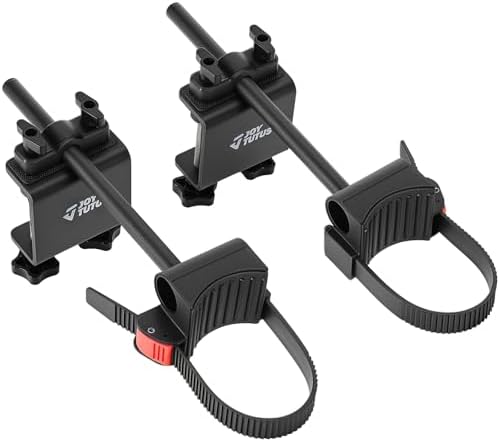 Visit on Amazon → JOYTUTUS Truck Bed Bike Rack Mount |
Pickup truck bed | No front tire removal, anti-wobble holder, strengthened metal | Fast wheel-on loading, through-axle bikes | Check current Amazon priceVisit on Amazon → |
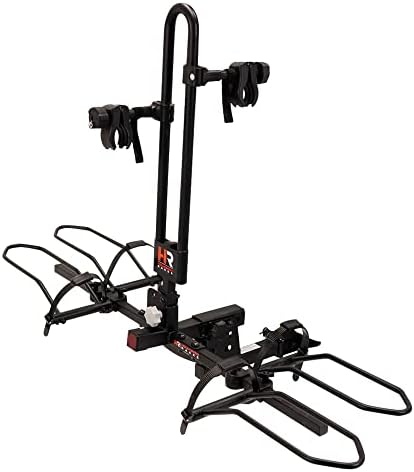 Visit on Amazon → BeBecome Bike Rack for Car |
Trunk mount, fits sedan, hatchback, minivan | 3 bikes, foldable frame, anti-scratch foam padding, secure straps | Cars with no hitch, occasional trips, lower-cost bikes | Check current Amazon priceVisit on Amazon → |
 Visit on Amazon → VEVOR Roof Bike Rack |
Rooftop, upright carrier | 35 lbs capacity, 1 bike | Vehicles that already have crossbars | Check current Amazon priceVisit on Amazon → |
The pattern in that table is simple. If you have a bed, you have the easiest loading job of the four, because you are standing on the ground. If you have a trunk, you have the cheapest option and the most compromises. If you have crossbars, you have the cleanest bike position and the worst daily routine.
Should you buy the INNO RT201?
Yes, if you drive a standard pickup and you want the bike upright in the bed instead of leaning against the tailgate. It is a dedicated mount, so you give up floor space, and you should confirm it works with your bed liner, tonneau cover, or rail system first.
For a pickup owner who hauls one or two bikes and wants a repeatable, scratch-free loading routine, this is where I would start. The alternative is a tailgate pad and a frame that rubs on the paint for a season, and I have never met anyone who was happy with that trade.
Should you buy the JOYTUTUS mount?
If your priority is loading speed, yes. Keeping the front wheel on the bike means no fork mounting, no rotor contact, and no dropout wear, and the anti-wobble metal build is the right material for a bed that sees weather and cargo.
Check your tire width against the holder before you commit. A wheel-on mount that fights your tires is worse than a fork mount that fits.
Should you buy the BeBecome trunk rack?
Only for occasional use, and only on bikes you can afford to replace. It does the important things right, with foam padding, a foldable frame, and straps that are designed rather than added, but it is still a trunk rack, and a trunk rack is the least safe way to carry a bike on this list.
If you have no hitch and no bed, this is a reasonable answer for a couple of commuters and a weekend ride. If you have carbon, or a bike worth more than your deductible, get a hitch installed and buy a tray rack instead. That is the advice I give in every email, and I am not going to change it here.