Related: Best Bike Rack for a 2-Inch Hitch: What Actually Survives a Highway Run
A bike rack and garage storage setup is safety equipment, not cargo gear. I have watched a cheap rack launch a bike onto the shoulder of a highway, and I have spent enough evenings loading bikes in the dark after a long ride to know that the difference between a setup that works and one that fights you is almost never the price. It is whether the hardware matches your hitch, your frame, and how often you actually ride.
Most riders treat carrying and storing as two separate problems. They are one problem. If your garage is a maze of handlebars, you ride less. If your rack takes twenty minutes to mount, you ride less. The four options below cover the four jobs I see most often: hauling one heavy e-bike, parking ten bikes in a garage, keeping three bikes tidy in a small space, and shuttling a pickup load of friends to a trailhead.
Two things up front, because they save money. Tray racks over hanging racks, always, unless you ride a step-through or a fat bike. Carbon frames change everything, and hanging racks are off the table for carbon, full stop. And the hitch is the platform: a 1.25-inch hitch limits you to two bikes and a lot of wobble, while 2-inch is the real standard.
Best Overall for Hauling: RokRack S One EBike Rack with Ramp
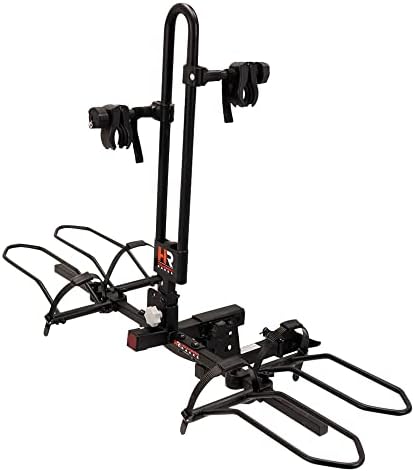
The ramp is the reason this one leads the guide. Loading a 60-pound e-bike onto a tray at chest height is the single worst part of e-bike ownership, and a rack that gives you a ramp solves it without you ever lifting the bike off the ground. You roll it up, you strap the wheels, you drive. The rack is rated for 100 lbs of bike, which covers a commuter e-bike, a cargo-ish build, or a heavy downhill bike with room to spare.
The other reason I like this shape: it carries one bike, and it carries it properly. A single tray means no anti-sway arms fighting each other, no second wheel strap to mis-thread at 9 p.m. in a trailhead parking lot, and no wondering whether the bike next to yours is rubbing your fork. Every strap on a tray rack is a point of failure, and this one has fewer of them.
What you give up is capacity. This is a one-bike rack, and that is the whole trade. If you and a partner both ride, you need two racks or a different design, and you should decide that before you order rather than after. If you ride alone most of the time, or you ride with one other person who has their own rack, the ramp is worth more than a second tray slot.
A note on the ramp itself: ramps are only useful if they stay attached and stow cleanly. A ramp that lives loose in the trunk is a ramp you will leave at home, and then you are lifting a 60-pound bike anyway.
Best Garage Storage for a Full Household: BestEquip 10 Holders Floor Bike Rack
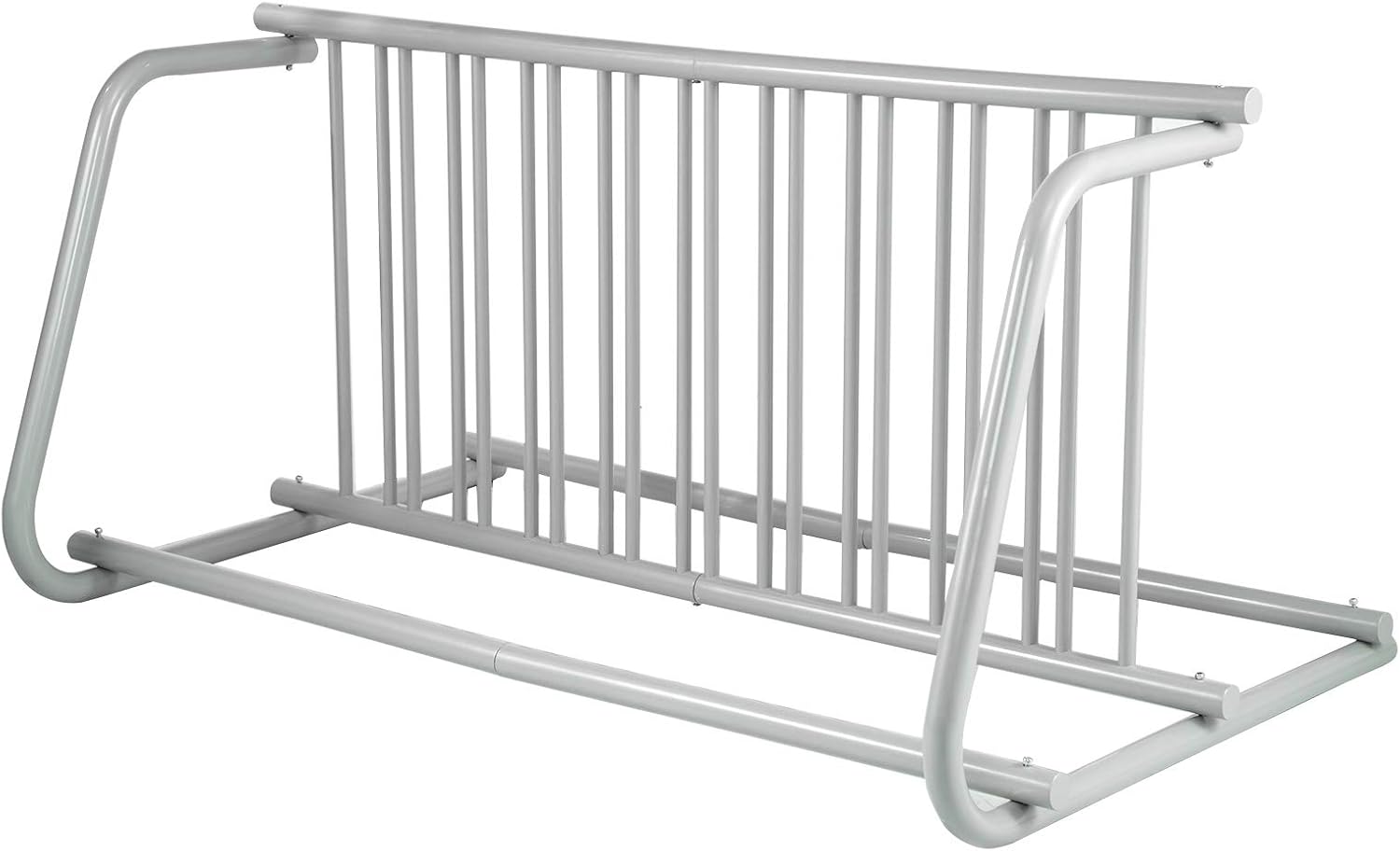
This is the rack I would put in a club trailer or a garage that has lost the war. It is a 59-inch all-steel grid that holds ten bikes, five per side, wheels down, and it does not care what kind of bike you feed it. Road bikes, kids' bikes, mountain bikes, the beater with a bent derailleur hanger. It stands on the floor, it needs no wall studs, and it takes up a footprint instead of a wall.
That last part is the honest tradeoff. Floor racks eat square footage in the middle of the garage, which is exactly where you want to walk. Wall-mounted racks and ceiling hoists keep the floor clear; a grid rack keeps the bikes upright, visible, and easy to grab, which is worth more than floor space if your problem is that you cannot find your own bike. I would rather see ten bikes in one dense grid than ten bikes leaned along three walls.
The dual-side layout also matters for tight spaces, because you can back it against a wall and load from both sides, or run it down the middle of a two-car garage and split the household into his-and-hers lanes. Steel construction means it will outlive the bikes, and it needs no assembly genius to be useful.
Buy this if you have a fleet problem, a growing family of riders, or you run club events and need to stage bikes somewhere. Do not buy it if you have three bikes, because you will spend the rest of your life walking around it.
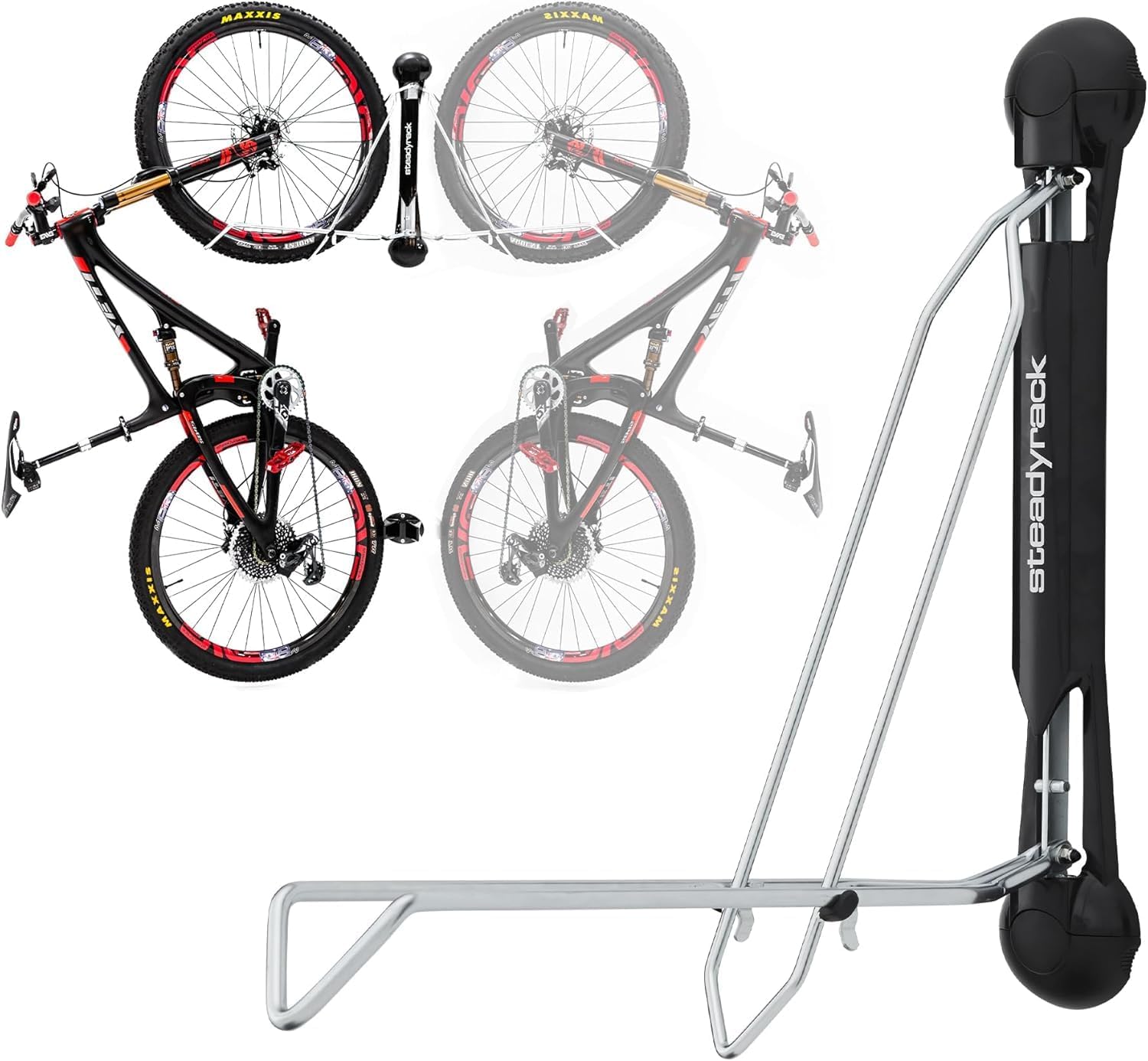
Best Small-Space Storage: Bike Stand for 3 Bikes
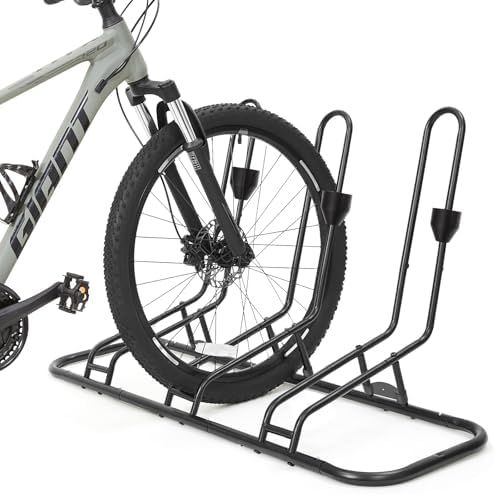
Three bikes is the most common number in a household, and this stand is built for exactly that. Bikes sit by the wheel, so nothing touches the frame, which is the only storage answer I trust for carbon. The anti-collision design is the feature that earns its keep here: it spaces the bikes so pedals, derailleurs, and disc rotors do not tangle when you pull one out. Anyone who has spent five minutes untangling a rear derailleur from a neighboring crank will understand why that matters.
It fits tires from 12 to 29 inches, so it handles the kids' bikes, the road bike, and the mountain bike in the same footprint. The waterproof construction means it can live outside on a patio or in a shed without turning into a rust experiment, and it needs no wall mounting, which is the answer for renters and anyone who does not want to drill into a garage wall.
What it is not: a transport rack. It does not go on a car. Keep the jobs separate in your head. This is where the bikes sleep, not where they travel.
If you have more than three bikes, this stand will not scale, and you should be looking at the grid rack above instead. If you have three bikes and a two-foot strip of wall or floor, this is the cleanest answer in this guide.
Best for Pickup Shuttles: Marscamd Tailgate Bike Pad
If you drive a mid-size pickup and your weekend involves driving five people and five bikes to a trailhead, a tailgate pad is the cheapest way to do it. This one is 51 inches wide and holds five bikes draped over the tailgate, front wheels over the edge or fully in the bed depending on how you strap them. There is no hitch involved, no tray to assemble, and nothing hanging off the back of the truck.
The tradeoffs are real and I will not pretend otherwise. The pad protects paint where the bikes rest, but straps and buckles still touch your frame, and a pad left on in the rain traps grit against the tailgate. Bikes in the bed sit in your rear camera view, so backing into a tight trailhead spot becomes a two-person job. And there is no lock, which means the coffee stop is a decision, not a convenience.
Still, for shuttle duty, nothing beats it on cost per bike. A five-bike tray rack is a serious purchase; a tailgate pad is an afternoon decision. Just be honest about how you ride: if you shuttle twice a season, the pad is right. If you are hauling your own bike every week, you want a tray rack on the hitch instead.
How I evaluate racks and storage
I look at four things, in this order.
Frame contact. Does anything touch the frame, and where? Wheel-contact storage and wheel-strap trays are the safest answers for carbon. Hanging racks and frame hooks are not, and no amount of padding changes the load path.
The hitch, if there is one. Hitch class decides your ceiling before any rack does. A 1.25-inch receiver limits you to two bikes and amplifies wobble; 2-inch is the standard worth building around. Anti-sway hardware and a tight hitch interface matter more than any other feature on a highway run.
Load time and load order. A rack that takes thirty minutes to mount gets used half as often as one that takes five. Same for storage: if pulling one bike out means untangling three, the stand is failing at its only job. I load in the dark, in the rain, and after long rides, and I judge hardware by that worst case.
Tilt clearance. A rack that tilts away from the hatchback is worth real money, because loading groceries around a rack is a weekly annoyance you cannot unsee. A tilt feature that only works with the rack empty is not a feature.
I do not cover roof racks, and I do not cover RV or fifth-wheel setups. The wind and weight physics are different enough that the advice does not transfer, and I would rather say nothing than say something wrong.
Analysis: matching the hardware to the job
These four products are not competitors. They are four answers to four different questions, and the most common buying mistake is picking the one with the best reviews instead of the one that matches your routine.
If you ride alone and your bike is heavy, the RokRack S One is the answer, because the ramp removes the lift. That is the entire argument, and it is a good one. If you ride with a partner or a group, a single-bike rack becomes a scheduling problem within a month.
If your problem is storage, count your bikes first. One to three bikes in a small space: the three-bike stand, wheels down, frame untouched. Four or more, or a club, or an event: the ten-bike grid rack, accepting the floor footprint as the cost of density.
If you have a pickup and a shuttle habit, the tailgate pad is the value play, with the caveat that you lose your camera view and your security. Pad for shuttles, tray for weekly hauling, storage stand for the garage. Some riders need two of these, and there is nothing wrong with that. The point is to stop asking one piece of hardware to do all three jobs badly.
The one pattern worth watching: tray racks keep getting cheaper as mid-tier factories upgrade their tooling, and e-bike and fat-bike tray widths keep expanding. That is the growing segment, and it is where I would spend attention over the next couple of years.
The bike rack and storage comparison table
| Product | Type | Capacity | Best for | Price |
|---|---|---|---|---|
 Visit on Amazon → Visit on Amazon →RokRack S One EBike Rack with Ramp |
Hitch tray rack | 1 bike, 100 lbs | Solo riders with heavy e-bikes | $206.98 |
 Visit on Amazon → Visit on Amazon →BestEquip 10 Holders Floor Bike Rack |
Floor storage grid | 10 bikes, dual side | Families, clubs, events | Check current Amazon price |
 Visit on Amazon → Visit on Amazon →Bike Stand for 3 Bikes |
Wheel-contact storage stand | 3 bikes, 12 to 29 inch tires | Small garages and renters | $32.39 |
 Visit on Amazon → Visit on Amazon →Marscamd Tailgate Bike Pad |
Tailgate pad | 5 bikes, mid-size pickup | Shuttle days with friends | $49.99 |
The pattern in the table is simple. Two of these products store bikes and two of them move bikes. The storage options are about frame contact and how many bikes you own. The transport options are about hitch class, load time, and how many people are riding with you. Figure out which question you are actually asking before you compare prices.
Should you buy the RokRack S One EBike Rack with Ramp?
Yes, if you haul one heavy bike and you load it yourself. The ramp is the feature that keeps an e-bike off your lower back, the 100 lb rating covers the realistic weight of a commuter or cargo build, and a single tray means fewer straps, less anti-sway fiddling, and nothing rubbing against your frame. If you ride with a partner who also brings a bike, this is the wrong shape and you should say so now rather than in the trailhead parking lot.
Should you buy the BestEquip 10 Holders Floor Bike Rack?
Yes, if the bikes have taken over the garage. It is a 59-inch steel grid that parks ten bikes on two sides with no wall drilling and no hoists, and it will still be standing when the bikes are gone. The cost is floor space, and it is not a small cost. Measure the lane you plan to give up before you order.
Should you buy the Bike Stand for 3 Bikes?
Yes, for the household with three bikes and not much room. Wheels sit in the stand, frames stay untouched, the anti-collision spacing keeps rotors and derailleurs clear of each other, and it fits everything from a 12-inch kids' bike to a 29-inch mountain bike. It is storage only. Do not ask it to go on a car.
Should you buy the Marscamd Tailgate Bike Pad?
Yes, if you have a mid-size pickup and a shuttle habit. Five bikes over the tailgate for a fraction of what a five-bike tray costs is a genuinely good deal. Go in knowing that straps touch frames, grit collects under the pad, there is no lock, and the load sits in your rear camera view. For weekly solo hauling, buy a tray rack instead.