Most people shopping for bike racks are solving two unrelated problems with one search. The first is transport: getting bikes to a trailhead or a race without scratching paint, blocking taillights, or watching a front wheel bounce at highway speed. The second is storage: getting those same bikes out of the hallway and into a garage corner where nobody kicks a crank arm in the dark. Bike racks for car and garage use look similar on a shelf and behave nothing alike in practice, so this guide separates them. The six products below include a hitch platform carrier, a trunk rack, a roof mount, and three floor or wall storage designs. Which one belongs in your garage depends on your receiver, your frame material, and how much floor space you are willing to give up.
Related: Hitch Rack Basics: Receiver Sizes, Tilt, and Load Limits
Quick answer
The Swagman XTC2 Hitch Mount Bike Rack, Platform Carrier for 2 Bikes, Ratcheting Hook System, Compact Clam-Shell Folding Design is the strongest fit for carrying two bikes behind a vehicle that has a hitch receiver, because it holds each bike on its own platform with ratcheting hooks and folds into a compact clam-shell shape when the ride is over. Choose the Delta Cycle Michelangelo 2 Bike Storage Rack instead when the bikes are staying home and you want them vertical, off the floor, and supported by a gravity rack rated to hold up to 80 lbs.
Bike racks worth comparing
There are four distinct designs in this group, and the differences between them matter more than any single brand name.
A hitch platform carrier sits behind the vehicle and supports each bike by its wheels. A trunk rack straps to sheet metal and a hatch, which means no receiver is needed but also means the load rests against your paint and the straps flex with the body panels. A roof mount lifts the bike overhead onto a crossbar, which keeps the rear of the vehicle clear but raises the loading height considerably. Floor and vertical storage racks never touch a car at all; they solve the garage problem, holding bikes upright so the fleet stops leaning against a wall.
Within the storage group there is a second split: floor stands that a wheel rolls into, and gravity or vertical racks that hold a bike by its frame or wheels against a wall. Floor stands are easier to load but consume floor area. Vertical designs free up the floor and use the wall instead.
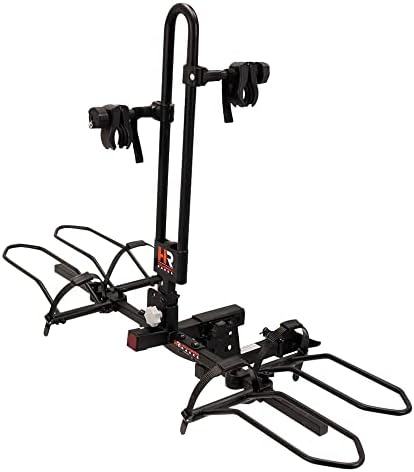
Swagman XTC2 Hitch Mount Bike Rack, Platform Carrier for 2 Bikes, Ratcheting Hook System, Compact Clam-Shell Folding Design
A hitch-mounted platform carrier for two bikes, with a ratcheting hook system to secure each bike and a compact clam-shell folding design for storage between rides.
Visit on Amazon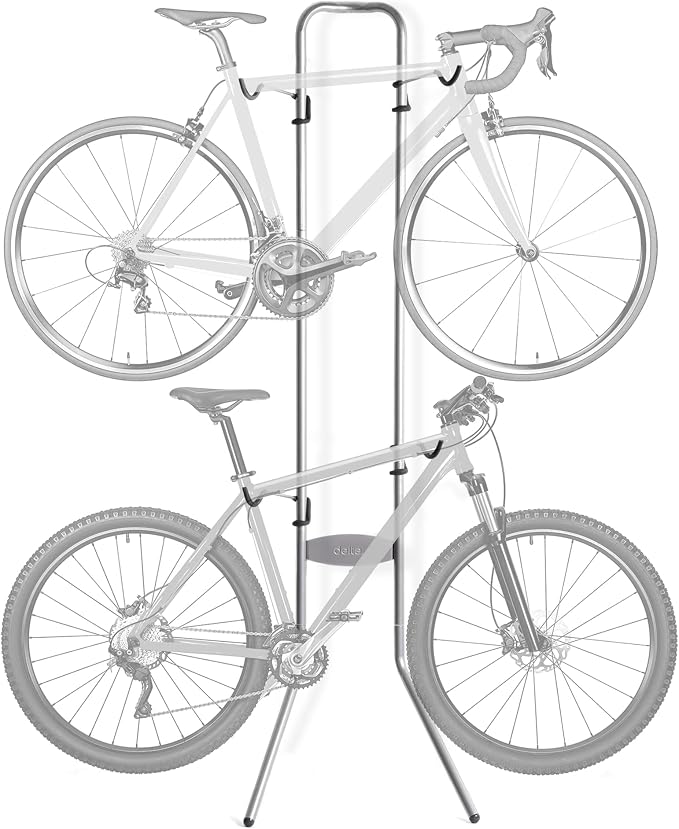
Delta Cycle Michelangelo 2 Bike Storage Rack - Gravity Fully Adjustable Bike Storage Garage For Road, MTB, and Hybrid Bicycles - Vertical Bike Rack Holds Up To 80 lbs
A gravity-fed vertical storage rack for two road, mountain, or hybrid bikes. It is fully adjustable and rated to hold up to 80 lbs.
Visit on Amazon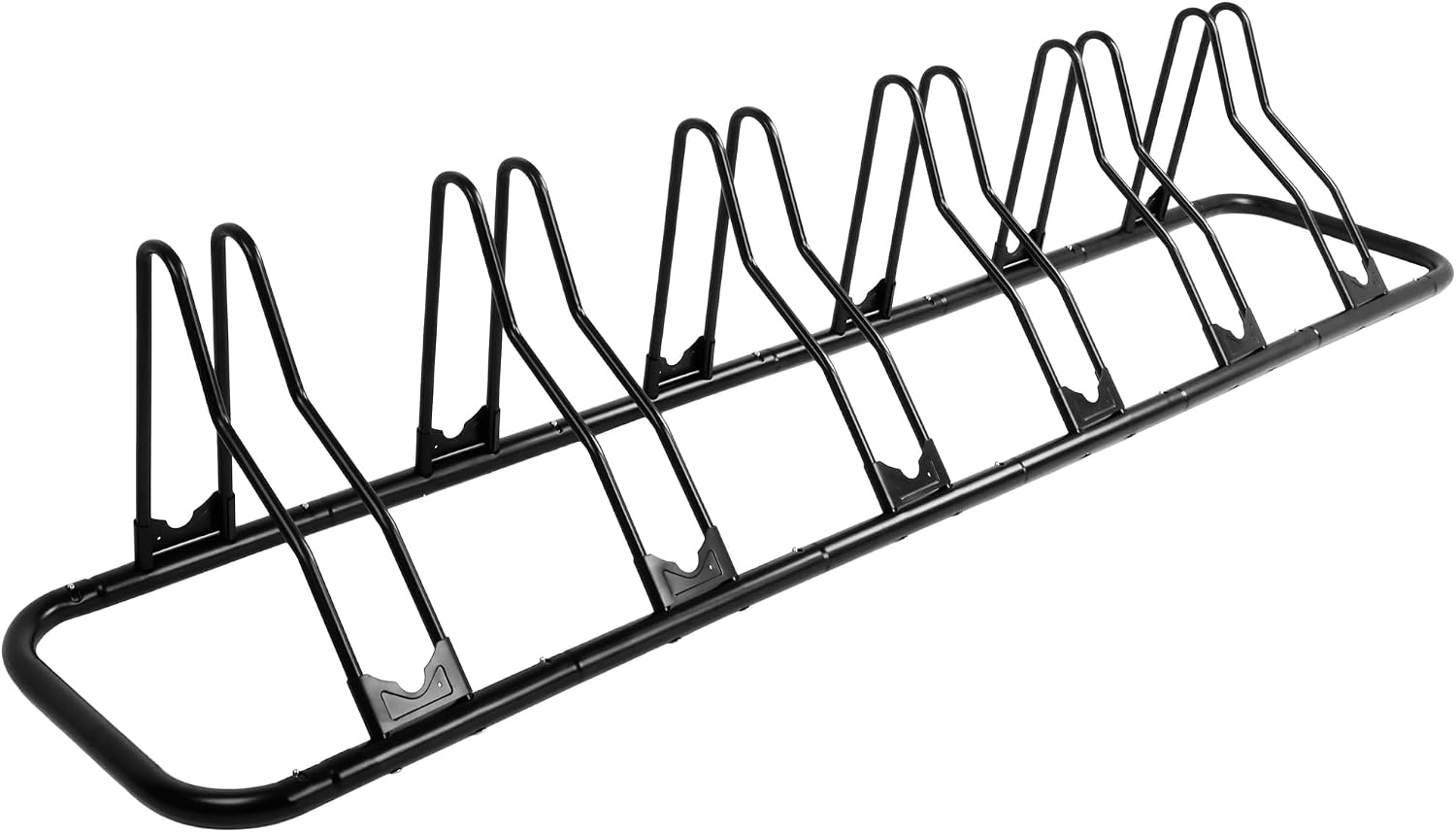
CyclingDeal Bicycle Floor Parking Rack Stand - for Mountain MTB Road Bike - Indoor Home Garage Storage - Classic 6 Bikes
An indoor floor parking stand for up to six mountain, road, or hybrid bikes, built for home and garage storage where several bikes need to stay upright.
Visit on Amazon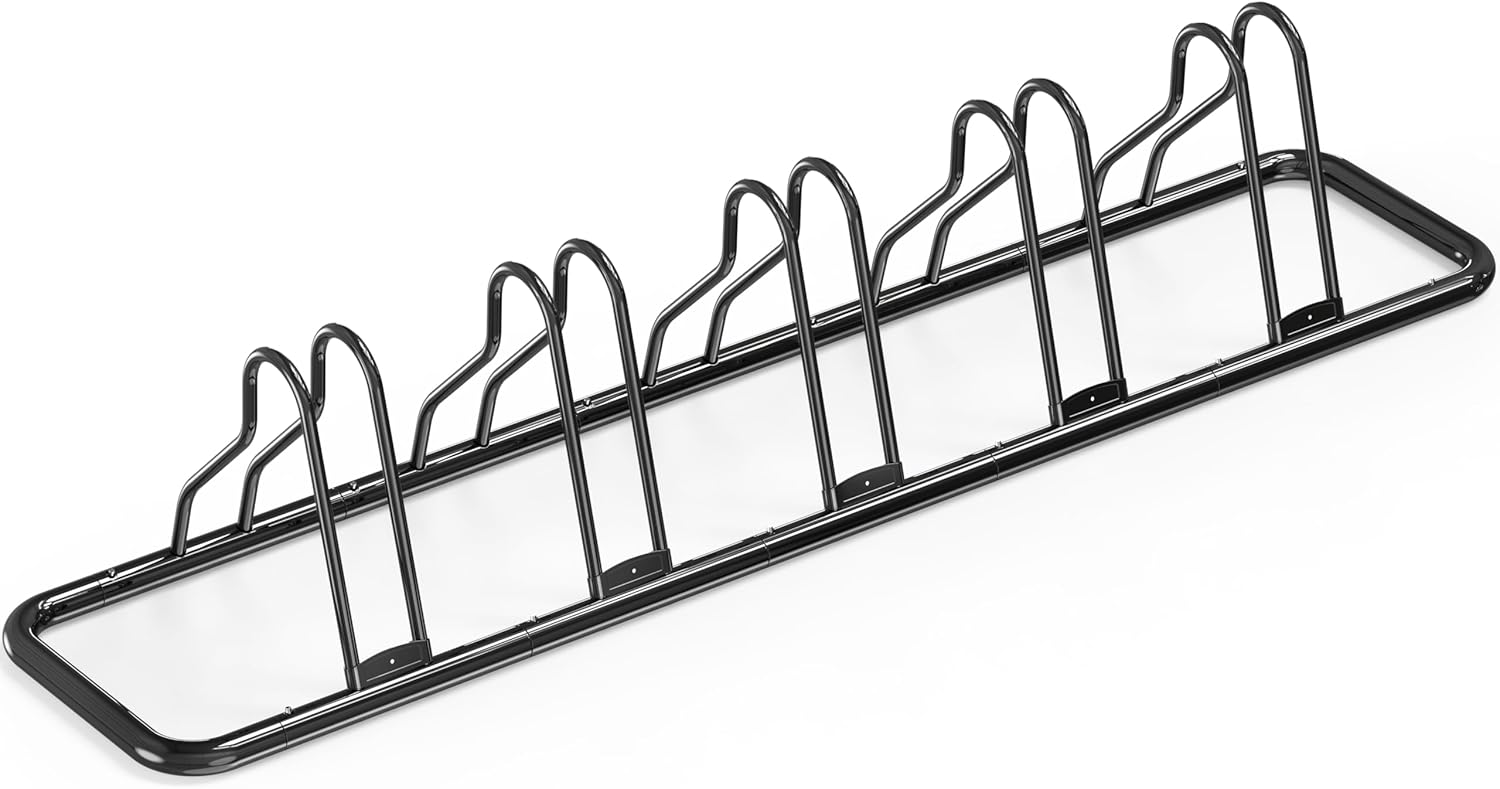
Simple Houseware 5-Bike Adjustable Floor Storage Rack for Garage, Black
An adjustable five-bike floor storage rack for the garage, designed to hold a household fleet upright and separated instead of piled against a wall.
Visit on Amazon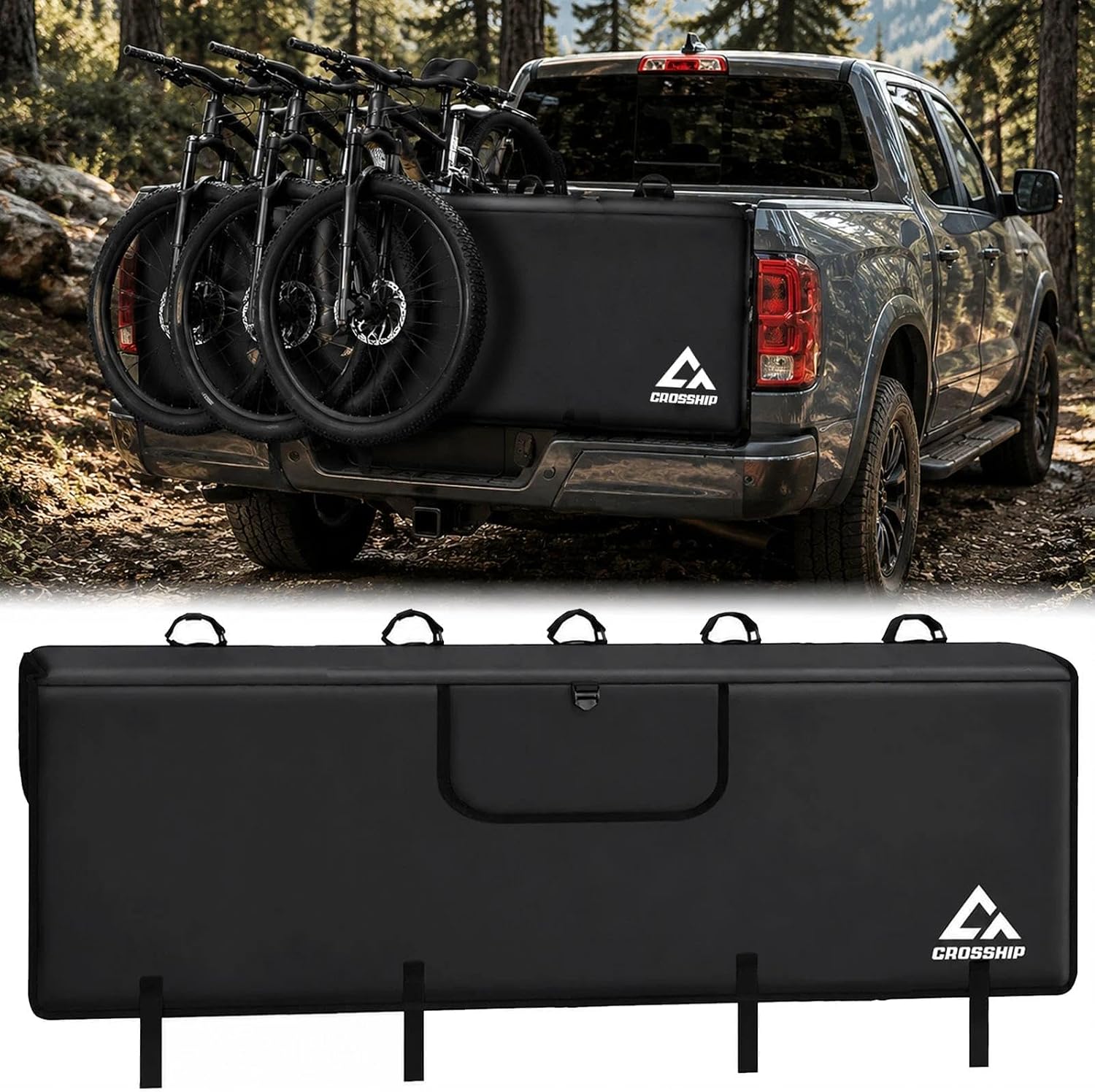
Allen Deluxe 3-Bike Trunk Mount Rack, Blk/ Silver
A three-bike trunk mount carrier in black and silver, a strap-on design for vehicles that do not have a hitch receiver.
Visit on Amazon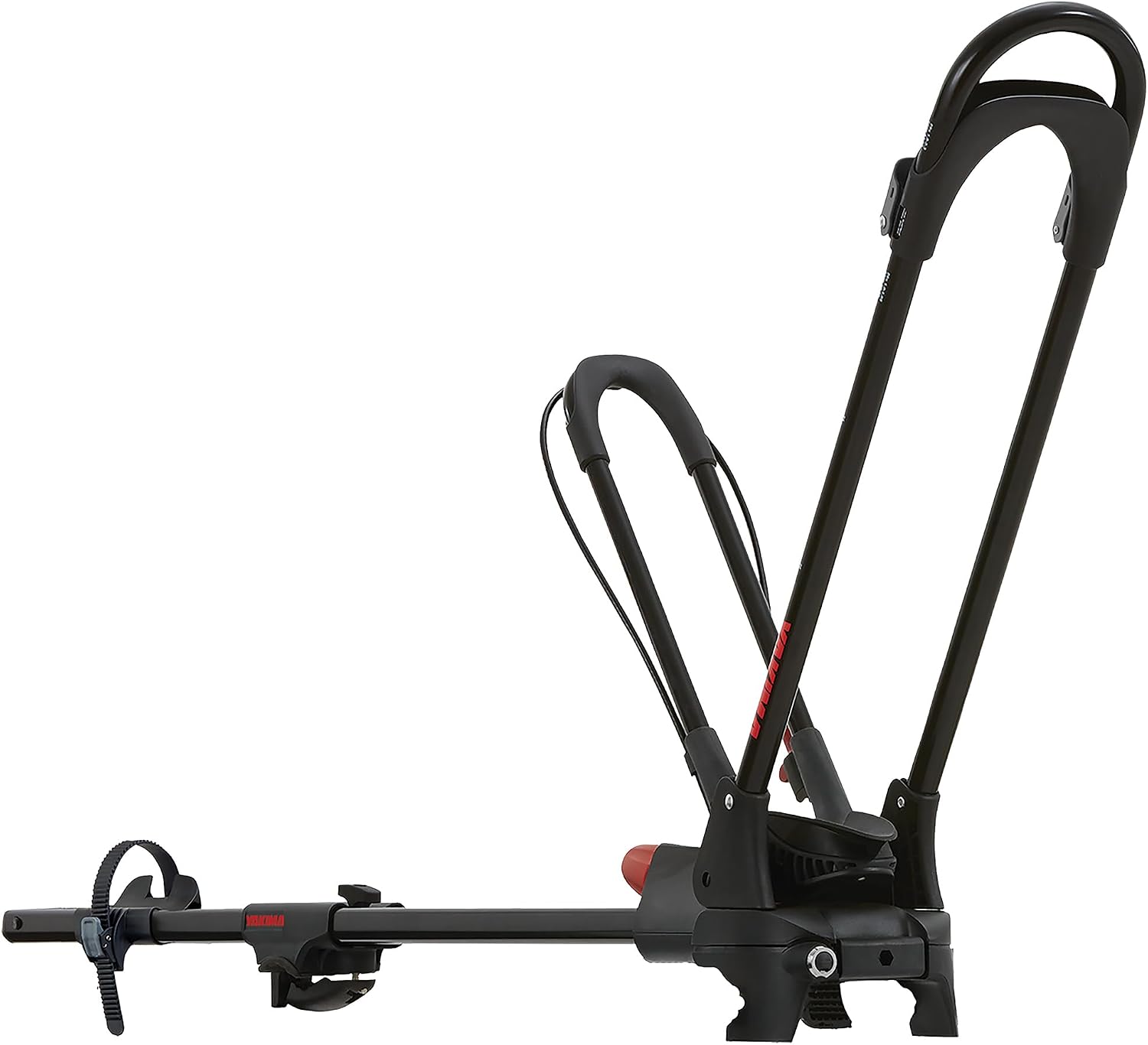
Yakima FrontLoader Rooftop Bike Rack Mount, Car & SUV Roof Carrier
A roof-mounted carrier for cars and SUVs that holds a bike above the vehicle on the roof rather than behind it on a hitch or trunk.
Visit on AmazonPrices and availability may change. Check the retailer for current details.
How these products were compared
This guide compares mounting type, bike capacity, frame contact, storage footprint, and how each rack handles a bike when it is not in use. Product names, images, and retailer links are matched by product identifier so that every card points to the product shown.
The practical question behind all five criteria is the same: does the rack match the way you actually move bikes? A rack that takes a long time to mount gets used less often, and a storage rack that blocks the garage door track becomes a problem you notice every single day.
How to choose the right bike rack
Start with the interface between the rack and the vehicle, because that decision eliminates most of the field immediately. If you have a hitch receiver, a platform carrier is the most secure option in this group. It supports each bike at the wheels, so the frame is not asked to carry the load, and the ratcheting hook design on the Swagman keeps the bike from rocking fore and aft. If you do not have a receiver, a trunk rack like the Allen Deluxe is the low-cost path, but understand the trade-offs: straps contact painted panels, the rack sits close to the bumper, and the load is limited by what the hatch and sheet metal can take. A roof carrier such as the Yakima FrontLoader keeps the rear of the vehicle clear and the bikes out of the airstream behind the car, at the cost of lifting every bike to roof height.
Then think about the bikes themselves. Platform and wheel-supported designs are the safer choice for carbon frames, thin-walled tubing, and anything with a delicate paint job, because nothing clamps the frame. Hanging and trunk designs that suspend a bike by its top tube put stress exactly where you do not want it on a lightweight frame, and the straps that hold the bike can rub a rim or a fork leg over a long drive. If your household mixes a carbon race bike with a steel commuter, a wheel-support platform handles both without you thinking about it.
The storage side of the decision is about floor space and daily friction. Floor stands are the easiest to live with because a wheel simply rolls in and the bike stands upright, and a six-bike stand like the CyclingDeal keeps an entire family's worth of bikes in one footprint. The cost is that the stand occupies floor area in the middle of the garage. A gravity or vertical rack like the Delta Cycle Michelangelo trades floor space for wall space and lifting effort: you hang the bike rather than roll it in, and the rack's adjustable arms let you set the position for road, mountain, or hybrid geometry. If your garage is narrow and you park a car inside it, the vertical approach usually wins. If your garage is deep and you want the least effort per bike, the floor stand wins.
One more thing worth checking before you commit: how the rack behaves when it is empty. A platform carrier that folds up and a trunk rack that comes off entirely are both easier to live with than a rack that stays in the way all week. That single detail often decides which product actually gets used on a Saturday morning.
Swagman XTC2 Hitch Mount Bike Rack, Platform Carrier for 2 Bikes, Ratcheting Hook System, Compact Clam-Shell Folding Design
This is the pick for anyone with a hitch receiver who wants two bikes carried securely and simply. The design is a platform carrier, which means both bikes sit on their own wheel trays rather than hanging from a frame. Ratcheting hooks hold each bike down, and the whole assembly folds into a compact clam-shell shape so it takes up far less space when the car is not hauling anything.
The reason a platform carrier earns the top spot is that it removes the two most common failure points in bike transport. Nothing clamps the frame, so carbon and thin-wall aluminum bikes are not stressed by the rack itself. And because each bike is held at the wheels, the bikes cannot swing into each other the way they can on a hanging rack.
The trade-off is honest and simple: this rack requires a hitch. If your vehicle has no receiver, none of the platform advantages are available to you, and the trunk rack in this group becomes the realistic option. It also carries two bikes, so a family of four riders needs a different plan, most likely a storage rack for the home fleet plus a two-bike carrier for the road.
Alternatives to consider
The Delta Cycle Michelangelo 2 Bike Storage Rack is better suited to a garage where two bikes need to live vertically against a wall, with fully adjustable gravity arms and a rating of up to 80 lbs. The CyclingDeal Bicycle Floor Parking Rack Stand is a stronger fit when you have a large household fleet and want six bikes parked on the floor in one organized stand rather than scattered around the garage.
The Simple Houseware 5-Bike Adjustable Floor Storage Rack, the Allen Deluxe 3-Bike Trunk Mount Rack, and the Yakima FrontLoader Rooftop Bike Rack Mount cover the remaining use cases. The Simple Houseware rack handles a five-bike garage on the floor with adjustable positioning. The Allen Deluxe is the choice for a vehicle with no hitch, carrying up to three bikes on the trunk. The Yakima FrontLoader moves the load to the roof of a car or SUV, which keeps the hitch and the rear hatch free.
Day-to-day use and maintenance
The routine that keeps a rack working is boring and takes two minutes. Before every trip, check the attachment points: the hitch bolt or pin, the trunk straps, the roof mounts, and the ratcheting hooks or wheel straps. After the first few miles of any drive, stop and recheck everything, because a rack that settles under load will loosen slightly on its first outing and then stay put.
Wash the rack when you wash the car, especially in winter. Road salt and grit work into moving parts, and a folding mechanism that stops folding is usually a mechanism that has never been rinsed. Store carriers indoors when the season ends if you have the space, and keep the rubber contact points and straps clean so they do not transfer grit onto paint or rims.
For storage racks, the maintenance is mostly about the bikes. A floor stand or vertical rack keeps tires off cold concrete and keeps derailleurs away from boots, but it does not protect a bike from a garage that swings between humid and freezing. If you ride less in winter, a cover and a wipe-down after wet rides will do more for the drivetrain than any rack choice.
One safety point applies to every carrier here: whatever the rack holds, the load changes how the vehicle drives. Braking distances grow, crosswinds push harder, and a roof-mounted bike adds height you will forget about once. Check your clearance before you pull into a garage with a bike on the roof.
Buying checklist
- Measure your hitch receiver size, or confirm that you have no receiver at all.
- Weigh your heaviest bike and compare it to the rack's stated capacity.
- Check whether the rack contacts the frame or supports the wheels, especially for carbon.
- Measure garage wall and floor space before choosing between vertical and floor storage.
- Verify the current retailer price, availability, and return terms.
Final recommendation
Choose the Swagman XTC2 Hitch Mount Bike Rack, Platform Carrier for 2 Bikes, Ratcheting Hook System, Compact Clam-Shell Folding Design when you have a hitch receiver and regularly carry two bikes to rides, because wheel-supported platforms with ratcheting hooks are the most secure and frame-friendly way to move bikes behind a car. Choose the Delta Cycle Michelangelo 2 Bike Storage Rack when the trips are over and the priority is getting two bikes off the garage floor and against a wall, with a gravity design that adjusts to road, mountain, or hybrid geometry.
If neither of those describes your situation, the remaining products cover the gaps: a six-bike floor stand for large households, a five-bike floor rack for a slightly smaller fleet, a trunk rack for vehicles without a hitch, and a roof carrier for keeping the rear of the vehicle clear. Match the rack to how you actually move and store bikes, confirm the current details at the retailer, and spend the two minutes to recheck the mounting hardware after your first drive.