How To Load Bike Rack Alone
Related: How To Install Hitch Bike Rack
Loading a bike rack by yourself isn't hard if you've done it a hundred times. It's a nightmare if you're doing it cold in a trailhead parking lot at dusk with a 35-pound bike and a set of instructions you didn't read. I've been on both sides of that. The rack matters, but the technique matters more. Here's what works, what doesn't, and which racks make the solo loader's life easiest.
The tray rack is the solo loader's best friend. If you're loading alone, buy a tray rack, not a hanging rack. Trays hold the bike from the wheels, so you're not fighting gravity while hooking a top tube overhead. Hanging racks work, but every solo loader I've talked to ends up adding bungee cords to control the swing.
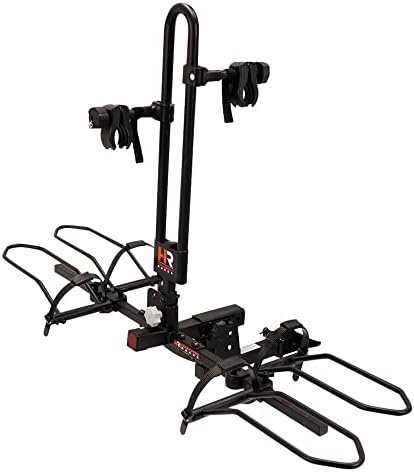
Hollywood RV Rider Hitch Bike Rack
RV-specific; not for solo loading.
Heavy, 20-40 min install, instructions are poor
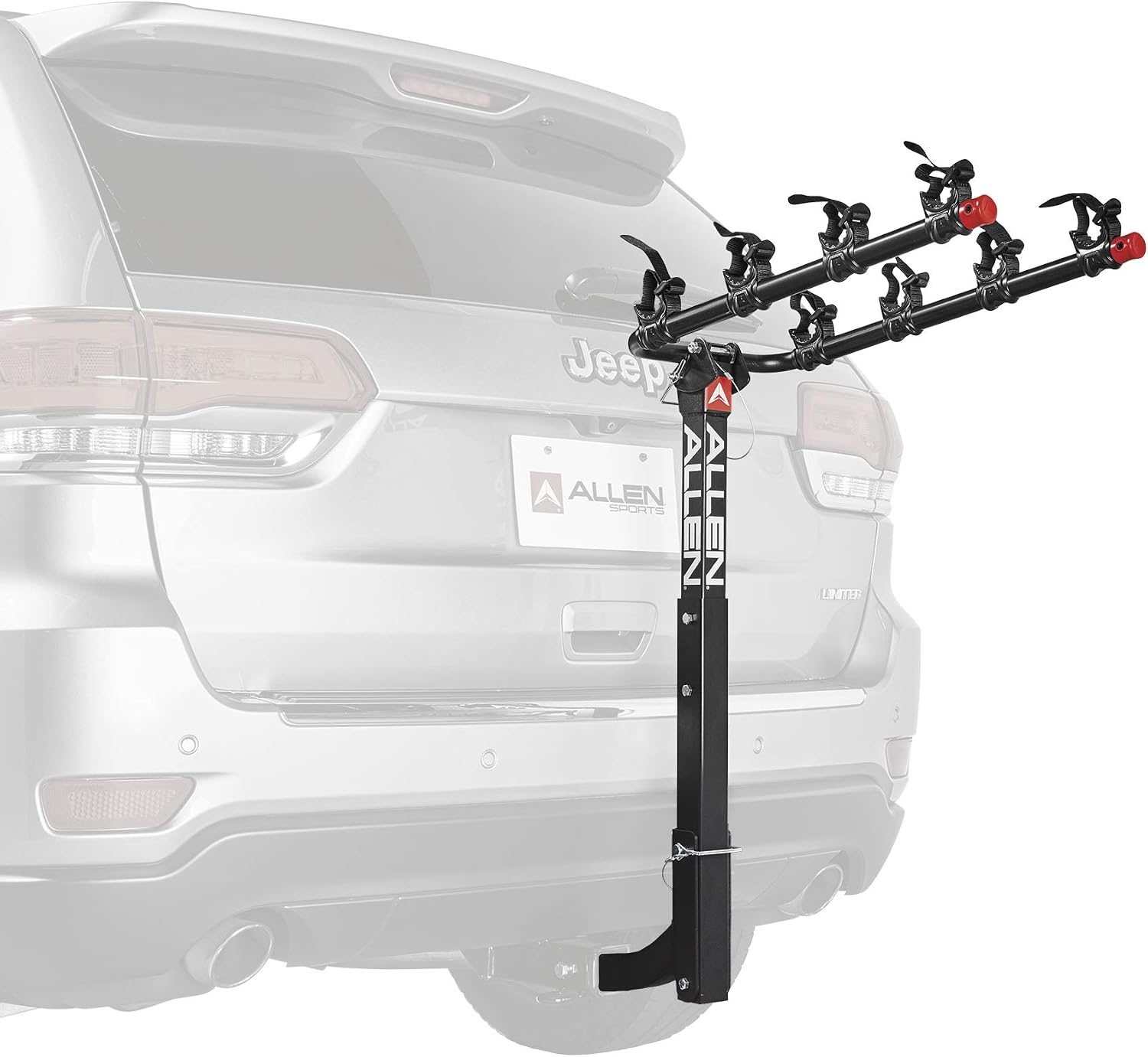
Allen Sports Deluxe 4-Bike Hitch Mount Rack (2-Inch Receiver)
Quality pick in this category.
Bikes sway, straps are basic, wobble in hitch
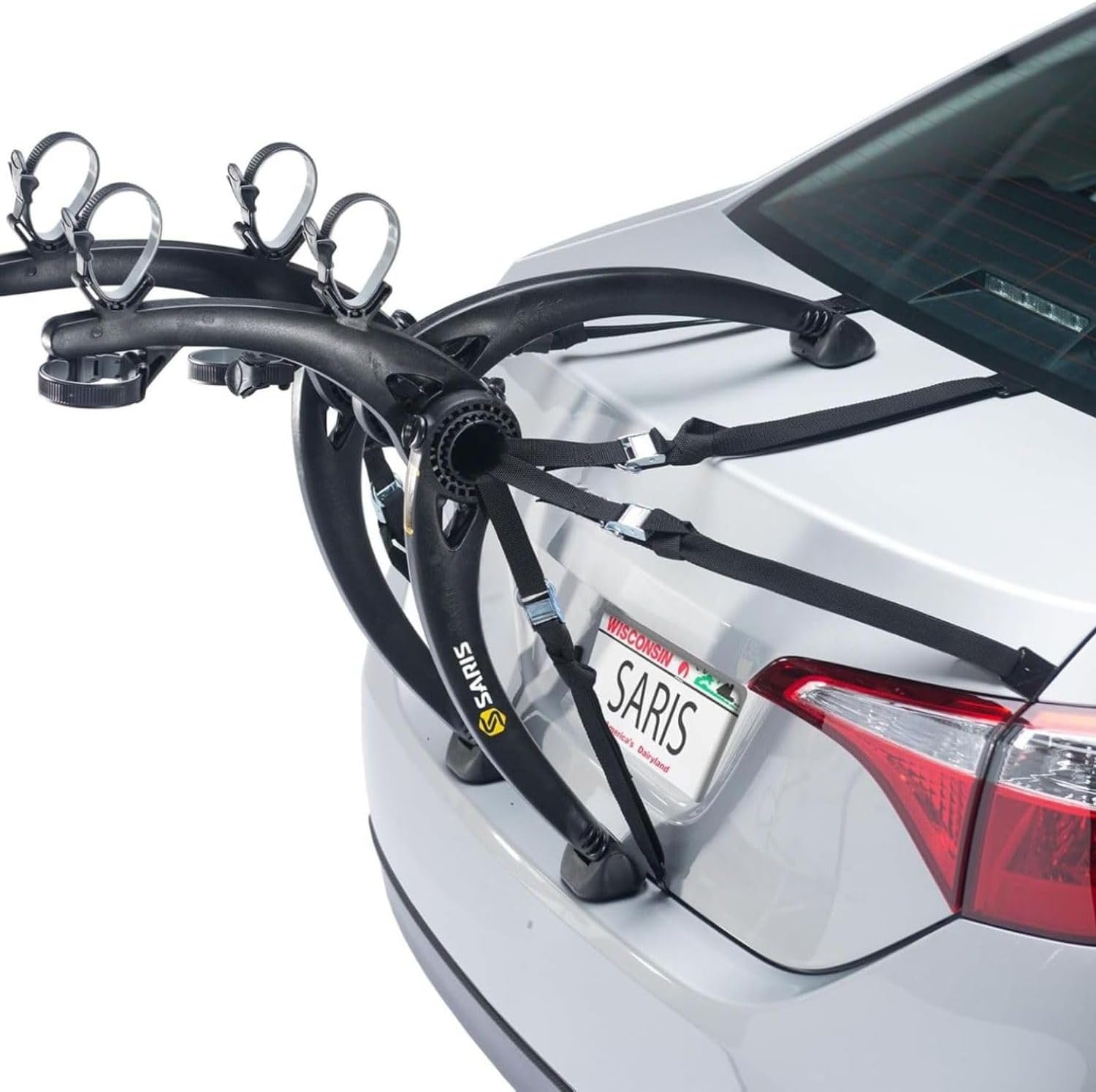
Saris Bones Car Trunk Bicycle Rack Carrier, Mounts 2 Bikes, Black - Durable,...
Quality pick in this category.
Limited bike capacity, frame contact
Allen Sports Deluxe 2-Bike Trunk Mount Rack, Model 102DN-R
Quality pick in this category.
Trunk strap scratching, bikes sway
Prices and availability were captured from Amazon Creators API and may change.
I've loaded bikes alone in the dark, in the rain, after 100-mile rides when my legs were shaking. Here's the sequence that works on every rack I own.
Step 1: Park on level ground. Sounds obvious. It's not obvious at 10 PM after a criterium when you're trying to back into a spot between a Suburban and a concrete barrier. Level ground means the rack sits at a predictable angle, and the bike doesn't roll when you set it down.
Step 2: Load the heaviest bike first, closest to the car. This is the one that took me years to learn. On a tray rack, the inside position has the least use, so the bike moves less when you set it down. On a hanging rack, the inside position means you can brace the frame against your hip while you hook the top tube. Either way, heaviest bike, inside slot, every time.
Step 3: Get the front wheel seated before you let go. On a tray rack, drop the front wheel into the wheel holder and make sure it's against the stop before you release the bike. This sounds simple. It is simple. But I've watched people try to hold the bike with one hand while fumbling the strap with the other, and the bike tips into the car. Every time.
Step 4: Strap the rear wheel second. Once the front wheel is seated, the bike will stand on its own. Now you can use both hands for the rear strap. This is where the difference between racks shows up. Some wheel holders have built-in straps that you can tighten with one hand. Some have cam-buckle straps that require two hands and a lot of cursing.
Step 5: Add a bungee cord for insurance. I do this on every rack, every time. Not because the straps are bad. Because I've been on I-70 when a strap loosened and a bike started to rotate, and I'd rather not do that again. Lori, a verified buyer of the Allen Sports Deluxe, uses three bungee cords to supplement the included straps. She's not paranoid. She's experienced.
Why Hanging Racks Are Harder Solo
A hanging rack holds the bike by the top tube. You lift the bike, hook the top tube over the horizontal bar, and let it hang. Sounds easy. It's not easy alone, for three reasons.
First, you're lifting the bike to shoulder height or higher. My steel road bike is 22 pounds. My partner's gravel bike is 25. My e-bike is 50. At the end of a long ride, 50 pounds feels like 80. And if you're 5'4" or shorter, that "shoulder height" hook is overhead.
Second, the bike swings. Once the top tube is hooked, the bike is a pendulum. It swings toward the car, away from the car, and into the next bike. William Roche, a verified Allen Sports Deluxe buyer, confirmed: "the bikes do swing freely once mounted." I can control a swinging bike with one hand while strapping with the other. Most people can't.
Third, the strap situation. Hanging rack straps go around the frame to prevent rotation. On the Allen Sports Deluxe, those straps are not rubber-type. They're harder to tighten, and they don't hold as well under highway vibration. William Roche ordered Velcro straps separately. I used pipe insulation and electrical tape. The MacGyver test is real, and the Allen Sports Deluxe passes it.
Why Tray Racks Win For Solo Loading
A tray rack holds the bike at the wheels. You roll the bike into the wheel holders, and gravity does the rest. The bike doesn't swing. The bike doesn't need to be lifted overhead. You don't need three hands.
The trade-off is weight and cost. A tray rack is heavier than a hanging rack because the trays themselves are metal, not tubes. The Hollywood RV Rider Hitch Bike Rack is 50+ pounds. That's a lot to mount on a hitch by yourself.
Judd Rousseau, a verified buyer, called it "VERY heavy, and a big unit." He's right. I store mine in the garage and wheel it to the car on a furniture dolly.
That's not a joke. That's the workflow.
But once it's mounted, loading a bike takes 30 seconds. Set the front wheel in the holder. Set the rear wheel in the holder. Tighten the cam straps. Done. No lifting, no swinging, no swearing.
RSB, a verified Hollywood Racks buyer and former FAA aircraft mechanic, hauled two 65-pound e-bikes (130 pounds total) "without any signs of being over-loaded." He sprayed the wheel holders with silicone and used a rubber mallet for initial assembly. After that, loading was one motion per bike.
Loading In The Dark: What Actually Helps
I've loaded bikes in the dark enough to know what matters.
Reflective straps help. A strap with a reflective stripe is easier to find when you're working by tailgate light. The Hollywood Racks' straps are reflective. The Allen Sports' are not.
A tilt feature helps. Lori, a verified Allen Sports Deluxe buyer, called the tilt capability "incredibly useful, allowing easy access to the back of the car, even when a bike is on the rack." I use this constantly. Grabbing a jacket, a water bottle, or a snack without unloading the bikes is a small thing until you've tried to do it without a tilt feature.
Wheel holders that you can see help. On a tray rack, the wheel holders are at bumper height. You can see them in your tailgate light. On a hanging rack, the top tube hook is at chest or shoulder height. You can't see it as well in the dark.
The Hitch Mount Vs. Trunk Mount Question
Trunk mount racks don't require a hitch. The Saris Bones Car Trunk Bicycle Rack Carrier mounts to the trunk with hooks and straps. No hitch required, which means it works on sedans and hatchbacks that don't have a 2-inch receiver.
The loading technique is different. You set the rack on the trunk first, then hook the bikes. The Saris Bones holds two bikes by the frame, so you're back to the lifting and swinging problem. But the rack itself is lighter (around 11 pounds) and easier to handle alone.
The Allen Sports Deluxe 2-Bike Trunk Mount Rack, Model 102DN-R is even lighter, at ~$51. It's the cheapest option on this list, and it works for two bikes on a trunk. But it's the rack that scratched the paint on my first Subaru Outback. I'd use it on a beater. I wouldn't use it on a car I cared about.
The Solo Loader's Checklist
Before you drive away, do these things. Every time. Alone or not.
- Grab the front wheel and try to rotate the bike. If it rotates, the front strap isn't tight enough.
- Grab the rear wheel and try to rotate the bike. Same test.
- Push the bike side to side. If it moves more than an inch, the tray straps or frame straps need tightening.
- Check the hitch bolt. On hanging racks, the wobble bolt should be tight. On tray racks, the hitch pin should be locked. The Hollywood Racks comes with a keyed-alike hitch lock and cable lock. Amazon Customer, a verified buyer, called them "good quality." Use them.
- Drive 100 feet and stop. Listen. If you hear a rattle, something is loose. Go back and check.
I've done this checklist at every trailhead for twelve years. It's caught two loose straps, one loose hitch bolt, and one bike that was about to rotate into the spare tire. The checklist works.
What I'd Buy If I Were Loading Alone Tomorrow
The Hollywood RV Rider Hitch Bike Rack at ~$400 if I had e-bikes or heavy bikes. The tray design makes loading one-motion. The keyed-alike locks mean I'm not fumbling with three keys at the trailhead. The weight is a problem, but I have a furniture dolly and a garage.
The Allen Sports Deluxe 4-Bike Hitch Mount Rack (2-Inch Receiver) at ~$178 if I was on a budget and had standard road or gravel bikes. The wobble is real but manageable. The sway is real but fixable with bungee cords. The 82-year-old reviewer Buckeyejack said it's "very high quality" and light enough for him to handle. That's the solo loader's benchmark.
The Saris Bones Car Trunk Bicycle Rack Carrier at ~$159 if I didn't have a hitch and only had two bikes. Simple, proven, and it doesn't require a hitch receiver.
The Allen Sports Deluxe 2-Bike Trunk Mount Rack, Model 102DN-R at ~$51 if I had a beater car, two bikes, and no budget. It works. It scratches paint. It sways. It's $51. For a weekend trip with a friend's bike, it's fine.
What I'm Testing Next
I'm watching the mid-tier tray rack market. The Hollywood Racks Sport Rider SE is the benchmark at ~$400, but there are tray racks coming in under $300 that claim e-bike compatibility. I'll test one next month and report back. If a $300 tray rack holds 130 pounds of e-bike without complaint, the value math changes fast. That's the prediction I'm tracking.