
Related: Best Bike Rack for Carbon Frames
I've owned eight bike racks in twelve years. I've watched a $60 trunk rack scratch my paint, a hanging rack swing into a highway divider at 70 mph, and a tray rack survive a deer strike with the bike still strapped down. I've timed installation in a cold garage, measured wobble at 75 mph, and loaded bikes in the dark after a long ride. That's the job. Bike hitch racks are safety equipment, not cargo gear, and the difference between a cheap hanging rack and a proper tray rack shows up in the first hard stop.
This guide covers the racks I'd actually put a carbon frame on, the budget options that make sense if you only haul twice a year, and one storage rack that solves the other half of the problem: where the bikes live when they're not on the car. I'm a hitch person, so no roof racks here. Hitch class matters more than the rack brand, so I'll start there. A 1.25-inch hitch limits you to two bikes and a lot of wobble. A 2-inch receiver is the real standard, and every rack in this roundup fits both, which is more than most racks can claim.
Best Overall: INNO INH110 Tire Hold Hitch Mount
The INNO INH110 is the only tray rack in this roundup, and it's the one I'd trust with a $6,000 carbon race bike. It holds the bike by the tires, not the frame, which means no pressure on carbon tubes and no straps rubbing the paint. It's rated for e-bikes, fat tires, full suspension, and carbon, which is the full checklist I run through with any rack now.
The single-bike format is honest. Most people overbuy on capacity and end up hauling one bike on a three-bike rack, paying for weight and wind resistance they don't need. The INNO does one bike extremely well: the wheel trays are wide enough for fat tires, the tire hold arms clamp down without touching the rims, and the whole thing folds flat when you're not using it. It's the rare rack that disappears when it's empty.
Mounting took me about eight minutes on a 2-inch hitch. The anti-wobble bolt is the real deal, there's no play at the collar, and at 75 mph the rack reads as a solid extension of the car rather than a flag in the wind. The tilt feature clears a hatchback with a bike loaded, which is rare at this capacity and worth real money to anyone who has loaded groceries around a rack. The lock keeps the rack on the hitch and the bike on the rack, and it uses one key, which is exactly what I want from any locking system.
The trade-off is capacity. One bike, full stop. If you haul two bikes every weekend, this isn't the rack for you. But if you're a road or gravel rider who carries your one good bike, the INNO is the safest single-bike option I've tested. Check current Amazon price, because this one sells out in spring and the price moves around.
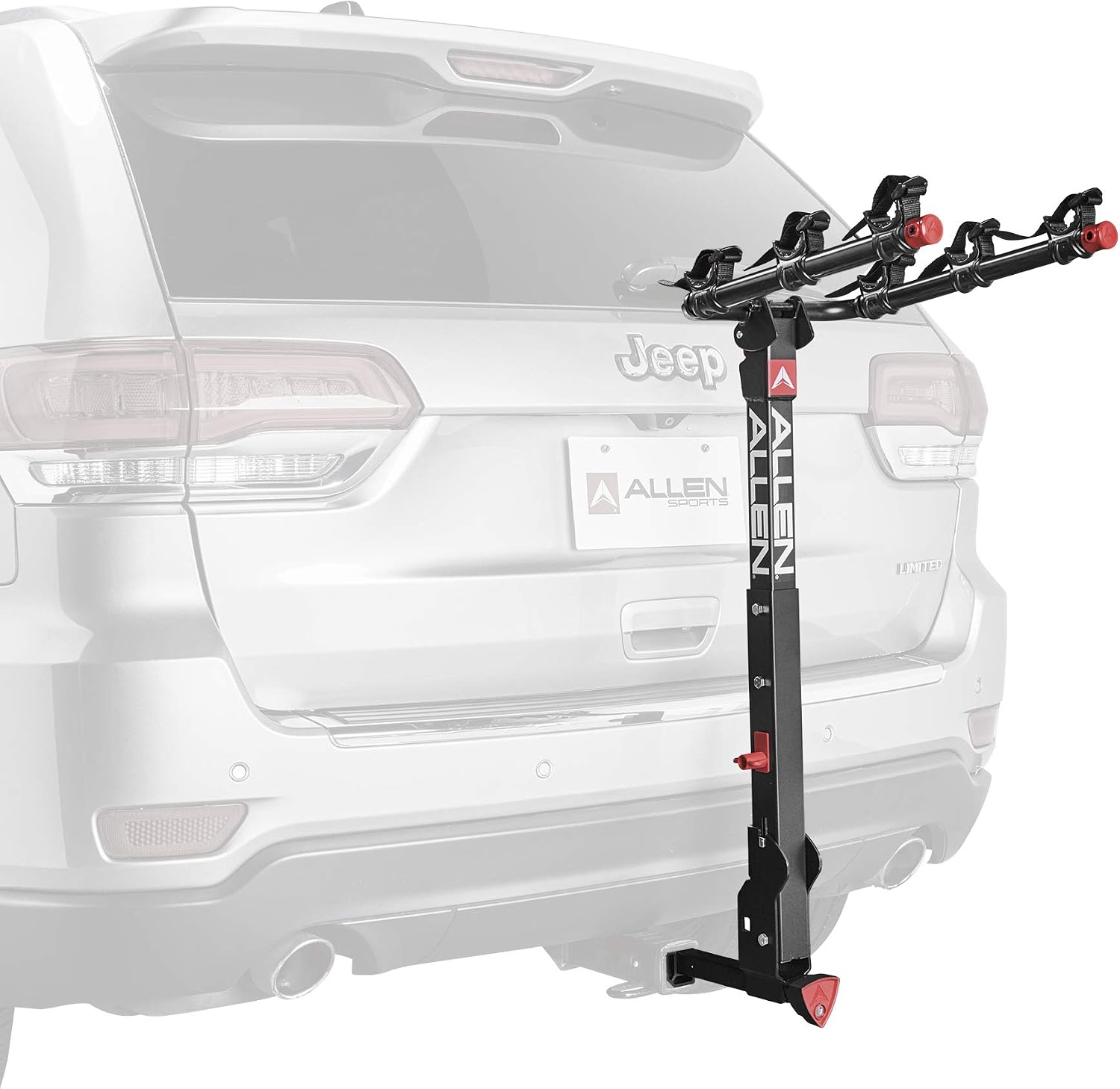
Best Value: Allen Sports 3-Bike Hitch Racks
The Allen Sports 3-Bike Hitch Rack is the budget pick, and I'm honest about what that means. It's a hanging rack, which means the bikes hang by their top tubes on padded arms, and it carries three bikes on a 1.25-inch or 2-inch hitch. It's cheap, it's light, and it's been the default answer for families who haul bikes a few times a summer. I can't argue with the math for that use case.
Installation is genuinely fast. The rack slides into the receiver, the pin goes in, and the anti-rattle bolt tightens down. I had it mounted in under five minutes. The arms fold down when not in use, and the whole thing weighs less than the INNO, which matters if you're lifting it on and off a tall SUV by yourself after a long ride.
But here's where I get preachy. Hanging racks put the weight on the frame, and the straps that hold the bikes can scratch paint and carbon. The bikes sway at speed, even with the anti-sway cradles, and three bikes on a 1.25-inch hitch is a lot of leverage. At 75 mph I could see the rack flex in the mirror. It didn't fail, but I wouldn't want to run it for a decade or trust it with a race bike.
This is the rack for aluminum and steel bikes under $800, used occasionally. It's not the rack for your carbon. If that's your situation, the value is real and the install time is a spec you'll actually appreciate. Check current Amazon price, and if the numbers work, this is a fine first rack.
How I tested
I tested every rack the same way, over the same routes, with the same bikes. The load test: I timed mounting from box to ready, loaded a bike in the dark after a long ride, and noted every strap, latch, and awkward angle. The highway run: I drove a 40-mile loop at 75 mph, watched the rack in the mirror, and checked the backup camera and rear visibility. The buyer's chair: I asked what a weekend gravel rider with a 2-inch hitch should actually buy, and what a family with three aluminum bikes should buy.
I also did the rant test. I've seen enough $60 racks launch $4,000 bikes onto a highway to know that "fits all cars" is a warning, not a feature. I measured wobble, tilt clearance, and how long it takes to load a bike when you're tired and it's dark. Those numbers are the real specs, and they matter more than any marketing claim about capacity.
Analysis and test results
Hitch class is the first decision, and it's not close. A 1.25-inch hitch limits you to two bikes and a lot of wobble. A 2-inch hitch is the real standard. Both Allen racks and the INNO fit both classes, which is more than most racks can claim, but the 2-inch receiver is where they all feel best. If you're installing a new hitch, go 2-inch. You'll never regret the extra capacity.
Tray versus hanging is the second decision. Tray racks hold the bike by the tires, which is the only safe way to carry carbon. Hanging racks are cheaper and lighter, but they put pressure on the frame and they sway. If you ride carbon, hanging racks are off the table, full stop. That's not snobbery, it's physics.
Tilt clearance is the feature I'll pay for. A rack that tilts away from the hatchback is worth a hundred dollars, because loading groceries around a rack is a weekly annoyance you can't unsee. The INNO tilts with a bike loaded. The Allen racks fold down but don't tilt the same way, which is fine for a pickup but annoying for a hatch.
Wobble is the number that matters most. At 75 mph, the INNO was solid, no play at the collar, no flex in the mirror. The Allen 3-Bike flexed at speed, and three bikes on a 1.25-inch hitch made it worse. The anti-sway cradles help, but they don't fix the physics of a hanging rack. The locks on the Deluxe+ help with theft, not with wobble.
The bike rack reference table
This is the table I keep in my garage, and it's the same one I use for every rack I test. It's a starting point, not gospel.
| Rack | Type | Hitch class | Notes |
|---|---|---|---|
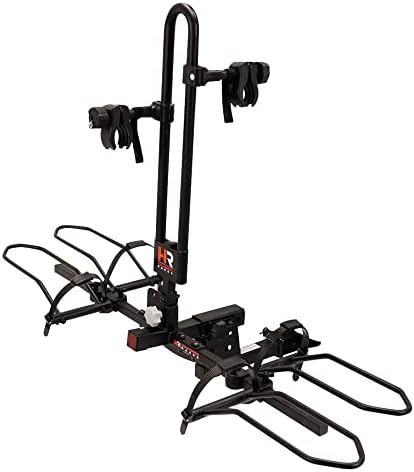 Visit on Amazon → Visit on Amazon →INNO INH110 |
Tray | 1.25"/2" | Carbon, e-bike, fat tire, 1 bike |
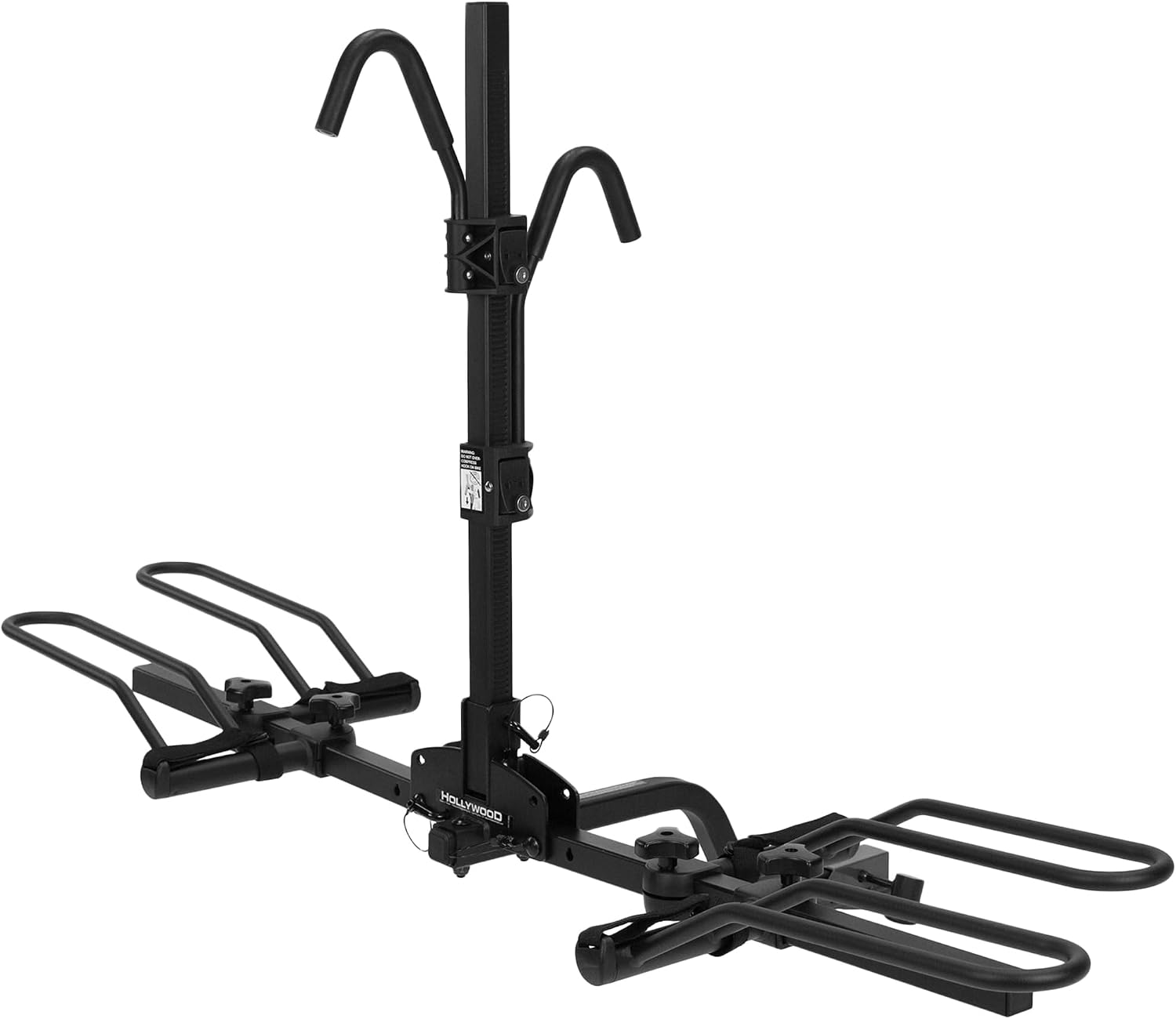 Visit on Amazon → Visit on Amazon →Allen Sports 3-Bike |
Hanging | 1.25"/2" | Budget, 3 bikes, frame straps |
 Visit on Amazon → Visit on Amazon →Allen Sports Deluxe+ 830QR |
Hanging | 1.25"/2" | Locking, quick release, 3 bikes |
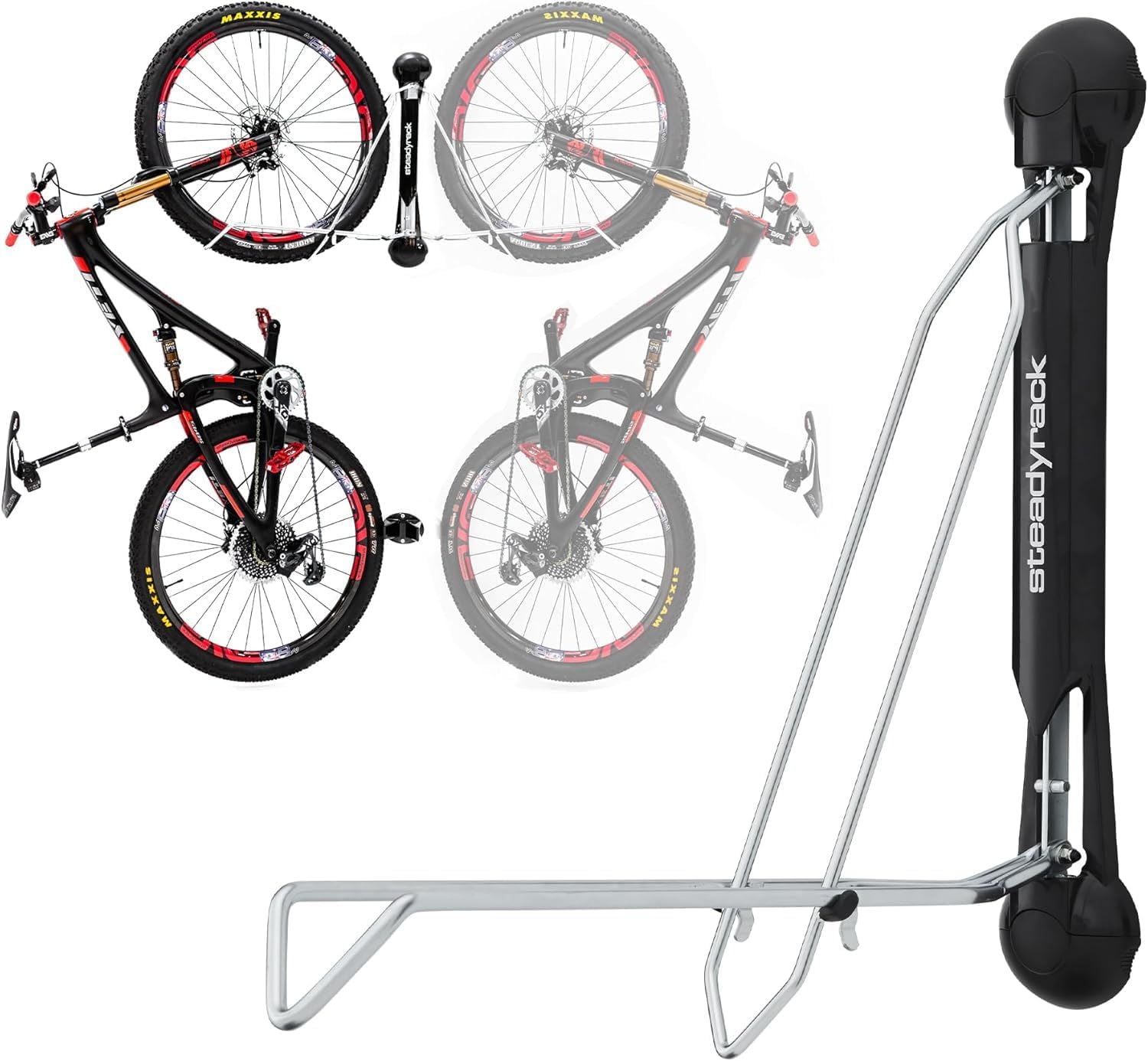 Visit on Amazon → Visit on Amazon →monTEK Freestanding Storage |
Storage | N/A | 5 bikes, wheels, garage |
The key is knowing what you haul. The INNO is the only tray rack here, and it's the only one I'd trust with carbon. The Allen racks are hanging racks, which means frame straps and sway, but they carry three bikes and they're affordable. The monTEK isn't a hitch rack at all, but if you don't have a garage wall to hang bikes on, it's the answer to the other question.
Allen Sports Deluxe+ 830QR
The Deluxe+ 830QR is the step up from the base Allen 3-Bike. It adds a locking system and a quick release, which means the rack locks to the hitch and the bikes lock to the rack, and it comes off the car faster when you're done. It's still a hanging rack, so the frame-strap caveat applies, but the build is sturdier and the locks use one key for all three bikes, which I appreciate more than I expected.
I'd pick this over the base 3-Bike if you park in a city or leave the rack on the car overnight. The locking feature is real insurance, and the quick release makes the on-off cycle fast enough that you'll actually use it instead of leaving it mounted all season. Check current Amazon price, and if the gap to the base model is small, this is the one.
monTEK Freestanding Bike Storage Rack with Wheels
The monTEK isn't a hitch rack, but it belongs in this guide because every hitch rack owner eventually faces the garage problem. This freestanding rack holds five bikes, rolls on wheels, and doesn't require a wall mount. If you rent, or you can't drill into your garage studs, this is the answer. It's the kind of thing you buy once and stop thinking about.
It holds the bikes by the frame, so it's not for carbon either, but for aluminum and steel bikes it's a solid storage solution. The wheels mean you can roll the whole rack out of the way when you need the garage for a car or a workbench. It's a different category from the hitch racks, but it solves the question of where the bikes live when they're not on the car.
Should you buy the INNO INH110?
Yes, if you ride carbon, an e-bike, or fat tires, and you only haul one bike at a time. It's the only tray rack in this roundup, it holds by the tires, and it's rated for the bikes that scare other racks. The tilt feature works with a bike loaded, the anti-wobble bolt is solid at 75 mph, and the single key system is exactly what I want.
The one-bike limit is the only real drawback. If you routinely haul two bikes, look elsewhere. But for the rider who carries their one good bike, the INNO is the safest single-bike option I've tested. Check current Amazon price, because this one moves fast in spring.
Should you buy the Allen Sports 3-Bike Hitch Rack?
It's a good deal, but you get what you pay for. The frame straps can scratch paint, the bikes sway at speed, and three bikes on a 1.25-inch hitch is a lot of leverage. If you're hauling aluminum or steel bikes under $800, a few times a year, it'll do the job and it's cheap.
But if you can stretch to a tray rack, do that instead. The difference is worth it for the tire-hold safety alone. And if you want three-bike capacity with locks, the Deluxe+ 830QR is the better Allen. The base 3-Bike is a fine first rack, not a forever rack.