Related: Best Tray Bike Rack for a 2-Inch Hitch
Bikes outnumber cars on my street, and every one of them needs somewhere to live when it is not rolling. That is the whole problem in one sentence, and it has four answers: a wall, a tailgate, a hitch, or a freestanding rack in the corner of the garage. I have spent twelve years and eight racks learning which answer fits which rider, and this is the short version of the bike rack storage solutions that actually hold up.
I live in Boulder, I ride road and gravel, I race crits, and I drive to the mountains most weekends. My rack history includes a trunk strap rack that scratched the paint on a car I still miss, a hanging rack that swung into a highway divider on I-70 with two bikes loaded, and a tray rack that took a deer strike at highway speed and still carries bikes today. That is why I treat a rack as safety equipment and not cargo gear, and why the four products below are the ones I would put in front of a friend.
Two of them are storage. Two of them are transport. Mixing those up is the most common mistake I see, and it is an expensive one.
Best for the Garage Wall: Steadyrack Swivel Bike Wall Mount
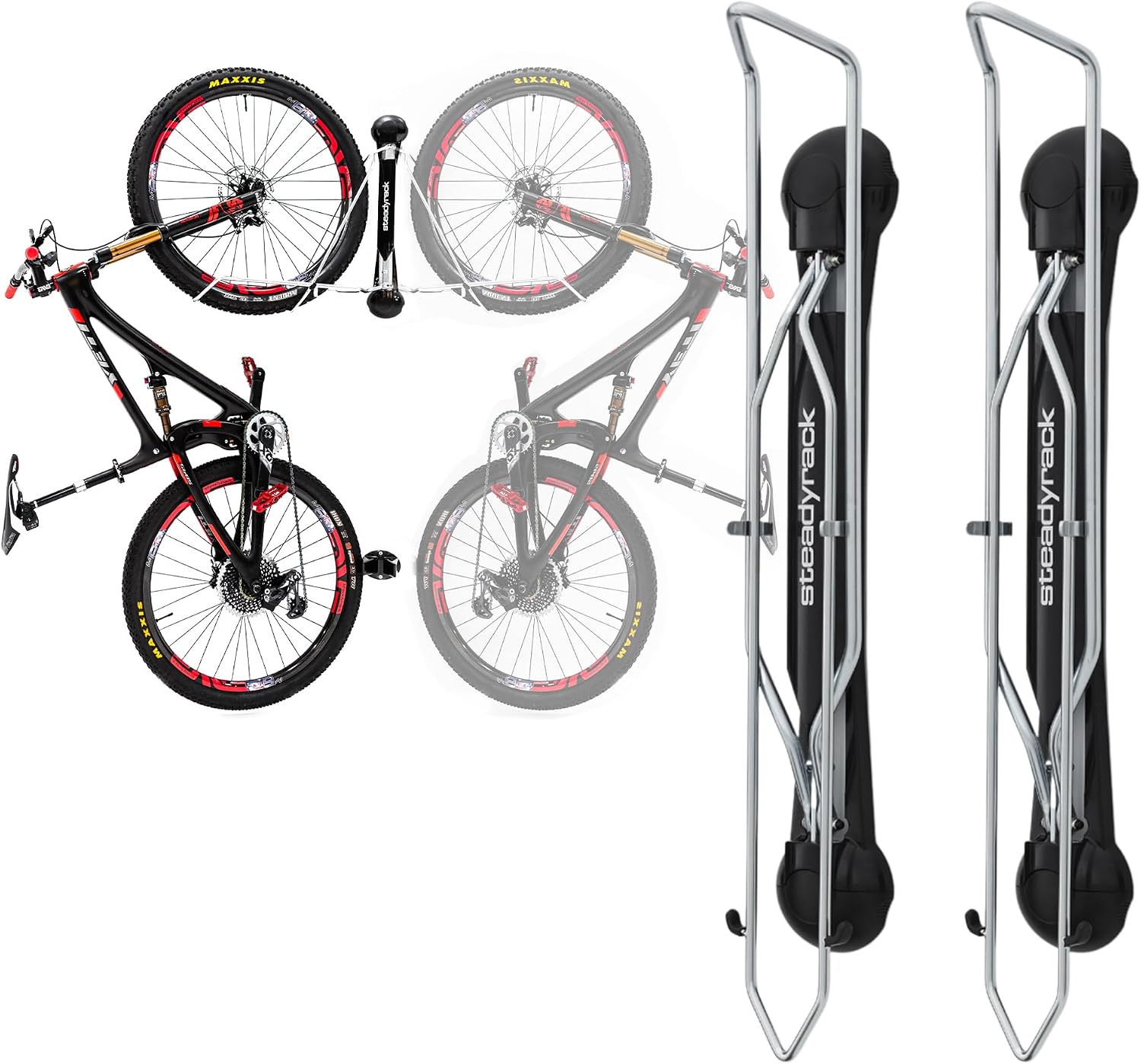
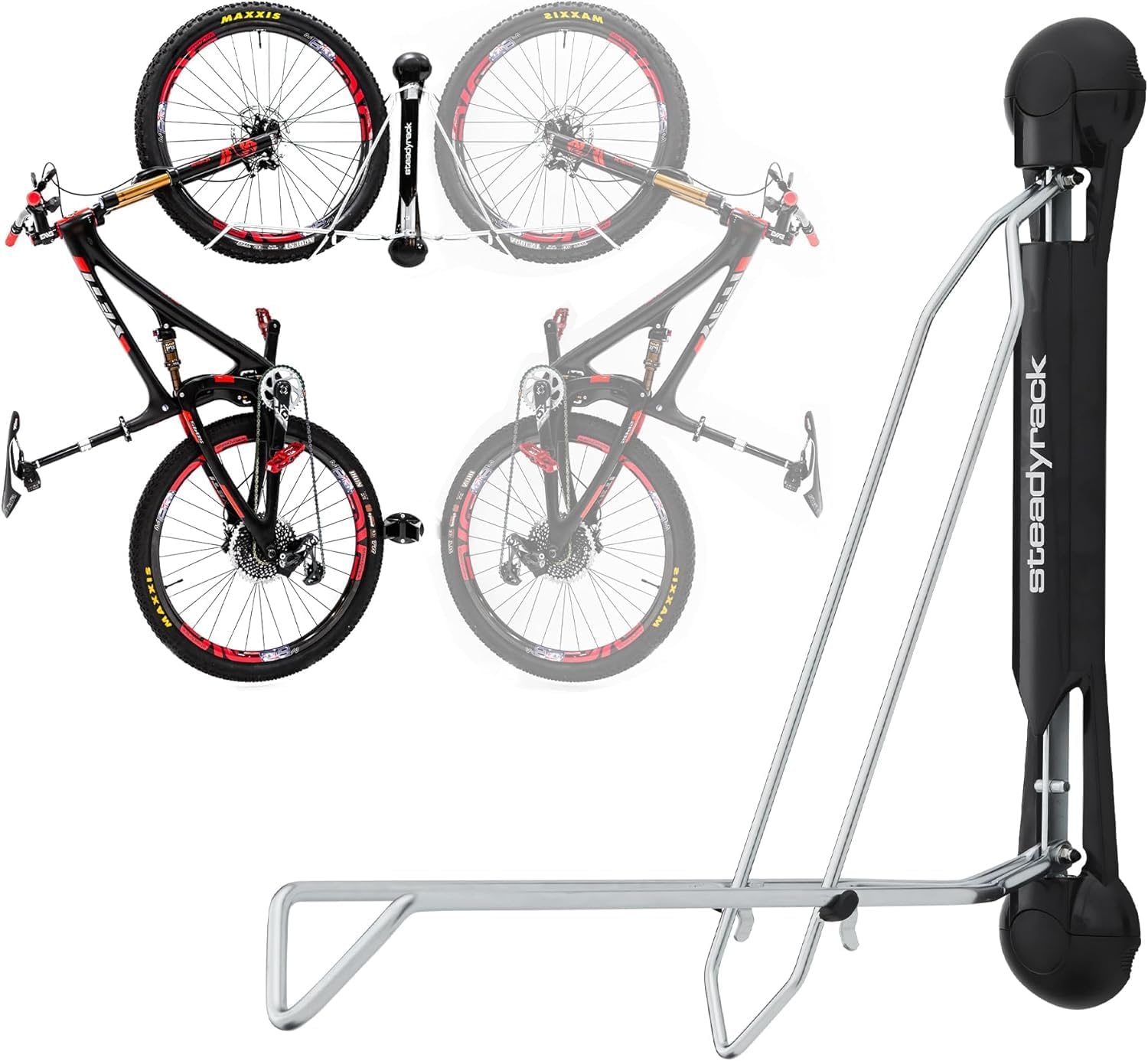
The swivel is the whole point. You lift the bike onto the mount, and the rack pivots so the handlebars and pedals fold flat against the wall instead of sticking a foot into the walkway. In a garage where the floor is already lost to a workbench and two cars, that pivot is worth more than any other single feature on this list.
Steadyrack builds this one for mountain bikes and garages, and it holds the bike vertically by the wheel rather than by the frame. That distinction matters if you ride carbon. Hanging a carbon frame from a hook is a line I will not cross, and a vertical wheel mount sidesteps the entire argument.
What I would plan for is installation. A wall mount is a permanent decision, and it lives or dies on where you put it. You are finding studs or drilling into concrete, and you get one shot at the height. Measure your longest wheelbase, your tallest handlebar, and the distance to the car door before the drill comes out. A rack that takes thirty minutes to mount gets used half as often, and a wall mount hung six inches too low means every bike you lift bumps the floor.
If your problem is floor space rather than hauling, this is the answer.
Best for a Pickup Bed: Marscamd Tailgate Bike Pad
A tailgate pad is the least expensive way to move bikes with a truck, and this one covers a mid-size tailgate at 51 inches wide with room for five bikes. The pad does two jobs at once: it protects the tailgate paint from fork lowers and pedals, and it protects your frame from the metal edge of the gate. Bikes hang over the tailgate with the front wheels pointing forward and the down tubes resting on the pad.
What it is not is a lock. Nothing on a tailgate pad secures anything, so the coffee stop turns into a decision about whether you can see the truck from the window. It also does nothing for a bike you cannot lift over the gate, and nothing at all for a car or an SUV.
For a mid-size pickup and a Saturday shuttle run, though, it is the least fuss of anything here. No receiver, no assembly, no torque spec to argue about. Drape it, load it, strap it, drive.
Best for E-Bikes and Fat Tires: Young Bike Rack Hitch Mount
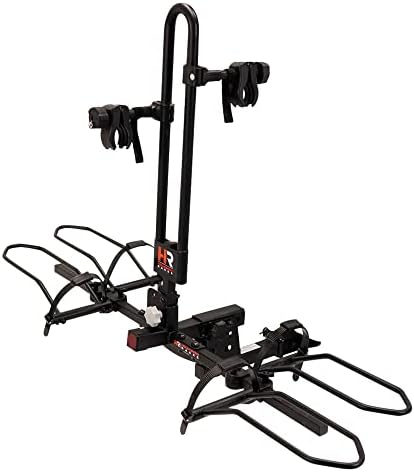
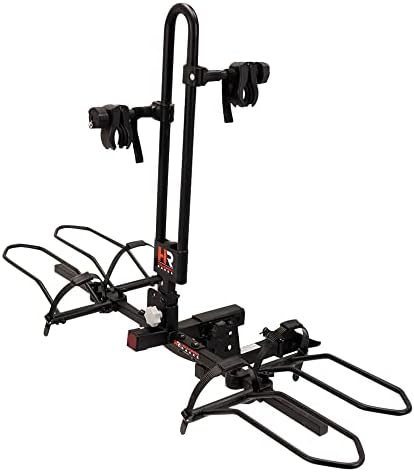
This is the rack in my own wheelhouse: a platform tray on a 2-inch receiver, rated for two e-bikes and 200 pounds, with anti-wobble hardware and a foldable frame that drops out of the way when the rack is empty. It is built for fat tires, which is the segment that keeps growing, and the camo finish is a choice you either love or you do not.
Hitch class is the first thing I ask about, always. A 2-inch receiver is the real standard, and a loaded platform rack needs it. If your vehicle only has a 1.25-inch hitch, you are limited to two bikes and a lot of wobble, and that is a vehicle problem before it is a rack problem. Sort the hitch first, then shop the rack.
The 200-pound capacity is the number that matters once you go electric. Two e-bikes plus the rack is real weight hanging off the back of a car, and it changes how the vehicle handles, how the rear suspension sits, and how much you can see out of the backup camera. Anti-wobble hardware is not a luxury at that weight. A rack that rattles at 65 mph is a rack you stop trusting, and a rack you stop trusting is one you leave in the garage.
The fold matters more than people expect. A platform rack that folds up against the bumper when it is empty is the difference between leaving it on the car all season and wrestling it off in the driveway every week. Tilt and fold features are worth real money, and I will argue that all day.
Best for Renters and Tight Garages: monTEK Freestanding Bike Storage Rack with Wheels
Three bikes, no drilling, and it rolls. That is the pitch, and for anyone who rents, moves every couple of years, or has already filled every wall in the garage, it is a good one. A freestanding rack asks nothing of your structure, which means it also comes with you when you move.
The wheels are the feature I would pay for. A rack you can pull out to load and push back into the corner keeps the floor usable on the days you actually need the floor. The tradeoff is footprint, because freestanding racks eat the exact space you were trying to reclaim. If your garage is narrow, measure before you buy. A rack holding three bikes is wider in real life than it looks in a product photo.
This is storage, not transport. Do not put it on a hitch, and do not expect it to leave the garage.
How I judge a rack
I run every rack through the same four questions, and none of them are about looks.
Mount time and load time. Installation time is a spec, and it is the most underrated one. A rack that takes thirty minutes to mount gets used half as often as one that takes five. Then there is loading in the dark after a long ride, which is the real test. If I cannot get a bike on and strapped by feel, in gloves, with the trunk light for company, the rack is too clever for its own good.
Wobble. I care about what happens at 75 mph with the mirrors full of a loaded rack. Anti-sway and anti-wobble hardware, hitch tighteners, and a receiver that is actually the right class all decide whether the rack tracks straight or shimmies. A rack that rattles no matter how you tighten it is the fastest way to ruin a road trip.
Frame and rim contact. Carbon frames change everything. If you ride carbon, hanging racks are off the table, full stop. Straps that bite into carbon rims are the other half of that problem, and I check every contact point before I trust a rack with a bike I care about.
Tilt clearance and visibility. A rack that tilts away from the hatchback is worth real money, because loading groceries around a rack is a weekly annoyance you cannot unsee. The same goes for the backup camera and the mirror view. A rack that blocks the camera is a rack I complain about every single time I reverse.
Where these four racks split
The Steadyrack wall mount and the monTEK freestanding rack solve a storage problem. The Marscamd tailgate pad and the Young hitch rack solve a transport problem. Buy the wrong category and no amount of quality will save you.
Within transport, tray racks beat hanging racks for almost everyone I know. Hanging racks are fine for a step-through frame or a fat bike, and they are cheaper, but they put frames in contact with hooks and they swing more. A platform tray holds each bike by the wheels, keeps the frames apart, and loads the same way every time.
Within storage, the wall mount wins on floor space and the freestanding rack wins on flexibility. If you own the walls and you are staying put, drill. If you rent, or you have already filled every stud, roll.
The last thing I would say is about weight, because racks are getting lighter and I am watching it closely. Thin aluminum trays save pounds and they flex at speed, and I would rather carry a heavier rack that tracks straight than a light one that wanders in a crosswind. Watch the fat tire and e-bike widths too. That is the segment expanding fastest, and it is where the capacity numbers actually matter.
The bike rack reference table
This is the table I keep for friends who ask the same question every spring. Match the category to your problem first, then compare the details.
| Rack | Type | Mounting | Capacity | Best for | Price |
|---|---|---|---|---|---|
 Visit on Amazon → Steadyrack Swivel Bike Wall Mount |
Vertical wall mount | Wall studs or concrete | One bike per mount | Garage walls, tight floor space | $179.99 |
 Visit on Amazon → Marscamd Tailgate Bike Pad |
Tailgate pad | Drapes over the tailgate | Up to 5 bikes | Mid-size pickups, shuttle runs | $49.99 |
 Visit on Amazon → Young Bike Rack Hitch Mount |
Platform tray, hitch mount | 2-inch receiver | 2 e-bikes, 200 lbs | E-bikes, fat tires, highway hauling | $349.99 |
 Visit on Amazon → monTEK Freestanding Bike Storage Rack |
Freestanding, wheeled | No mounting required | 3 bikes | Renters, apartments, full garages | $189.99 |
The order of operations is simple. Count your bikes, count your vehicles, and decide whether the problem is the floor or the road. The table will not make that decision for you, but it will keep you from buying a storage rack for a hauling problem.
Should you buy the Steadyrack Swivel Bike Wall Mount?
Yes, if your problem is floor space rather than hauling. It mounts to the wall, holds the bike vertically by the wheel instead of the frame, and swivels so the bars and pedals fold flat against the wall. It is the cleanest way to get bikes out of a two-car garage, and it never touches a hitch.
Plan the height before you drill. That is the only real risk with a wall mount, and it is a permanent one.
Should you buy the Marscamd Tailgate Bike Pad?
If you drive a mid-size pickup and haul bikes a few times a month, yes. It covers a 51 inch tailgate, holds up to five bikes, and protects both the truck paint and your down tubes. It is the cheapest way into truck-based bike transport, and the simplest.
Understand what it is not: there is no lock, no hitch, and no help for a bike you cannot lift over the gate.
Should you buy the Young Bike Rack Hitch Mount?
Yes, if you have a 2-inch receiver and you ride e-bikes or fat tires. It is a platform tray rated for two e-bikes and 200 pounds, with anti-wobble hardware and a foldable frame that gets out of the way when the rack is empty. That combination is exactly what the heavy end of the market needs.
Sort your hitch class first, because a 1.25-inch receiver changes everything about what you can carry.
Should you buy the monTEK Freestanding Bike Storage Rack with Wheels?
Yes, if you rent, move often, or have no free wall left. It holds three bikes, needs no drilling, and the wheels let you pull it out to load and push it back into the corner. For a garage you do not own, it is the honest answer.
It does eat floor space, so measure your garage width before you commit. Storage racks solve the floor problem by taking some of the floor, and that trade is worth knowing before the box arrives.